In a historic first in India, the Supreme Court on Wednesday permitted the withdrawal of artificial life support to Harish Rana, a 32-year-old who has been in a vegetative state for almost 13 years now. The court also urged the Centre to bring a comprehensive law to address passive euthanasia.
Rana, a resident of Ghaziabad in Uttar Pradesh, suffered head injuries after falling from a fourth floor flat in Chandigarh in August 2013, where he was a student at the time. He has been in a permanent vegetative state (PVS) since then.
In two concurring judgments, a bench of Justices J B Pardiwala and K V Viswanathan said: “In the facts and circumstances of the present case, we record our satisfaction that the twin legal requirements for the withdrawal and withholding of medical treatment have been unequivocally met. First, it is established that the Clinically Assisted Nutrition and Hydration (CANH) currently being administered to the applicant … constitutes medical treatment. Secondly, it has been conclusively determined that the continued administration of the same is no longer in the best interests of the applicant.”
“In light of the unanimous consensus arrived at by the parents/ next of kin and the constituted medical boards respectively, we are of the opinion that the medical treatment ought not to be prolonged any further,” it said, directing that “the medical treatment, including CANH being administered to the applicant, shall be withdrawn and/ or withheld.”
Citing the “peculiar facts and circumstances of the present matter”, the court “waived the reconsideration period of 30 days… as all stakeholders are unanimous in their opinion that the medical treatment… should be withdrawn and/ or withheld”.
Reconsideration period refers to the period between the date of decision by medical experts to withdraw life support and date of implementing it, so as to enable a person aggrieved by the decision to approach a court of law.
The bench asked AIIMS Delhi to admit Rana to its palliative care department “so that the withdrawal and/ or withholding of” his “medical treatment, including CANH, can be given effect to. For this purpose… AIIMS shall provide all necessary facilities for shifting him from his residence to the said palliative care department.”
“AIIMS shall ensure that such withdrawal and or withholding is carried out through a robust, palliative, and end-of-life care plan which is specifically tailored to manage symptoms without causing any discomfort to the applicant and ensuring that his dignity is preserved to the highest degree,” the bench said.
Noting the absence of a comprehensive legislation to address end-of-life care, the bench urged the Centre to enact a law in this regard. Due to absence of such a law, “end-of-life decisions stand imperilled by the possibility that considerations wholly extraneous to medical science or the patient’s autonomy, most notably financial distress, lack of insurance coverage, or socio-economic vulnerability, may imperceptibly shape outcomes,” said Justice Pardiwala.
“The right to die with dignity is inseparable from the right to receive quality palliative and EOL care. It is imperative to ensure that the withdrawal process is not marred by pain, agony or suffering,” Justice Pardiwala said in his opinion. “As the decision to withdraw or withhold a medical treatment is made keeping the best interests of the patient in mind, we deem it necessary to underscore that the same must be carried out in a manner that is humane, and reflects a responsible and sensitive extension of the doctors’ duty of care towards their patient. The resultant effect of the withdrawal or withholding of medical treatment must not be the abandonment of the patient. Due focus must be given to the comfort of the patient through pain and symptom management,” he said.
Justice Pardiwala also praised Rana’s family for not leaving his side, calling it an “act of profound compassion and courage”. “You are not giving up on your son. You are allowing him to live with dignity. It reflects the depth of your selfless love and devotion towards him,” he said.
The court said that “clinical and procedural characteristics of CANH indicate, without an iota of doubt, that CANH cannot be regarded as a mere means of basic sustenance or primary care, but should be recognised as a technologically mediated medical intervention that is prescribed, supervised and periodically reviewed by trained healthcare professionals in accordance with established medical standards…”
It said Rana “is sustained through the administration of nutrition and hydration in medically prescribed quantities of certain prescribed feed, via a surgically installed PEG tube. Consequently, it is beyond question that administration of CANH in this case is to be considered as medical treatment” and “the fact that (he)…. is administered CANH at home does not displace the status of such CANH as being considered as a medical treatment”
In his concurring opinion, Justice Viswanathan said that after interacting with Rana’s parents and siblings, they “firmly believe that the medical treatment is not making any difference and that there was no point in continuing with such treatment and making Harish suffer for no good reason.”
The judgement came on a plea by Rana’s family, seeking permission to withdraw medical support in terms of the SC’s five-judge bench ruling in 2018 (Common Cause vs Union of India), recognising the legality of “passive euthanasia” for terminally-ill patients.
The 2018 ruling laid down detailed guidelines for passive euthanasia, both in cases where the patient left an “advance directive” or “living will” stating that life support should be withdrawn if they slipped into terminal illness, and where no such directive was left behind.
In January 2023, another five-judge bench modified the 2018 order to make the process of withdrawal of treatment for terminally ill patients less stringent and more workable. The changes included introducing timelines for each board to make its decision and limiting the role of the judicial magistrate in the process.
Rana’s family initially moved the Delhi High Court in 2024. The HC, however, dismissed the plea in July 2024, saying that Rana was not terminally ill.
The family then moved the apex court in 2024 but failed to get any relief. The SC, while dismissing the plea in August 2024, however, gave permission to approach it again if the need arose. The family moved the apex court again last year by filing a miscellaneous application.
In other directions, the SC also asked the Centre, in coordination with the Secretaries of Health and Family Welfare of all States/ UTs, to ensure that the Chief Medical Officers of all districts “forthwith prepare and maintain a panel consisting of registered medical practitioners possessing qualifications in accordance with the guidelines as laid down in Common Cause (judgment), for the purpose of nomination to the secondary medical board. The panel so prepared shall be periodically reviewed and updated by the CMOs at regular intervals not exceeding 12 months,” it said.
The court will hear the matter after a month to see whether its directions have been complied with.

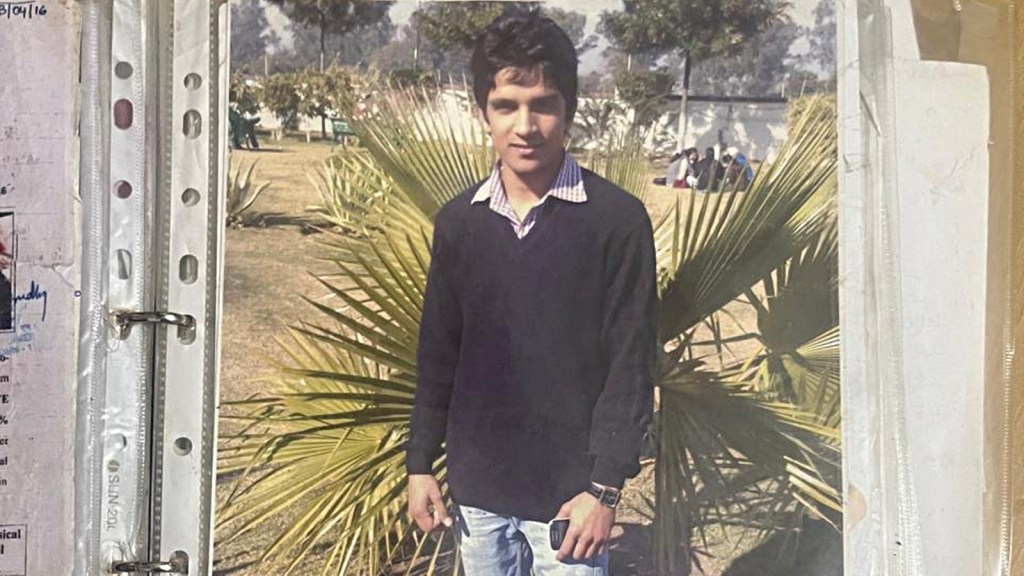 The decision came on a plea by Harish Rana’s family, seeking permission to withdraw his medical facilities in terms of the SC’s 2018 five-judge Bench ruling recognising the legality of "passive euthanasia" for terminally-ill patients. (Source: Express Photo)


 Share


