


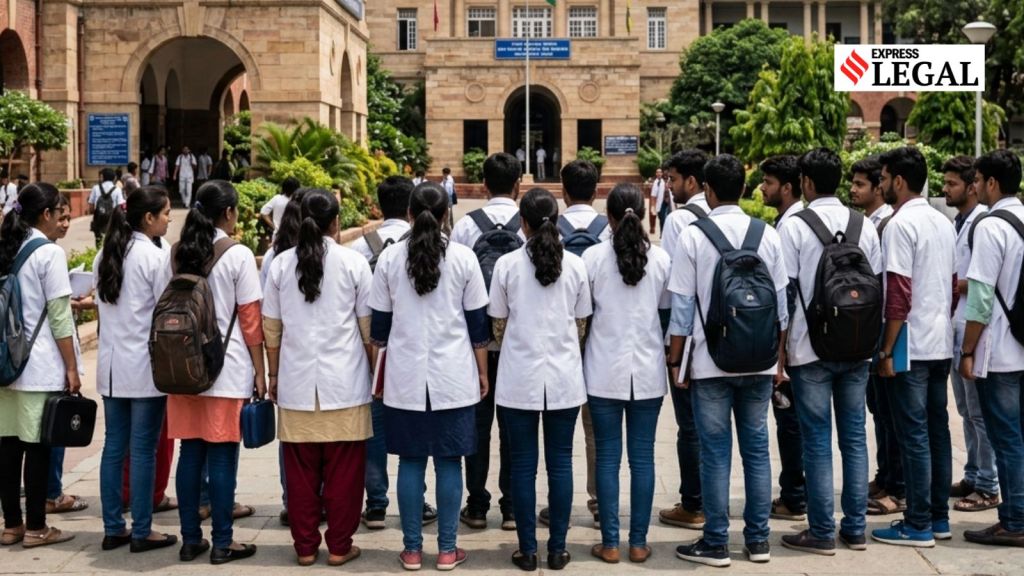
 The students had completed their BHMS course, passed the university’s examinations and were granted provisional registration in 2023 by the State Council of Homoeopathy. (AI-generated image)
The Madhya Pradesh High Court has directed the State Council of Homoeopathy to consider the permanent registration applications of a batch of Bachelor of Homoeopathic Medicine and Surgery (BHMS) graduates, observing that students cannot be made to suffer for regulatory disputes involving their college.
Justice Milind Ramesh Phadke said on September 9 that the students had completed their course, examinations, internship, and obtained degrees after provisional registration.
“The regulatory dispute between the institution and the authorities cannot be allowed to continue indefinitely at the cost of the students who have completed their education under the supervision of the competent authorities and whose academic qualification has already been recognised to the extent of granting provisional registration and awarding degrees,” the court said.
Observing that “statutory authorities are required to act fairly, reasonably, and within the framework of law,” the court pointed out that the state council had itself granted provisional registration to the petitioners in 2023 after verification of their educational status. It was not granted to persons who had not completed the requisite academic course.
The order said that the later award of degrees and completion of internship further strengthened their claim for consideration of permanent registration. “The State Council, therefore, cannot keep the applications pending indefinitely merely by referring to an unresolved communication or to an inter se regulatory dispute between the institution and the National Commission for Homoeopathy,” it added.
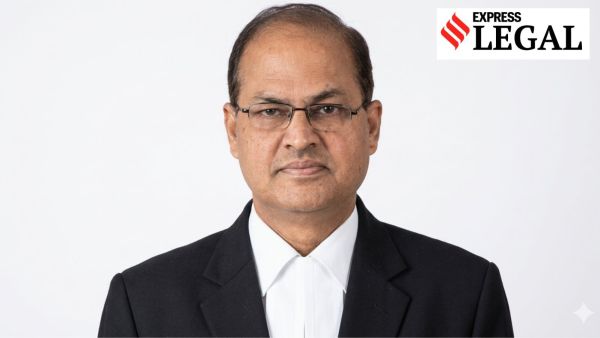 Justice Milind Ramesh Phadke observed that the petitioners were not admitted clandestinely or in violation of any order.
The petitioners are residents of Madhya Pradesh who completed their BHMS from Vasundhara Raje Homoeopathic Medical College and Hospital, Gwalior. The college was established in 1996 and had recognition to conduct the BHMS course, but its permission to admit students for the 2017-18 academic session became disputed due to alleged deficiencies under the applicable regulatory norms.
In September 2017, the Ministry of AYUSH denied the college permission to admit students for the 2017-18 session. However, the high court, through an interim order dated October 23, 2017, allowed admissions pending the outcome of litigation concerning the college’s regulatory status.
The petitioners were subsequently admitted to the college through the state AYUSH counselling process and were enrolled by the Madhya Pradesh Medical Science University, Jabalpur. The students completed their BHMS course, passed the examinations conducted by the university and, in 2023, were granted provisional registration by the State Council of Homoeopathy. They then completed the compulsory internship and were awarded their final BHMS degrees by the university.
After completing all these requirements, the petitioners applied for permanent registration with the state council in July 2025. However, the council neither granted registration nor passed an order rejecting their applications. The dispute arose because the authorities questioned the recognition of their 2017-18 admissions and said their names were not reflected in the relevant approved list/QR-coded list.
The petitioners then moved the high court. Arguing for the students, Senior Advocate Harish Kumar Dixit submitted that they should not be made to suffer for a regulatory dispute between the college and the authorities, particularly after they had been admitted through government counselling, examined by the university, provisionally registered by the State Council, allowed to complete their internship, and awarded BHMS degrees.
The court observed that the petitioners were not admitted clandestinely or in violation of any order. Their admissions were made through the state AYUSH counselling process pursuant to the high court’s interim order dated October 23, 2017.
“The petitioners have already crossed the stage of admission; they have completed the course and internship and have been awarded degrees. At this stage, their claim is not for permission to commence or continue an unauthorised course but for consideration of their applications for permanent registration on the basis of the qualification which they have acquired,” the order noted.
It held that the dispute over the college’s permission and recognition for the 2017-18 academic session was essentially a regulatory dispute between the institution and the authorities. The students had no control over the college’s inspection, recognition, or regulatory compliance.
The court said that the applications shall not be kept pending just on account of the dispute relating to the recognition of the college for the academic session 2017-18, particularly when the petitioners have completed the course, passed the examination, completed the compulsory internship, and have already been granted provisional registration.