5 min readNew DelhiUpdated: Sep 10, 2026 12:12 PM IST
SBI news: After the State Bank of India (SBI) admitted to losing the original title documents of two properties deposited with it as security for a loan, the Bombay High Court recently directed the bank to pay compensation of Rs 5,000 per day to a partnership firm from December 1, 2023, until the bank provides certified copies and reconstructed title records.
The loan was fully repaid in 2003 by the firm, In Vogue Creations, but the documents were never returned and remained untraceable. Rejecting the bank’s argument that the firm had delayed seeking the documents, Chief Justice Ravindra V Ghuge and Justice Gautam A Ankhad held on September 2 that the bank had a duty to preserve and return the valuable originals after repayment.

The court said the Rs 1 lakh already deposited by SBI in the firm’s account following proceedings under the banking ombudsman (Reserve Bank of India) will be adjusted against the total compensation payable.
“The respondent-bank (SBI) shall pay to the petitioner (firm) compensation calculated at the rate of Rs 5,000 per day from December 1, 2023, subject to adjustment of the sum of Rs 1 lakh already deposited/paid pursuant to the order of the Banking Ombudsman (RBI),” the order read.
Took loan in 1979, paid in 2003
The firm claimed that it deposited the property papers with SBI as security for the loan facilities extended to it. The firm took the loan from SBI in 1979 and repaid it in full on August 28, 2003. It also placed on record the no-dues/no-claims certificate issued by the bank on July 27, 2023, to prove the same. The bank allegedly also confirmed that it does not have any claim or mortgage over the properties, but the original property documents were not returned to the firm.
Chief Justice Ravindra V Ghuge and Justice Gautam A Ankhad said the bank had no right to retain the original title documents after the loan was repaid.
The bank admitted that it was unable to trace the original property papers of the firm in letters dated December 5 and 7, 2023. The firm later approached the RBI, which advised SBI to pay compensation of Rs 1 lakh to the firm.
However, the firm declined to accept the said amount. SBI nevertheless deposited the amount in the firm’s account on November 22, 2024. Aggrieved, the firm moved the high court seeking compensation from SBI.
Story continues below this ad
‘Firm can’t suffer due to bank’s failure’
One of the counsels representing the firm, advocate A M Saraogi, argued that the loss of the original title documents has caused and continues to cause, serious prejudice to the firm, since it is unable to sell or otherwise effectively deal with the two properties. He argued that the firm cannot be made to suffer the consequences of the bank’s failure to preserve and return original documents entrusted with it.
On the contrary, SBI’s counsel, advocate Bidan Chandran submitted that the present plea is not maintainable since the firm had already approached the banking ombudsman (RBI) and the complaint had been disposed of by directing payment of compensation of Rs 1 lakh which was already paid.
Chandran admitted that the bank was unable to trace the original title documents relating to both properties. He argued that the firm did not request for return of the original documents after repaying the loan and the request for return of documents was made after a gap of more than 15 years.
Bank’s duty to preserve documents: HC
The court clarified that the bank had no subsisting right or justification to retain the original title documents after the repayment of the loan. It pointed out that the RBI has expressly recognised that release of original title documents after repayment of a loan is an important aspect of responsible lending and prescribed a compensation of Rs 5,000 per day where the delay is attributable to the bank.
Story continues below this ad
“The prescription of Rs 5,000/- per day is not an arbitrary figure. It provides an objective and rational measure of the prejudice that RBI considered appropriate where a regulated entity fails in its obligation concerning original property documents,” the bench added.
It was noted that the bank has admitted, in various documents placed on record, that the original title documents are no longer traceable. “The loss of the documents while in the custody of the Bank therefore stands established,” it added.
The firm may not have immediately approached SBI after repayment of the loan seeking return of the original documents, but that could not absolve the bank of its obligation to preserve the title documents, the court said.
“The burden of maintaining a proper system for preservation, identification, retrieval and return of documents is solely on the respondent (SBI). It cannot be shifted to the borrower merely because the borrower did not immediately seek their return,” the court pointed out.
Story continues below this ad
The court directed the bank to take all steps in obtaining duplicate or certified copies of the documents which have been lost and in completing the reconstructed title record of the firm’s properties.


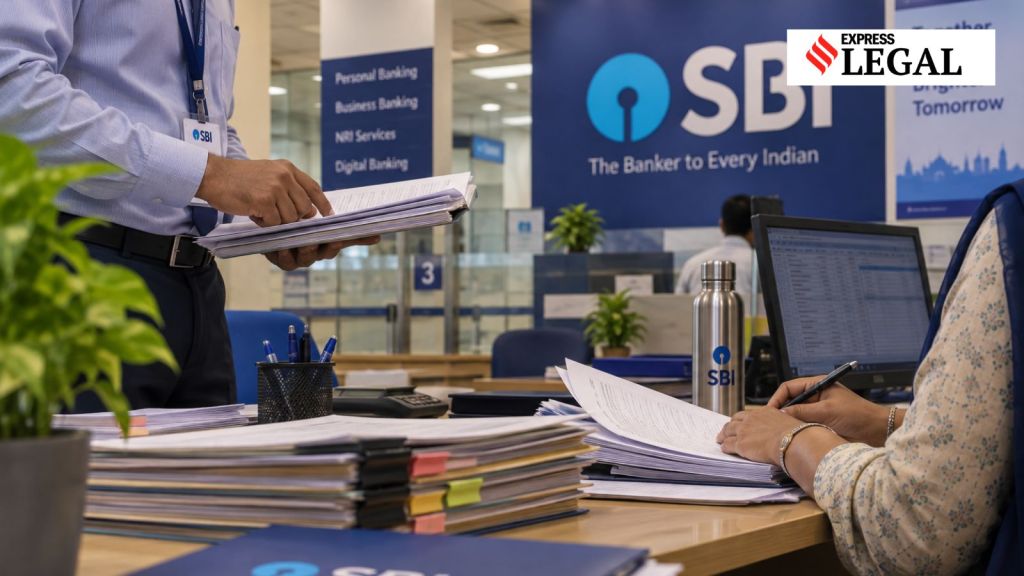


 Chief Justice Ravindra V Ghuge and Justice Gautam A Ankhad said the bank had no right to retain the original title documents after the loan was repaid.
