


Journalism of Courage
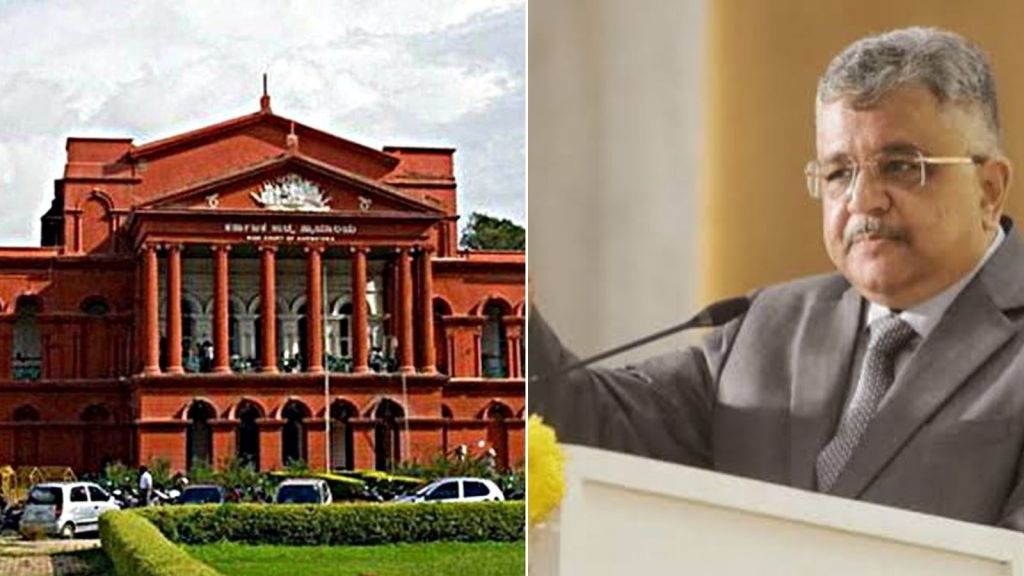 Solicitor General Tushar Mehta told the Karnataka High Court, “The legislative policy of our country in different enactments has used the term spouse, and it has always recognised a marital relationship between a heterosexual couple.
The Central Government on Saturday told the Karnataka High Court that if the court were to read down or include same sex couples into the term ‘spouse’ as defined in the Income Tax Act, then the direct result would be that it would make a large number of statutory provisions in other laws unworkable.
Solicitor General Tushar Mehta said, “If the prayer for reading words into the proviso as is prayed by petitioners is accepted in a statute like the Income Tax Act, where strict or literal interpretation of the provisions is the rule, then in that case, the direct result would be that it would make a large number of statutory provisions in other statutes unworkable.”
Mehta cited provisions in around 159 enactments and said, “The legislative policy of our country in different enactments has used the term spouse, and it has always recognised a marital relationship between a heterosexual couple and reading into it otherwise, would disrupt these provisions.”
Mehta made his submissions while opposing a petition filed by a same-sex couple seeking to declare the term ‘spouse’ as defined in the Income Tax Act as unconstitutional.
The Karnataka High Court had sought a response from the Central Government on a writ petition filed by Anurag Kalia and Akhilesh Godi, both IIT alumni, who have challenged the Constitutional validity of the “fifth proviso” to Section 56(2)(x) of the Income Tax Act, 1961. The provision exempts gifts between “spouses” from tax, but a plain reading, or the literal meaning of the term in legal parlance, excludes same-sex couples.
The challenge is to Section 56(2)(x) of the Income Tax Act, which mandates that any money or property worth more than Rs 50,000 received without consideration is taxable as “income from other sources”. The proviso carves out gifts received from a ‘relative’ — a term defined to include the “spouse of the individual”.
Mehta argued that the Explanation to Section 56(2)(vii), which defines the “relatives” exempted under the proviso, also shows that the Explanation does not support a gender neutral interpretation.
He said, “The term, ‘relatives’, under the explanation are those who share a legally recognised relationship with the individual claiming the tax exemption. The word “spouse” has to be considered in the same context, ie a legally sanctioned marital relationship.”
Further, he said, “Same sex marriage is not recognised in India, and if the court recognises them for tax exemption purpose as spouses, then we would indirectly recognise their marriage.”
Mehta also said that a same sex couple is not prohibited from cohabiting together, but if any rights are to be conferred on them, it has to be by the legislature and not courts.
The legislative framework develops based on societal norms and our cultural ethos.
Mehta contended that India’s legislative policy has been consistent before and after Independence that marriage is a valid ground for classification and marriage is conceived to be between a man and a woman.
He said, “Marriage forms the basis of a stable family unit and, through it, the society as a whole, and no other form of social relationship has such a central role in the perpetuation of social life. Therefore, no other form of social relationship can be legally provided the same entitlements as marriage.”
Mehta also contended that classifications based on marriage which exclude other social relationships, including same sex couples, from the rights, duties and obligations conferred on married couples are not unreasonable under Article 14.
The Centre submitted that judicially mandating legal recognition for same sex relationships is not permissible.
The Center referred to the Supreme Court judgment in the case of Supriyo v. Union of India, [2023], wherein a majority view held that no judicial directions could be issued to provide any rights or entitlements to same-sex unions.
Stating that the petition was not maintainable and should be dismissed, the government said, “The issues sought to be raised by petitioners have already been settled by the Supreme Court and the state cannot be mandated to grant recognition to same sex unions, either directly or indirectly.”
Since, in the case of cohabiting same-sex partners, the condition of legal recognition of the relationship is not satisfied, they cannot avail the benefit of the exemption proviso under the Income Tax Act, and there is no violation of Article 15 of the Constitution.
Justice B M Shyam Prasad has now posted the matter for further hearing on October 9.


