
“The right to access water and the right to property are not rights that operate in isolation or in conflict with one another. The State is undoubtedly under an obligation to ensure access to and supply of water, which constitutes an essential public necessity and implicates the right to life and human dignity…,” the court said on September 29.
“The right to provide water and the right to property must consequently be balanced in a manner which advances the public purpose while ensuring that the individual owner is not deprived of the substance of his proprietary rights without due authority of law and just compensation in accordance with the applicable statutory framework,” it added.
Justice Wasim Sadiq Nargal noted that the petitioners acquired the property in 2012 and the pipelines continued to remain there and be used for water supply.
The dispute concerned water infrastructure which the authorities said had been laid decades before the petitioners purchased the land in 2012. While the department relied on the age of the pipelines to oppose the compensation claim, the court held that their continued use of the property meant the owners’ claim could not be rejected merely because the infrastructure predated their purchase.
Water pipelines on private land
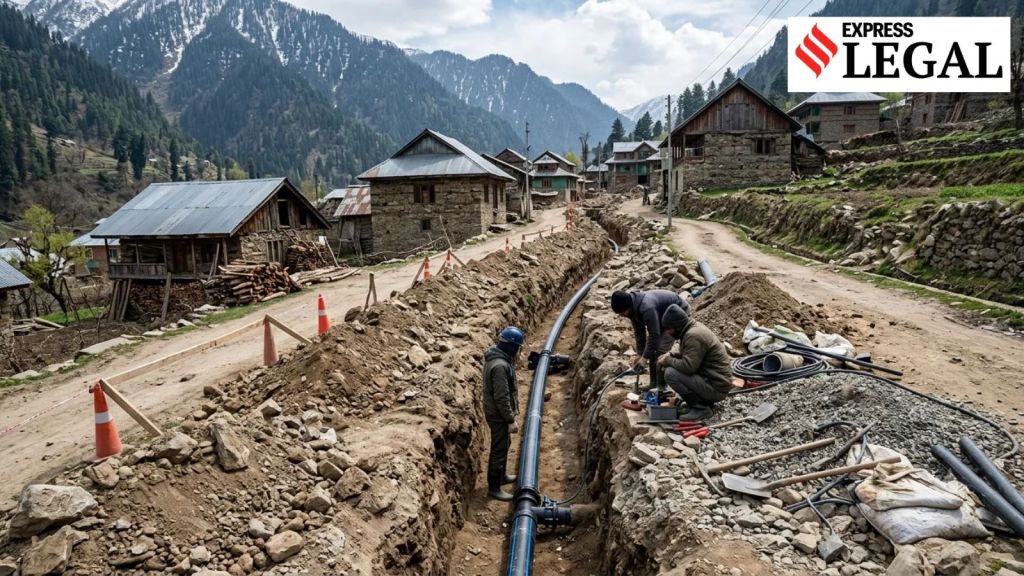
According to the petition, the public health engineering department had laid water pipes of different dimensions through the petitioners’ land to provide water to villagers in Pattan tehsil. Some were underground and others above ground, while concrete structures had also been built to control the water supply. The petitioners claimed the arrangement affected their ability to use the land.
They submitted a representation on December 26, 2013, seeking action. They later issued a demand notice on February 23, 2018, seeking removal of the pipelines, compensation or rent for use of the property and, alternatively, acquisition or requisition proceedings.
Story continues below this ad
The respondents disputed the claim, saying the pipelines had been laid decades earlier when the land was vacant. They pointed out that the petitioners bought the property only in 2012 and contended that they should have known about the pipelines when they purchased it.
The department also argued that the applicable water law did not provide compensation merely because a pipeline passed through private land. A departmental report recorded one 150 mm pipe, two 100 mm pipes and two sluice chambers through the subject land.
Court says pipeline power comes with safeguards
The high court examined the Jammu and Kashmir Water Resources (Regulation & Management) Act, 2010, which permits the government to lay or carry water pipes through, across, under or over private or public premises for arranging or maintaining water supply.
The court noted that the power is subject to safeguards. The law provides for compensation where an owner or occupier suffers damage from such operations. It also requires at least 15 days’ written notice before operations begin and says pipelines should be laid sufficiently underground to safeguard the owner’s or occupier’s use of the land.
Story continues below this ad
The judge held that the respondents’ contention that the petitioners could not claim compensation merely because the pipelines had been laid before their purchase was not legally tenable. It noted that the petitioners acquired the property in 2012 and the pipelines continued to remain there and be used for water supply.
“The use of the land, therefore, is continuing and cannot, by any stretch of imagination be characterised as a one-time use,” the court said, describing the continued occupation as a continuing interference with the petitioners’ proprietary rights.
Authorities told to assess compensation
The court did not itself determine how much compensation the petitioners should receive. It directed the Chief Engineer, Public Health Engineering Department, Kashmir, to constitute a committee within two weeks of receiving the judgment.
The committee must conduct a spot inspection, examine the relevant revenue and departmental records, determine the extent of land being used by the pipelines and structures and assess any damage caused to the property. The petitioners or their authorised representative must also be given an opportunity of hearing.
Story continues below this ad
If the authorities continue using the land for maintaining the water supply infrastructure, the competent authority must also examine the petitioners’ claim for reasonable rent or use and occupation charges for the portion actually being used. The high court directed that this claim be considered from the date the petitioners purchased the property in 2012, subject to determination according to law.
If the authorities intend to permanently retain the land for the public purpose, they must also examine whether acquisition proceedings are required under applicable law. The entire exercise has to be completed within six weeks of constitution of the committee.
The court further directed that if the amount determined is not paid within the specified period, it will carry interest at 6 per cent per annum, subject to final determination of the petitioners’ entitlement. It made clear, however, that it had not itself decided the precise compensation, extent of damage, area under occupation or amount of rent payable.




 Justice Wasim Sadiq Nargal noted that the petitioners acquired the property in 2012 and the pipelines continued to remain there and be used for water supply.
