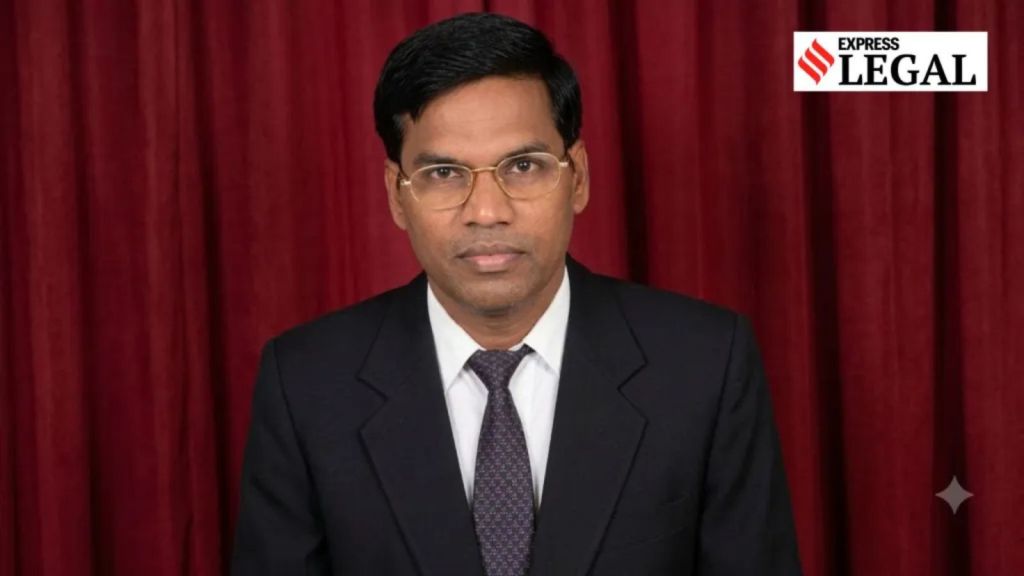
The UP judge’s statement, penned in Hindi, came in a dowry death case ruling, where he sentenced the man to the death penalty on September 7.
“If I become fearful of other forces… it would be appropriate for me to resign from this sacred judicial institution,” Judge Diwakar wrote. “I would rather die, but would not like to be called a coward judge. As long as I can follow my principles, I will continue in service… As long as I am on the judge’s chair, the authority to take decisions/judgments will be mine alone.”
He added that his parents taught him from the very beginning to always fear God and no other person, and if he fears anyone such as strongmen, mafias or criminals, except the divine power, it would be completely inconsistent with the expectation of the common people who come to the courts believing that judges will be impartial, fearless and courageous and will perform their judicial duties without fear.
Cases recalled
97 murder cases pending before the UP judge, who had handed down 22 death sentences in 10 cases in the last four months, were recently transferred, an administrative order passed by the Muzaffarnagar District and Sessions Judge on August 18 has revealed.
The district judge’s direction, a copy of which is with The Indian Express, details the case titles of the 97 matters “recalled” from the court of Additional District and Sessions Judge (FTC 3) Ravikumar Diwakar.
The Indian Express had on August 17 reported that Between April 6 and July 17 – barely 100 days – the UP judge presiding over Fast Track Court No. 3 in Muzaffarnagar, sentenced 17 people to death across seven separate murder trials, out of 22 accused.
Story continues below this ad
Under Sections 407 to 412 of the Bharatiya Nagarik Suraksha Sanhita, no death sentence passed by a Sessions Court can be carried out until the High Court confirms it. So, all death sentences awarded by the Muzaffarnagar trial court will go to the Allahabad High Court for confirmation, alongside any appeals the convicts file independently.
Diwakar joined the Uttar Pradesh judicial service as a civil judge in 2009 and has worked in several districts over the years, including Sultanpur, Budaun, Varanasi and Bareilly. He has been posted in Muzaffarnagar since November 2025.
He became a familiar name beyond the courtroom in 2022, when, while serving as a civil judge in Varanasi, he ordered a videographic survey of the Gyanvapi mosque complex. Diwakar later said he received threatening calls and messages, including from international numbers, after the order.
Judge speaks of case files being removed
The UP judge discussed what he described as the removal of case files from his court. “At present, I am deeply hurt and saddened by some conduct,” he wrote, adding that he could not stop himself from expressing his personal views on what had happened. He alleged that the reason behind the conduct was “to protect mafias, gangsters and criminals”. He said he knew the complete reason but would not disclose it, citing the dignity of his office.
Story continues below this ad
Recounting what he said was a message conveyed to him by a mafia or gangster from western Uttar Pradesh, he said that he was warned that if the people concerned were pursued or any comments were made, their influence would allegedly be used to have his court changed or get him transferred outside the district.
He said, “For now, only the case files have been removed. If we are pursued or any comments are made, we will use our influence to get the court changed or have you transferred outside the district, because we have contacts at higher levels.”
On transfer of serious cases
The judge also raised questions over the transfer of serious cases from one court to another. He directed that where such cases are transferred without any reason and with the intention of benefiting accused persons, criminals, strongmen or mafias, the district government counsel (Criminal) should be given an opportunity to present the State’s case.
“The purpose of the criminal justice system is not only to protect the rights of the accused, but also to provide justice to the victim,” he wrote. The judge then questioned whether, without hearing the Uttar Pradesh government, the accused or murderers in the case relating to singer Ankit Baliyan’s killing should have the right to choose the court.
Story continues below this ad
He also questioned whether Baliyan’s parents, wife and family, as the victim’s side, and the State government as the complainant should not be heard, and whether the victim had no interest or right in the criminal justice system.
Why court awarded death penalty
According to the court’s findings, the man deliberately poured kerosene on his wife and set her on fire, causing her to suffer 98 per cent burns. Taking note of the the physical pain caused by fire and the fear it generates, the judge said that the woman did not have sufficient opportunity to save herself or obtain immediate help. Her helplessness and vulnerability were treated as aggravating circumstances.
Describing the act as “extremely brutal and barbaric”, the court held that the case fell within the “rarest of rare” category warranting capital punishment. The court also referred to the physical pain, fear, helplessness and mental trauma suffered by the woman, and said the killing represented a breach of the trust inherent in the marital relationship.
In making this point, the judge referred to well-known stories of love such as Laila-Majnu and Shiri-Farhad, observing that they illustrated that love does not involve taking another person’s life. He connected this to marriage, saying the relationship between husband and wife is based on love and affection and that the killing in the present case raised a question about that relationship.
Story continues below this ad
The court also considered the principle that life imprisonment is the rule and the death penalty an exception. Weighing the manner and circumstances of the killing, it concluded that the case met the threshold for capital punishment and that sympathy for the offender was not warranted.
The court sentenced the man to death for murder and imposed a fine of Rs 1 lakh. It also awarded him two years’ imprisonment for another offence, with the sentences to run concurrently.