Observing that for children who grow up in institutional care, turning 18 can bring an abrupt transition into adulthood without a stable home, identity documents, employment or a dependable support system, the Rajasthan High Court has directed the Central and state governments to create a structured support system for such young people, including a policy providing 1 per cent horizontal reservation in government education and employment.

“This Court feels pain to observe that thousands of youth, individuals who, after growing up in CCIs, are thrust into the outside world upon turning 18,” the court said on September 3. It observed that such young people often leave care without a stable identity, permanent address, shelter or a support system and said they need assistance in education, housing, employment and emotional well-being to make the transition into adulthood.
The Central and state governments have been directed to frame and notify within 12 weeks a comprehensive policy providing 1 per cent horizontal reservation for care leavers in admissions to government and government-aided educational institutions, as well as in government services, public employment and outsourced contractual engagements.
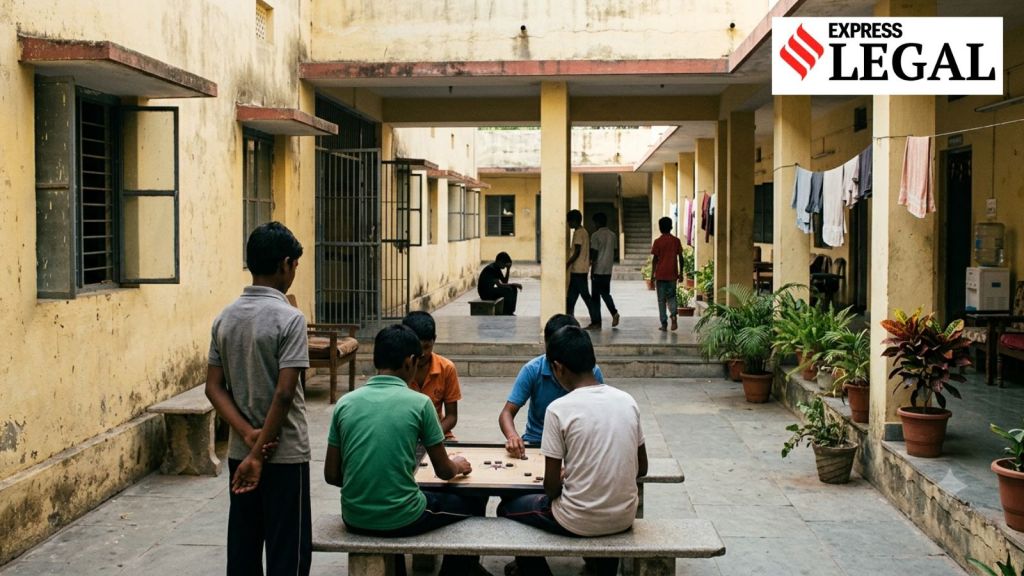
Justice Anoop Kumar Dhand directed the state to strengthen preliminary assessments of juveniles and create structured aftercare support for young people leaving Child Care Institutions. (Image enhanced using AI)
Only home children know
The court noted that children who are orphaned, separated from their families, lost, rescued, born in prisons or otherwise taken into government care may spend their childhood in child care institutions, orphanages and other care facilities until they turn 18.
But reaching adulthood can bring an abrupt and unsupported transition. The court noted that some care leavers (the youth leaving child care institutions) may lack essential identity documents such as Aadhaar, PAN, voter ID and domicile certificates, creating difficulties in accessing education, employment, banking and other services.
The court also stressed that not every child living in institutional care is an orphan. Some may come from dysfunctional families, single-parent households or families unable to provide adequate financial support. It noted the need for continued support in education, housing, employment and emotional well-being after young people leave institutional care. The court further noted the absence of a formal system to track care leavers after they leave institutional care and said existing programmes and rehabilitation efforts were fragmented.
Story continues below this ad
Mechanical juvenile assessments
The order also contains strong observations on preliminary assessments required when a child aged between 16 and 18 is alleged to have committed a heinous offence. The court said the assessment is intended to examine the child’s physical and mental capacity, ability to understand the consequences of the alleged conduct and the circumstances surrounding it. It stressed that the exercise is not meant to determine whether the child committed the alleged offence, but to assess the child’s mental maturity.
The court observed that such assessments were not always being conducted in their true spirit and referred to reports prepared mechanically, without adequate psychological testing or proper interaction with the child, parents or teachers.
Rajasthan was directed to constitute district-level panels of clinical psychologists, psychiatrists and child psychology experts trained in accordance with NIMHANS guidelines. No preliminary assessment report is to be accepted by a Juvenile Justice Board unless it follows the prescribed NIMHANS format. Each assessment must include at least three sittings with the child, interviews with parents or guardians and a school teacher, besides standardised psychological tools to assess mental age and maturity.
1 per cent reservation policy within 12 weeks
For care leavers without family support, the court directed the Social Justice and Empowerment Department to prepare a comprehensive aftercare and rehabilitation policy covering accommodation, continuation of education, vocational training, counselling and financial assistance for one year after they turn 18.
Story continues below this ad
The court directed the establishment of care leavers secretariats at the Central and state levels to function as nodal agencies and single-window grievance mechanisms. A digital database is to be created to track care leavers. The court directed that the process of obtaining identity documents should begin when a child reaches 17.5 years so the documents are available before leaving care. No care leaver should leave without an aftercare identity card.
The directions also provide for free education up to graduation in government institutions, hostel facilities and a ‘Care Leaver Education and Scholarship Fund’. The court directed monthly scholarships of at least Rs 4,000 for higher studies and Rs 6,000 for professional courses.
Until that policy is framed, the state has been directed to provide five years’ age relaxation and exemption from application and examination fees in government selection processes. The court also directed the constitution of a State Juvenile Justice Council and divisional-level Juvenile Justice Commissions to oversee implementation, rehabilitation and grievances.




 Justice Anoop Kumar Dhand directed the state to strengthen preliminary assessments of juveniles and create structured aftercare support for young people leaving Child Care Institutions. (Image enhanced using AI)
