


 A four-decade liquor licence fight ends with Bombay HC awarding Rs 2.5 lakh costs to a 91-year-old man. (AI-generated image)
The Bombay High Court has granted Rs 2.5 lakh in costs to a 91-year-old man and said he had knocked “the doors of this Court thrice” and each time, after going through three rounds before the Collector, the Commissioner and the Minister, that resulted in the “past quarter century of his life being mired in litigation”. The dispute over a liquor licence was said to have “travelled through three rounds of litigation before this court across nearly four decades”.
The issue arose after an FL-II liquor licence (vendor licence issued by state excise departments) initially granted to one Balkrishna Wadkar in 1973 was converted into a 90:10 partnership with Suryakant Khaladkar and his father in 1979. Wadkar’s death in 1985 triggered decades of litigation between Khaladkar and his widow, Shobha. In 2002, the High Court ruled that the partnership and licence had legally expired with Wadkar’s death and required a fresh application from Shobha and Khaladkar. However, in 2016 the High Court noted that the previous directions were not complied with.
The judgment remained unchallenged and was embraced by all parties, including the State. Both Khaladkar and Shobha filed fresh applications before the Collector later. Despite these directions, in 2017 the Collector retransferred the licence to Shobha, only for the excise commissioner in 2022 to divide the rights according to their original 90:10 ratio. Shobha challenged the order before the Minister for Excise, who restored the Collector’s order on October 26, 2023. Khaladkar challenged it by way of the present petition.
On September 10, Justice Somasekhar Sundaresan noted that it was not compensation but an acknowledgement that despite the 2002 judgement being explicit in its terms, the State had put the man through “multiple rounds to assert his acknowledged rights, only to be ambushed by the policy not to ever have meant to grant him a licence”.
The plea challenged an October 2023 order by the Minister-in-charge of State Excise reinstating a Collector’s order in favour of the legal heirs of the original licence holder, setting aside a 2022 Excise Commissioner order that had equitably recognised the surviving partner’s 90 per cent and the legal heirs’ 10 per cent complementary shares.
“Khaladkar deserves to be granted costs for having to knock the doors of this Court thrice and each time after going through three rounds before the Collector, the Commissioner and the Minister, resulting in the past quarter century of his life being mired in litigation, with the State having not even presented to two Writ Courts that it had no intention of issuing a fresh licence,” the court said.
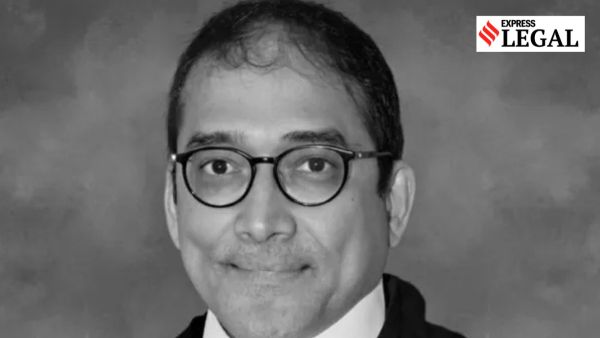 Justice Somasekhar Sundaresan felt that Khaladkar deserved the costs for having knocked the court doors thrice.
Advocates Vinayak Salokhe and Megha Jani, appearing for Khaladkar, submitted that his 1979 partnership was validly recognised, with the Khaladkars under Rule 25, and that the original licence had expired with the partnership.
Advocate S P Telgote, counsel for Shobha’s heirs, contended that the licence in Shobha’s favour was a re-grant or revalidation, not a transfer. They argued that the original licensee’s legal heir had a superior claim and relied on later state policies and judgments supporting such succession.
The judgment highlighted that the State was unable to find any basis to confer the benefits of the expired licence on Shobha other than finding that the interests of the original grantee had primacy over the interests of the inducted partner.
“Now, this is precisely what it had done in the first instance, which led to the challenge being allowed by way of the 2002 judgment. The permissible mandate from the writ court was clear – examine a fresh application from each of Shobha and Khaladkar, applying Rule 25 of the Foreign Liquor Rules. That mandate is all the State was permitted to apply,” the court noted.
According to the court, the State could have rejected both applications upon a finding that no new licence could at all be issued, and if it felt that an exception for Shobha was to be carved out, being Wadkar’s heir, that position would be in violation of judgments passed in 2002 and 2016.
“The mere labelling of the same action as a ‘re-grant’ or ‘reissue’ of licence to one party over another, without regard to Rule 25 and in fact with regard to the policy on rights of heirs as against rights of partners, is nothing but old wine in new bottle and is completely untenable,” it added.
The ruling continued, “The State can still redeem itself having acted in violation of two iterations of writs issued by this Court, and considering that it would always be open to a policymaker to mould its policy in the peculiar situation that it finds itself in, it is for the State to consider moulding the policy restrictions by issuing a licence to both in the 10:90 ratio.”