


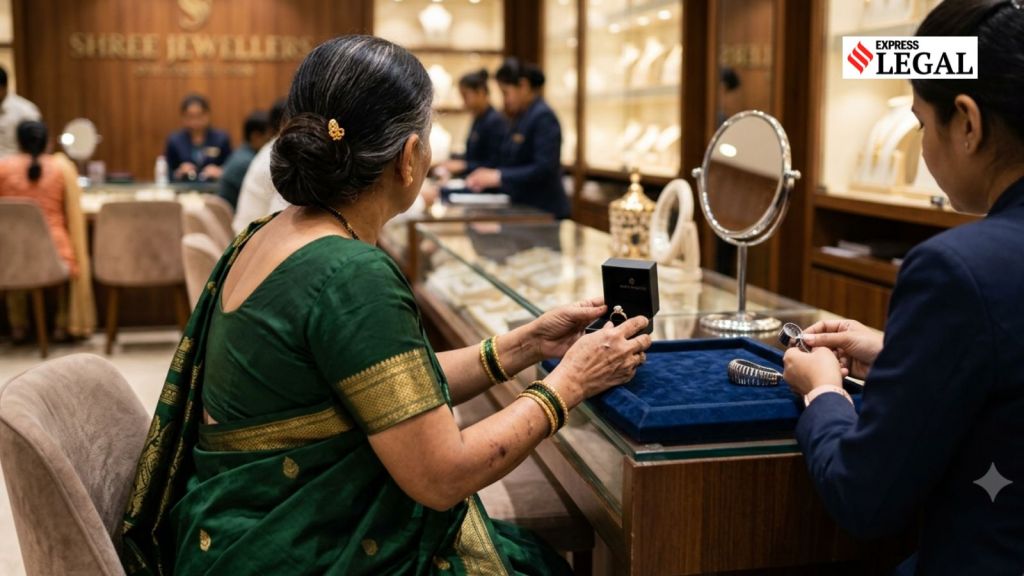
 The commission found that the complainant had paid the full amount for the diamond ring. (AI-generated Image)
The Ropar District Consumer Commission has directed a jewellery showroom to exchange a defective diamond ring sold under a monthly kitty scheme to a 51-year-old woman. The commission held that the company could not refuse exchange or demand fresh charges when the defect was not attributable to the consumer.
Dealing with a woman’s plea, a bench of president Kuljit Pal Singh and Ranvir Kaur also directed the jewellery showroom to pay Rs 10,000 lump sum as compensation and litigation expenses to the complainant.
“As the item/product was defective, but the opposite party refused an exchange, paying no heed to the requests of the complainant, and since full payment was made, they/Ops can not deny an exchange or impose new charges like stone cost again, especially when the defect is not the fault of the complainant,” the commission said on September 2.
The order noted that if the terms about no exchange were not mentioned anywhere in the bill or scheme documents, their refusal is not legally valid.
The woman purchased a diamond ring from a jewellery brand through its monthly kitty/recurring deposit scheme, under which she paid Rs 2,000 per month for 22 months, totalling Rs 44,000. After adjustment of the kitty payments, she paid an additional Rs 4,890 towards the ring on September 25, 2025.
A few days after receiving the ring, the complainant noticed that some diamonds were missing and that the ring was not of the desired size. On approaching the showroom, the sales executive allegedly acknowledged the manufacturing defect. However, the company cited a robbery at the showroom and assured her that the issue would be resolved after normal operations resumed.
The complainant said she repeatedly visited the showroom, but neither received a replacement nor a refund. She subsequently sent a legal notice seeking a refund or exchange of the defective ring. After receiving no relief, she approached the consumer commission. The company and its sales executive did not appear before the commission and were proceeded against ex parte.
The commission found that the complainant had paid the full amount for the diamond ring, but the opposite parties delivered a defective product despite receiving the payment.
The commission noted that the complainant had repeatedly approached the opposite parties for resolution, but they neither rectified the defect nor refunded the amount. The documentary evidence, including bills and payment receipts, supported her claim.
The commission observed that since the ring was defective and the defect was not attributable to the complainant, the opposite parties could not refuse an exchange or demand additional charges for the stone.
It further held that if the alleged “no exchange” condition was not mentioned in the bill or scheme documents, the opposite parties’ refusal to exchange the ring could not be considered legally valid.
As the opposite parties did not contest the complaint and were proceeded against ex parte, the complainant’s allegations remained unrebutted. The commission also found that the documentary evidence was sufficient to establish deficiency in service.
The judgment underscores that sellers cannot deny exchange of a defective product or impose fresh charges when the defect is not attributable to consumers. It also highlights the importance of documentary evidence, including bills and payment receipts, in establishing deficiency in service.
Consumers facing similar grievances may contact the consumer helpline in their respective states (Punjab helpline: 1800-425-1082) or dial the National Consumer Helpline at 1915 for assistance.