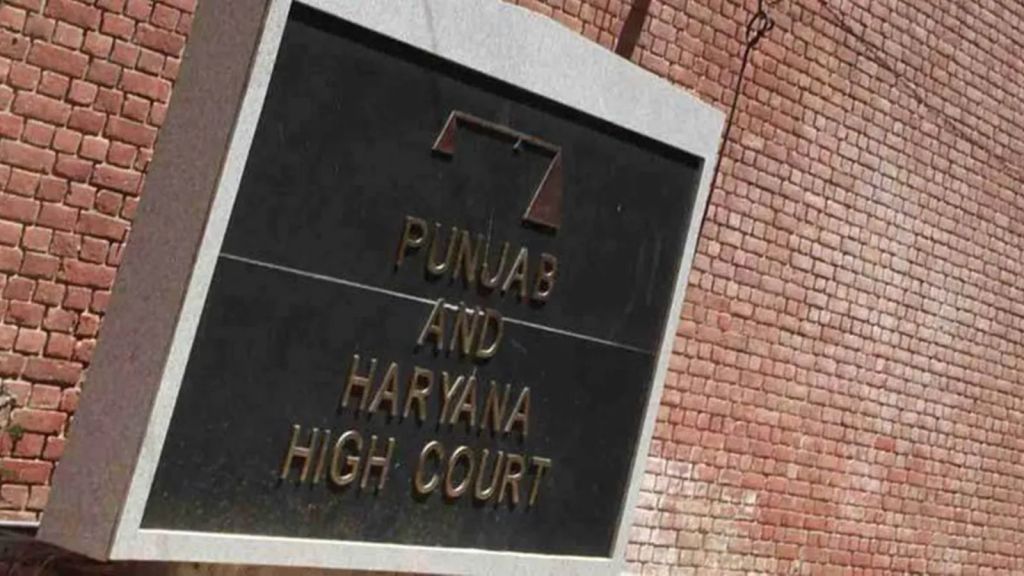
Why Punjab and Haryana High Court reversed PRTC workers’ regularisation

Court held that a 'master-servant relationship' must be established through documentary evidence such as an appointment letter or order.

PRTC outsourced workers regularisationThe ruling is likely to affect nearly 2,000 workers employees who had been working with PRTC through M/s S.S. Service Providers. (File photo)

The Punjab and Haryana High Court has reversed its own order regularising employees engaged through a private outsourcing agency by the Pepsu Road Transport Corporation (PRTC), holding that a “master-servant relationship” must be established through documentary evidence such as an appointment letter or order. Merely working for an organisation, even under its supervision, does not make outsourced workers its employees, the court said.

The observations form part of an order passed earlier this month by a division bench of Justices Harsimran Singh Sethi and Minderjeet Yadav, which allowed four appeals filed by PRTC against an April 22 order of a single bench. The single bench had directed PRTC to regularise the services of employees working through an outsourcing agency and extend other benefits, including the old pension scheme wherever applicable.

The ruling is likely to affect nearly 2,000 workers employees who had been working with PRTC through M/s S.S. Service Providers. The posts, including those of drivers and conductors, were advertised by the private agency, which also issued their appointment orders.

PRTC argued in the high court that there was no master-servant relationship between the corporation and the workers. Punjab Advocate General MS Bedi and PRTC standing counsel Abhilaksh Gaind submitted that not a single document showed that the Corporation had appointed the workers or conferred any employment status on them.

Appearing for the workers, Senior Advocate Rajiv Pratap Atma Ram argued that their continuous service, the nature of their duties, applicable service rules and the Punjab Ad hoc, Contractual, Daily Wage, Temporary, Work Charged and Outsourced Employees Welfare Act, 2016, justified regularisation. They also relied on Rule 8 of the PRTC Employees (Conditions of Appointment and Service) Regulations, 1981, arguing that the rules contemplated engagement through an outsourcing agency and that the single bench had correctly determined the actual employer-employee relationship.

The division bench disagreed, holding that the master-servant relationship could not be inferred merely from the nature of duties or supervisory control and had to be established through documentary evidence.

Referring to the Supreme Court’s March 2025 judgment in The Joint Secretary, Central Board of Secondary Education and another versus Raj Kumar Mishra and another, the Bench observed: “For a person to claim employment under any organization, a direct master-servant relationship has to be established on paper.”

Story continues below this ad

In the present case, it noted, PRTC had never issued an appointment order to the workers or conferred on them any status, whether temporary, ad hoc or officiating.

“Mere working with the PRTC, will not be good enough to treat the respondents as the employee of the PRTC for regularising the services of the such an employee,” the Bench said.

The court also rejected reliance on the 2016 Act. It noted that Section 6 provides for outsourced employees to be taken on contract subject to prescribed conditions, including the state entity being financially capable of bearing the additional burden without transferring the liability to the state exchequer.

There was nothing on record, the Bench said, to show that PRTC had taken the workers on contract or was financially capable of bearing the burden of their regular salaries.

Story continues below this ad

The court also drew a distinction between temporary employees appointed directly by PRTC and outsourced workers supplied by a private agency. “There has to be a clear distinction between a temporary employee appointed by the Corporation and an outsourced employee provided by an outsourcing agency,” it said.

The Bench noted that the workers’ provident fund was managed by the outsourcing agency and their salaries were paid by the contractor. It also found no provision in the agreement under which PRTC could directly initiate disciplinary proceedings against or punish the outsourced workers.

Rejecting the argument that the court should “lift the veil” to determine their actual employer, the Bench said: “Terms and conditions and recruitment made by outsourcing agency cannot be overlooked to declare an outsourced employee as the employee of the PRTC.”

The workers had also cited PRTC’s regularisation of 110 similarly situated employees. The corporation, however, submitted that those workers were contractual employees directly on its rolls and had not been engaged through an outsourcing agency. The Bench accepted the distinction, holding that the two categories could not be equated.

Story continues below this ad

“…the benefit of regularization given to the contractual employees directly working with the PRTC, cannot be equated with an outsourced employee working with the PRTC through an outsourcing agency,” it held.

Setting aside the previous order, the court said the view taken by the single bench was “not supported by the facts and the law” and could not be sustained.

The writ petitions filed by the workers were dismissed and all four appeals filed by PRTC were allowed.

Jagpreet Singh Sandhu is a Senior Correspondent at The Indian Express, based in Chandigarh. He is a veteran reporter with over a decade of experience, specializing in legal, crime, and environmental reporting across the tri-city area (Chandigarh, Mohali, and Panchkula). Professional Background Core Beat: He primarily covers the Punjab and Haryana High Court, District Courts, CBI Courts, and Consumer Commissions. His legal reporting is known for breaking down complex judgments and tracking long-standing criminal cases. Environmental Reporting: Jagpreet has become a key voice in reporting on the deteriorating air quality and weather patterns in the Punjab-Haryana region. Crime & Technology: He frequently reports on cybercrime, digital arrest scams, and the intersection of technology and law enforcement, such as the development of citizen-centric policing apps. Recent Notable Articles (Late 2025) His late 2025 coverage has focused on significant judicial verdicts, major financial scams, and public health concerns: 1. Legal & CBI Court Verdicts "12 years on, CBI court acquits Haryana judge, parents in wife’s death case" (Dec 17, 2025): Detailed coverage of the acquittal of a judicial officer in a high-profile dowry death case from 2013. "‘Wicked & evil mind’: Court gives man 30-year term for kidnapping, sexually assaulting 8-year-old" (Dec 16, 2025): A report on a stern judgment from a Chandigarh district court in a POCSO case. "Man acquitted in rape case after victim found ‘very happy’ in wedding reception" (Dec 9, 2025): Covering a unique legal observation regarding consensual relationships and age verification. 2. Investigative & Scams "CBI registers FIR in Rs 1.14-cr Patient Welfare Grant scam at PGIMER" (Dec 19, 2025): An exposé on how funds meant for poor patients were siphoned off through forged documents and a photocopy shop inside the PGIMER campus. "Month-long torture, Rs 85 lakh transfers: How ‘Innocence Certificate’ led to a ‘digital arrest’ of an elderly couple" (Dec 12, 2025): Detailing a sophisticated cyber fraud targeting senior citizens in Chandigarh. 3. Environment & Public Safety "Panchkula air turns ‘very poor’, fourth worst in country" (Dec 22, 2025): Reporting on the sudden spike in pollution levels in Panchkula compared to neighbouring cities. "Soon, you can snap that overspeeding car, and report to Chandigarh Police" (Dec 16, 2025): Breaking news on a new mobile application being developed to allow citizens to report traffic violations via geo-tagged photos. 4. Gangster Culture & Crime "City Beautiful in the crosshairs of gangsters" (Dec 14, 2025): A feature analysis of how Chandigarh has increasingly become a staging ground for extortion and rivalries between gangster modules. "Shooters wanted for Parry murder held by Delhi Police Special Cell" (Dec 18, 2025): Following the developments in a high-profile murder case in Chandigarh’s Sector 26. Signature Style Jagpreet is recognized for his tenacious follow-up on cold cases and his ability to report on courtroom drama with a focus on victim rights. His work often highlights administrative lapses, whether in the handling of patient welfare funds or the enforcement of environmental standards. ... Read More


Advertisement
Loading Recommendations...
Advertisement
Advertisement
Latest Comment
Post Comment
Read Comments