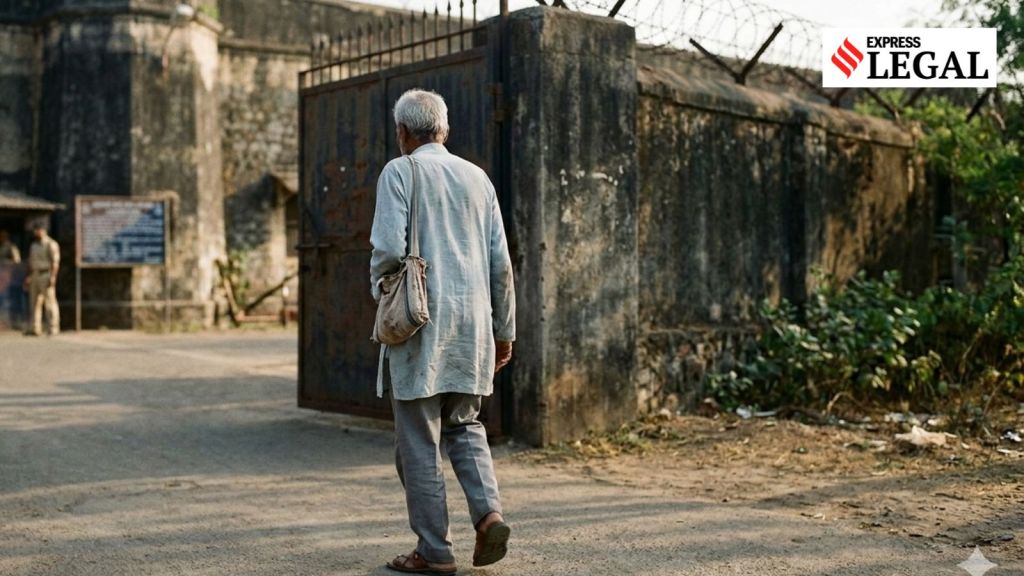
Observing that parole conditions must take a prisoner’s financial circumstances into account, the Rajasthan High Court has allowed a 53-year-old prisoner to avail his already sanctioned parole after he said poverty and lack of income prevented him from arranging two sureties of Rs 50,000 each. The court directed his release for 30 days on furnishing a personal bond of Rs 1 lakh.

“While sanctioning parole, the amount of personal bond to be furnished by the prisoner should be such as is commensurate with his economic background and status and should not be exorbitant, prohibitive or oppressive,” the court said on September 15, relying on its own earlier directions.
The issue before the bench was not whether Munia should be granted parole afresh. His parole had already been sanctioned. The question was whether he could avail it when, according to his petition, he was unable to arrange the required sureties because of poverty and lack of income. The court ultimately directed his release without those sureties.
Parole sanctioned, sureties blocked release
Munia had been granted parole on April 23 with a condition requiring him to furnish two sureties of Rs 50,000 each along with a personal bond of Rs 1 lakh.
Justices Sanjay K Agrawal and Vinit Mathur said that ordinarily an appropriate surety bond could be imposed when the first periodical parole was sanctioned.
Following this, he approached the high court, stating that due to poverty and lack of income, he was unable to furnish the sureties and sought release on a personal bond. Under a personal bond, the person gives a written undertaking to comply with the conditions attached to his release, and is required to pay a specified amount to the court only if they violate the conditions.
Referring to its earlier decision dated January 6 in which it had framed guidelines for competent authorities dealing with parole, the court said those directions were intended to ensure compliance with the law, bring uniformity in decision-making, avoid unnecessary litigation and delay, and mitigate hardship faced by prisoners after parole had been sanctioned.
Story continues below this ad
The earlier directions specifically addressed prisoners who are unable to furnish surety because of their financial circumstances.
The court said that ordinarily an appropriate surety bond could be imposed when the first periodical parole was sanctioned. However, if the parole committee was satisfied after an appropriate inquiry that a prisoner was poor and unable to furnish a surety bond, it could exercise its discretion not to impose the surety condition even at the stage of sanctioning the first periodical parole.
The court also dealt with cases where a surety condition had already been imposed. If a prisoner applied for waiver and the committee was satisfied that he was unable to afford the surety, it could waive the requirement. The guidelines further stated that where a prisoner had previously been released on parole without furnishing surety, the requirement should ordinarily be dispensed with for later periodic parole as well, unless his financial circumstances had changed.
Legal aid mechanism
The high court’s earlier directions also created a mechanism for prisoners who receive a waiver of surety. Once a prisoner is given the benefit of waiver, the member secretary of the Rajasthan State Legal Services Authority must be informed. The state, in coordination with the authority, is then required to take steps for later periodic parole applications through legal aid.
Story continues below this ad
The guidelines were also directed to apply, with necessary changes, to cases involving humanitarian parole under the Rajasthan Prisoners Release on Parole Rules, 2021.
Applying the earlier directions to Munia’s case, the bench ordered that he be released on the sanctioned parole after furnishing only a personal bond of Rs 1 lakh, along with relevant identity documents. The court said that he was entitled to release for 30 days from the date of his release from the concerned jail. The writ petition was then disposed of.




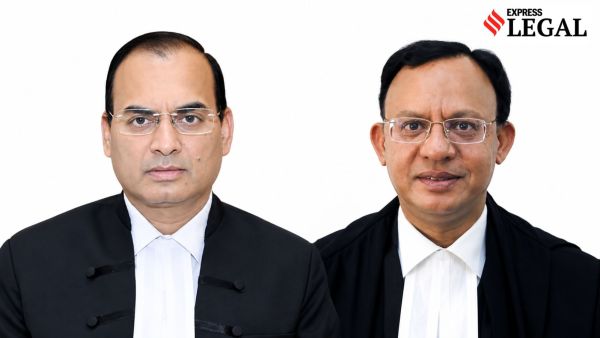 Justices Sanjay K Agrawal and Vinit Mathur said that ordinarily an appropriate surety bond could be imposed when the first periodical parole was sanctioned.
