
“Considering that the maintenance is awarded for the wife, as well as the minor child, the amount of Rs 75,000 per month cannot, in the circumstances, be said to be excessive or disproportionate,” the order read.
‘Wife a tuition teacher’
The man married the woman in April 2019 and their son was born in September 2023. The couple started living separately on June 10, 2025. The wife later filed a case before the family court seeking maintenance from her husband. She claimed that their monthly expenses were around Rs 1.5 lakh and that her husband earned around Rs 32-35 lakh per annum.
The family court, by its May order, directed the husband to pay interim maintenance of Rs 75,000 per month to the wife and son — Rs 37,500 each — from the date of filing the application till disposal of the petition.
Justice Prateek Jalan passed the order on September 1.
Aggrieved, the man approached the high court, arguing that his wife is a qualified teacher who used to work in a school and is currently undertaking private tuitions and earning from it. He also argued that her earning capacity and ability to maintain herself should have been taken into account while deciding the amount of maintenance.
The man, through advocate Ashok Taneja, argued that the family court made a mistake in assessing the husband’s monthly income at Rs 2 lakh. He added that his salary slips for February and June 2026 reflected a net monthly income of Rs 1.68 lakh and Rs 1.76 lakh, respectively.
The counsel claimed that directing the man to pay Rs 75,000, or around 50 per cent of his income, to his wife and son was excessive, particularly as his financial liabilities, including a housing loan, expenses towards his dependent parents and necessary personal expenses, had not been properly considered.
Obligation to parents: HC
The high court emphasised that the provision of maintenance under the law is to prevent “destitution” of the wife and children, and while determining the amount of maintenance to be paid to the wife and son, it is important to “balance” the needs of the wife and minor child with the financial capacity and existing obligations of the husband.
“It is well settled that the object of Section 125 (monthly maintenance) CrPC is to prevent destitution of the wife and children. The provision is intended to secure the basic sustenance and dignity of the wife and children and to ensure that a husband does not evade his moral and familial obligation to maintain them despite having sufficient means to do so,” the court stated.
Finding that the family court estimated the man’s monthly income at Rs 2 lakh for the purpose of determining interim maintenance in the absence of his salary slips or ITRs, the high court found that there was no evidence placed on record to establish that the wife was earning through private tuitions.
The courts also found that the husband claimed to be servicing a housing loan, but had not placed any document on record before the family court to establish his liability. “The family court, however, took into account the petitioner’s obligation towards his parents and deducted a sum of Rs 50,000 per month on that account while determining the interim maintenance,” it noted.
The high court upheld the family court’s order, noting that it concerned interim maintenance only. It clarified that the husband’s actual income and liabilities, the wife’s earning capacity and her entitlement to maintenance would ultimately be determined based on the evidence and material brought on record during the proceedings.

 The high court emphasised that the provision of maintenance under the law is to prevent “destitution” of the wife and children. (AI-generated image)

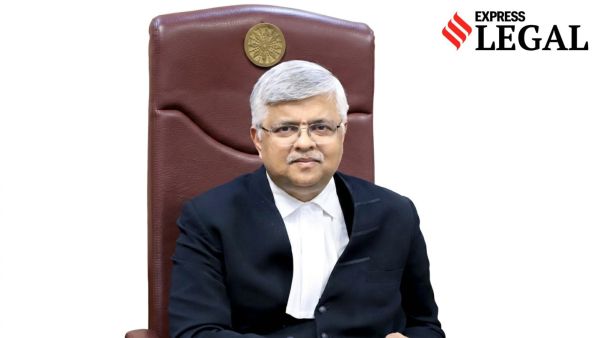 Justice Prateek Jalan passed the order on September 1.


 Share


