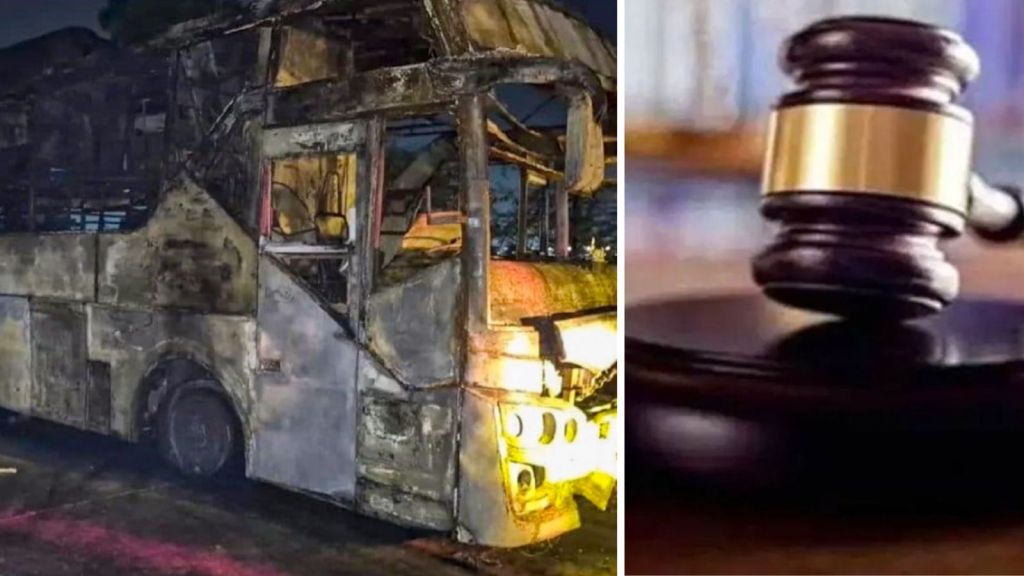
A single bench of Justice Saurabh Shyam Shamshery, on Friday, expressed concern over safety non-compliance in long-distance buses and summoned Uttar Pradesh’s top government officers — Chief Secretary, the DGP, and the Transport Secretary — to appear via video-conference. The Chief Secretary promised the court to look into the matter personally and take joint action and inspection specifically at night since these buses ply normally during the night. The officer also told the court that they would also verify whether the buses are stopped at specified/designated places or not.

It also asked the transport department to submit a detailed affidavit addressing technical and procedural issues pointed out by the court.
Citing specific bus fire incidents in UP in 2023, 2024 and 2025 causing deaths, the court observed, ‘It appears that AC sleeper buses are operating without proper checks and without proper safeguards, such as fire extinguishers, etc. It also appears that drivers and conductors of buses are not trained to act responsibly in any such mishappenings.”
The bench also cited a report by the Ministry of Road Transport and Highways which mentioned that about 45 bus fire incidents occurred in India in three years, killing 64 passengers and injuring 145 passengers from January 2023 to December 10, 2025.
The court also mentioned the names of some advocates to assist the court and collect data on such incidents that occurred in Uttar Pradesh or in any other state.
‘Scope for improvement’
The officers appeared before the court in the afternoon and briefed the court about the accident and action taken. On a specific query on conducting inspections, the court was informed about steps taken by the transport department. However, the court said there was scope for improvement and regular checking of buses needed to be intensified.
Story continues below this ad
The court also enquired whether the bus met the mandatory Automotive Industry Standard (AIS), which is required to be followed in buses, including technical specifications for general bus body design, the sleeper coach, and also fire detection and suppression.
The bench stated in its order that the aforesaid norms require key technical mandates. The sleeper coach prohibits driver partition; restricts vehicle height to 3.8 metres; mandates 4 emergency exits (less than 12 metres in length) or 5 (greater than 12 metres in length) as well as strict gangway dimensions.
It added that fire detection and suppression mandates automated aerosol/ foam systems in the engine bay and low-pressure water mist systems in the passenger cabin. It also requires installation of Driver Drowsiness Alert Systems (ADAS).
“The court is not informed whether the bus, which was involved in the accident in question, has followed aforesaid mandates or not, and if it has not followed aforesaid mandates, the authorities are directed to initiate proper action not only against the driver and conductor but the licensee also. Even a decision can be taken to ban buses of such licensee,” the court said.
Story continues below this ad
After the hearing, the court directed the officials to appear on the next date of hearing, October 13.
‘Give the number of permits issued in 3 years’
Meanwhile, the court also directed the transport department to file affidavits mentioning the number of permits issued to sleeper buses in the last three years from Uttar Pradesh, details on inspections conducted on sleeper buses before issuing the permits (supported by documents), and whether the design of the buses was altered to make more space, compromising security. The affidavit shall also specify the checking points on state borders for surprise inspections, the date of previous inspections, statements of passengers, and the presence of fire extinguishers and an emergency gate. It should also contain the details of whether the driver and conductor have knowledge about precautions to be taken in case of some mishaps, etc.
The affidavit shall also provide details of criminal action taken in the last three years and its outcome in such accidents.
The court directed that the affidavit shall not be limited to the above-referred points; rather, it should contain proposed action or collective measures required to prevent such accidents.