


Journalism of Courage
 The Kerala High Court said the government must ensure access to life-saving treatment, holding that the cost of patented cancer drugs can undermine the constitutional right to healthcare. (AI-generated image)
Quoting actor Mammootty’s “heartbreaking monologue” in the National Award-winning movie Sukrutham on the plight of cancer patients and their “bystanders” who end up pledging their life savings for medical care “only to be left buried in mountains of debt”, the Kerala High Court has held that the government is empowered to produce and sell patented cancer drugs at non-commercial rates for needy patients.
Justice Harisankar V Menon was hearing a suo motu case on the exorbitant pricing of life-saving patented cancer drugs and observed that even though over three decades have passed since the movie, “the plight of patients and their families remains the same”.
“The government, the people, and stakeholders should, as a joint venture, ensure that no man is refused or refuses treatment exclusively due to financial constraints. It is imperative that we, as a community and as a system that caters to billions, strike the balance between affordable access to medical treatment and maintaining adequate incentives,” the September 28 order read.
The case was filed by a retired bank employee suffering from metastatic breast cancer, whose monthly pension was Rs 28,400, while her husband, also a retired bank employee, earned a pension of Rs 46,000. The woman was being treated with ‘targeted therapy’ and one of the medicines ‘Ribociclib’, which was used to slow the cancer’s growth, was very expensive, costing about Rs 58,140 for 21 days (three tablets per day).
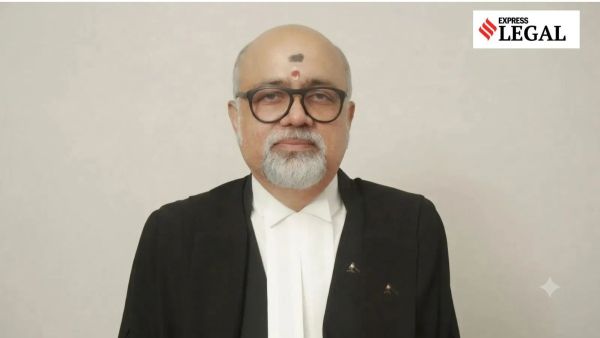 Justice Harishankar V Menon held that it was for the Centre to consider whether Section 100 of the Patent Act needed to be invoked.
The woman had alleged that the financial assistance from the government for the treatment of breast cancer was minimal, and steps were required to reduce the price of such drugs. She argued that the government should intervene under the Patents Act to reduce the price of the medicine, as the patent granted for the cancer medicine had made it “exorbitantly costly” and affected the lives of patients like her. While the case was pending, the woman died.
However, on September 16, 2022, the Kerala High Court decided that her death should not make the case unproductive and decided to continue it by taking “suo motu cognisance of the issue of exorbitant pricing of life-saving patented medicines”. Advocate Maitreyi Sachidananda Hegde was appointed as amicus curiae (friend of the court) to help the court in the case.
Subsequently, the high court ordered various private persons, patented companies engaged in the manufacture of drugs, authorities and institutes to be made parties to the case as they were “proper and necessary parties”.
“While agreeing that there is an exorbitant price and Palbociclib cannot be used to substitute for Ribociclib and Amemacicib, leaving the decision regarding the use of Section 100 (of the Patents Act) to the policy discretion of the government is a denial of justice to breast cancer patients who badly require access to these two patented medicines,” read a statement by K M Gopakumar, co-convenor of the Working Group on Access to Medicines and Treatments, which had written a letter to the Chief Justice of the Kerala High Court on July 10 this year, seeking an expeditious hearing in the case.
Advocate Hegde submitted that “every three minutes a woman is diagnosed with breast cancer in India, and in every six minutes one such woman dies”.
Referring to the 139th report on ‘Cancer Care Plan and Management: Prevention, Diagnosis, Research and Affordability of Cancer Treatment’, the counsel stated that after observing that “almost 40% of cancer hospitalisation cases are being financed through borrowings, sale of assets, etc”, the committee had given the opinion that “there is a strong need to make cancer care affordable through suitable interventions from both Government and private sectors”.
The counsel contended that Section 100 (power of Centre to use inventions for purposes of government) of the Patents Act “ought to have been invoked by the government” as “the government is considered as the custodian/trustee of the interest of the patients, which is all the more a reason for the central government to interfere.”
Deputy Solicitor General of India (DSGI) O M Shalina, appearing for the Ministry of Women and Child Development, argued that the government had “already reduced the basic customs duty for the medicine” from February 1, because of which the price of 21 tablets had come down.
Senior Advocate Joseph Kodianthara, appearing for the pharmaceutical company Novartis AG, which is one of the manufacturers of the medicine, argued that Section 100 applied only to “cases where the central government requires the use of the patent ‘for the purposes of Government’, and not in an instance where the government is informed that there is a requirement for reduction of the price”.
The counsel further stated that among various countries, the company charged the lowest price in India and there was already a 30 per cent cap on the trade margin on drugs, and hence the government had already “intervened so as to regulate the price of the medicine”.
After evaluating Section 100 of the Patents Act, the high court said that the term “for government” had to be interpreted by taking into account the right to sell the goods made using the patent on a non-commercial basis to a purchaser. The high court further noted that Section 100 did not restrict who the purchaser could be.
The bench held that “the provisions under Section 100 would include the entitlement of the government to use the patent or invention for manufacturing the medicine covered by the patent and sell the same on a non-commercial basis to a person who can be none other than the needy patient.”
The high court stated, “There can be no doubt that the government is required to provide all necessary facilities to citizens to ensure access to healthcare, including access to life-saving treatment, as in the case at hand” but “the high cost of the drug in question virtually defeats the requirements under Articles 21 (right to protection of life and personal liberty) and 47 (duty of the state to raise the level of nutrition and the standard of living and to improve public health) of the Constitution of India.”
Since the aim of the Patent Act was “protecting the process leading to the manufacture of the article” and “if such sanctity is not being extended to a patentee….no one will come forward to register their patent under the statute”, the high court further held that it was for the Centre to consider whether Section 100 of the Patent Act was required to be invoked, as it was a policy decision which should be taken after collecting the necessary statistics.
“The data required to be collected by the government, as to the actual number of persons affected with the particular type of cancer, the number of patients consuming the medicines in question, the cases where such medicines are not consumed by patients on account of the alleged exorbitant price, etc”.


