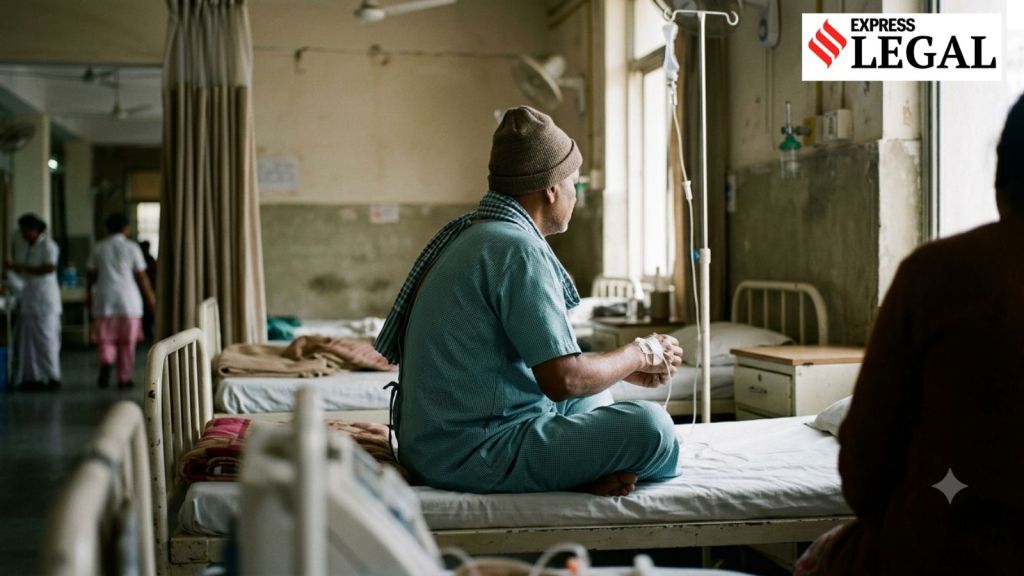
“Medical negligence cannot be inferred merely because a later diagnosis of cancer was made. There must be evidence to establish that the treatment given was not in accordance with accepted medical practice or that the doctor failed to exercise reasonable care and skill expected in the circumstances,” the commission said on September 21.
The dispute arose from the treatment of a 54-year-old man, who complained of back pain and underwent an MRI at another private hospital on September 9, 2005. He later consulted the doctor and was diagnosed with tuberculosis involving the L2-L3 region, a left psoas abscess, and diabetes.
Biopsy report
The man was admitted on September 11, 2005, underwent debridement the next day, and was discharged on September 16 after an uneventful stay. His condition later deteriorated, according to the complainants. On December 27, when that doctor was unavailable, another doctor from the same hospital examined him and sought the histopathology report.
It recorded an undifferentiated malignant tumour, including possibilities of malignant fibrous histiocytoma, liposarcoma and lymphoma. The man was referred to an oncologist, examined at AIIMS, Delhi on January 3, 2006, and died on June 23, 2006.
The complainants alleged that the hospital and doctor failed to act on the biopsy report, delaying cancer treatment. The hospital and doctor said the report from an outsourced diagnostic centre had not been produced during earlier consultations.
Story continues below this ad
The NCDRC found no evidence establishing when the report was collected or that it had been shown to the doctor earlier. It came to light on December 27, when Dr Kapoor examined Jaswani and referred him to an oncologist.
Negligence not proved
The NCDRC found the tuberculosis diagnosis and treatment consistent with accepted medical practice. The MRI indicated tuberculosis, while tissue was sent for biopsy to check the diagnosis. The commission noted the Delhi Medical Council’s finding that the tumour was highly malignant and that earlier cancer treatment was not shown to have changed the outcome.
It flagged coordination gaps that could have ensured the biopsy report reached the patient earlier, but said these did not establish medical negligence. The negligence finding was therefore set aside.
The Rs 5 lakh already deposited by the hospital was ordered to be released to the complainants with interest as an ex-gratia payment towards treatment costs. The Rs 2 lakh imposed on the doctor, if deposited, was ordered to be returned to him after 30 days.
Takeaway
Patients should ensure pending diagnostic reports are collected and shown during follow-up visits. Hospitals should also have clear systems to track and communicate crucial reports. The NCDRC held that the doctor could not be held negligent when the biopsy report was not produced during consultations and there was no evidence that he knew it was available.
Story continues below this ad
For consumer-related grievances, individuals may contact consumer helpline in their respective states or call the National Consumer Helpline at 1915 for assistance.
Don’t miss out on these stories:
‘Green pastures at policy time’: United India to pay trader’s Rs 2.04 lakh theft claim
Electric scooter fails twice within 2 months of purchase, Kerala widow wins Rs 1.6 lakh
Car owner wins Rs 5.89 lakh after insurer rejects claim over driver’s ‘fake’ licence