“Opposite party 1 hospital shall pay Rs 1 lakh to the complainant towards mental harassment and agony on account of not having CCTV provision in the ward where the mother of the complainant was given medical treatment,” the August 20 order read.
Mother died a day after hospitalisation
The complainant claimed that her mother, Shanta, was 74 years old in 2023 and held a Central Government Health Scheme (CGHS) card. She allegedly was admitted to the hospital on May 26, 2023, for treatment and blood pressure control. It was also claimed that her mother had previously received routine medical services at the same hospital.
On the next day, during the early hours, the woman claimed that the treating doctor gave an injection to raise her mother’s blood pressure, but she did not respond. The complainant informed the doctor about the same and requested that the change of clothes advised by the doctor be deferred until her mother felt better.
However, the woman claimed that the doctor disregarded her concern and asked her to vacate the ward, and about 10-15 minutes later informed her about her mother’s death. The complainant also alleged that she was detained at the hospital reception despite being in mental distress and was asked to sign certain documents.
Later, she approached the hospital’s medical superintendent and sought access to the CCTV recording of the area where her mother was being treated during her last moments. She also submitted a letter seeking the footage on June 27, 2023. However, the hospital stated that CCTV was installed only in the entrance and lobby areas and not inside the wards, citing the privacy and well-being of patients.
Aggrieved, she moved the commission and argued her case in person.
‘CCTV footage requested reasonable’
It was not an unreasonable request for the woman to seek CCTV footage of the last minutes of her mother’s life and how she was being treated, the commission noted.
“However, it is observed that generally hospitals are shying away from providing the same for the reasons best known to them, raising doubt in the mind of the attendants, which has happened in the present case,” the commission mentioned.
It was also found that the hospital and the doctor were “concealing more than revealing proper facts” even to the commission, adding that there should have been transparency on the part of the hospital so that relatives could know what happened to their patient.
The commission also emphasised that simply denying the documents is not sufficient unless it is supported by proper reasoning, and said the hospital should have preserved and provided the CCTV footage to the complainant.
The commission noted that the woman had made allegations of medical negligence leading to the death of her mother. However, she failed to prove any specific instance of medical negligence, and there was no medical expert opinion on record.
“Therefore, the prayer of the complainant for direction to the Medical Council of India to take action against the treating doctor is not granted for the reason of lack of evidence and expert opinion,” the commission said.
Hospital’s defence
The hospital, through advocate Sujata Rao, argued that the patient’s vital signs were highly deranged and she was not responding to fluid resuscitation when she was admitted to the emergency room. The lawyer added that the complainant’s mother had a cardiac arrest in the early morning of May 27, 2023.
The hospital added that CPR was immediately initiated and the doctor’s team called the complainant thrice, but she allegedly arrived after 25 minutes of CPR had begun, and she was informed about the critical condition of her mother. However, after approximately 45 minutes of high-quality CPR, the patient could not be revived and was declared dead at 6.45 am on May 27, the hospital claimed.
Takeaway
This ruling highlights that hospitals have a duty to maintain transparency and preserve relevant records, including CCTV footage where available, when patients or their relatives seek to understand what happened during medical treatment.
For consumer-related grievances, individuals may contact the consumer helpline in their respective states and union territories or call the National Consumer Helpline at 1915 for assistance.
Don’t miss out on these stories:
Stroke treatment ‘delayed’ for Covid test, deceased PhD scholar’s parents win Rs 1 crore
Housing loan repaid but property deed ‘lost’, woman wins Rs 2 lakh from bank manager
No wedding bells after 9 years, marriage bureau ordered to pay professor Rs 8,000

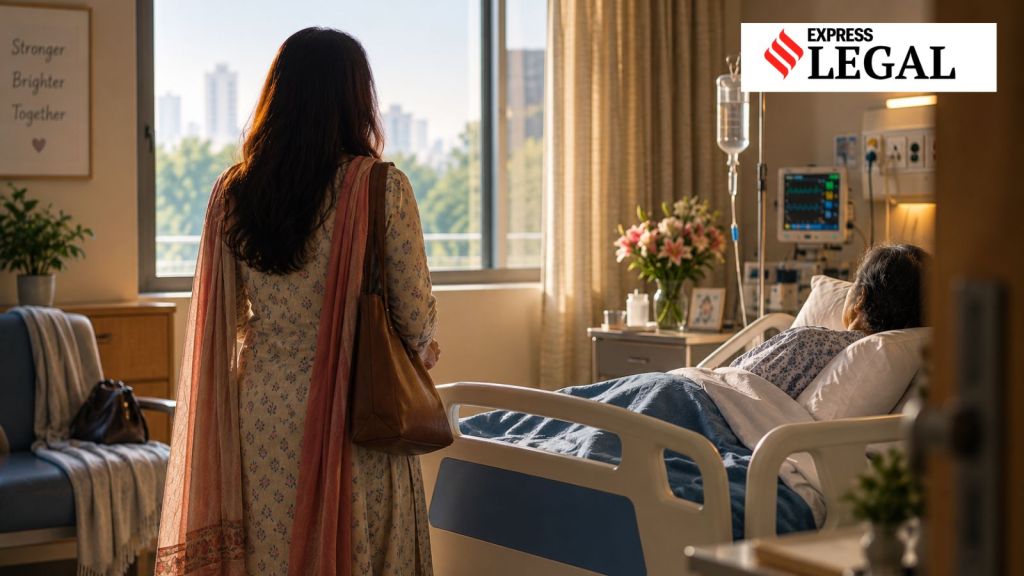 The commission held that it was not an unreasonable request for the woman to seek CCTV footage of the last minutes of her mother’s life. (AI-generated image)



 Share


