
Justice Vimal Kumar Yadav noted that the woman no longer wanted to pursue the case and said, “It seems some sort of soul-searching was there, where the truth sits naked. In her heart of hearts, deep down somewhere, she must also be looking for answers and explanations for the tattoos and travel to Manali, etc.”
The court said sending the man back to jail would be “nothing short of a travesty of justice”, noting that he was 18 years old when the incident took place and was now “heading towards the evening of his life.”
“Although she (girl) did not have any convincing answers to certain aspects, such as what was the occasion with her to have the name of the Appellant (man) tattooed on her chest. She has also admitted that her name was tattooed by the Appellant on his hand,” the court observed on September 7.
FIR in 2009, settled in lives in 2026
The woman, who was about 14 years old in 2009, went missing from her home in June that year. Her parents realised she was missing, but no FIR was registered for two days. The FIR was then registered for kidnapping, after which the girl returned home. During the intervening period, she had travelled with the accused, who was 18 at the time, to Connaught Place and Manali before they returned to Delhi.
The man claimed that the girl had voluntarily accompanied him and that whatever happened between them was consensual. The girl’s initial version before medical authorities was also in line with his account, but she later took a contrary stand in her statement before the court.
Story continues below this ad
The trial court had already awarded a sentence below the minimum prescribed at the time, citing special and adequate reasons. The man then approached the Delhi High Court seeking a further reduction in his sentence.
Arguments
The man was represented by advocate Saahila Lamba, who submitted that he should be considered for the lightest possible sentence and that the period he had already spent in custody should be treated as sufficient punishment. She also referred to the Supreme Court’s observations on the possibility of a “Romeo-Juliet clause” for genuine adolescent relationships involving young people with a small age difference.
Assistant Public Prosecutor Raj Kumar opposed any further reduction, arguing that the trial court had already taken the circumstances into account while awarding a sentence below the minimum.
‘Girl was minor in 2009’
The court noted that the girl was 14 and the man was 18 at the time, and that their intimacy could not be legally recognised because she was a minor. It also noted that both had since married and were settled in their respective lives, while the woman had expressed her desire not to continue contesting the case.
Story continues below this ad
The court referred to the Romeo-Juliet clause and also pointed out that various high courts, including Delhi, Madras and Bombay High Courts, have recognised adolescent love and urged the Parliament to make suitable changes.
Analysing the circumstances, the court found that the “unanswered and open-ended” aspects of the case suggested that the man alone could not be blamed for what happened. It added that the girl’s age was the factor that ultimately led to the man being held responsible.





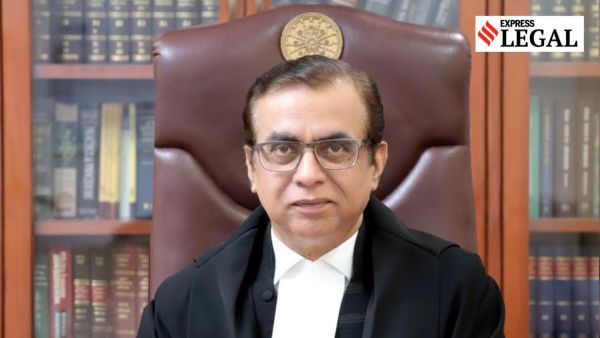 Justice Vimal Kumar Yadav said sending the man back to jail would be “nothing short of a travesty of justice”.
