4 min readNew DelhiUpdated: Sep 23, 2026 08:34 AM IST
After nearly 29 years of service at Savitribai Phule Pune University (SPPU), a senior law officer has won a legal battle to have her first 13 years of service counted towards pension, after the Maharashtra government argued that those years could not be taken into account because she had then worked on a university-funded post.
The Bombay High Court held that the earlier service as a law officer could not be ignored, noting that the woman had served the university continuously and that the state had previously recognised the same service.

Justices G S Kulkarni and Dr Neela Gokhale noted that Dr Parveen Parvez Sayyaed worked as a law officer from 1997 to 2010 before becoming a senior law officer. The state later sought to exclude those 13 years because the earlier post was funded by the university rather than the state government.
“The denial of pension to the petitioner (senior law officer) in fact amounts to non-recognition of public service as rendered by the petitioner with the university (Savitribai Phule Pune University) from the year 1997 on the post of law officer and thereafter discharging duties on the post of senior law officer from 1 August, 2010,” the September 21 order read.
‘29 years of service’
The woman claimed that she has a PhD in law and was in continuous employment of the university at the post of law officer for 13 years, from 9 June, 1997 to 31 July, 2010.
Justices G S Kulkarni and Dr Neela Gokhale said the decision to withdraw the benefit was ‘arbitrary’.
While working as a law officer, the woman allegedly participated in the selection process for the post of senior law officer, as advertised by the university, after the state government had approved the post of senior law officer as an aided post, which means that the salary would be paid by the state government.
The court noted that the employee has till date spent almost 16 years on the post of senior law officer, a fully aided post, and before that for a period of about 13 years on the post of law officer, totalling a period of 29 years in the service of the university.
Story continues below this ad
The dispute began when the Maharashtra government later said that her 13 years as law officer could not be counted for salary protection or pension because that post was funded by the university, not the state government. The authorities then sought to withdraw the pay protection and benefits that had earlier been granted to her.
She challenged this before the Bombay High Court, arguing that she had been properly selected and had worked continuously, while her earlier service had already been recognised for fixing her pay. The woman was represented by Senior Advocate Mihir Desai, while the state was represented by assistant government pleader D S Deshmukh.
State not justified in denying pension: HC
The high court noted that the employee had rendered about 29 years of service with the university and held that “it would be wholly unjust if the valuable service rendered by the petitioner exclusively in the service of the university for such a long period is not duly recognised to be counted for the purpose of pension.”
The court pointed out that the state government’s decision to withdraw the benefit was “arbitrary”, particularly because her earlier service had already been recognised while fixing her pay as senior law officer and while granting her relaxation from the age limit.
Story continues below this ad
It held that the university was neither justified in law to initiate any recovery from the employee nor was it permissible and legal for it to deny the grant of pension to the woman. “…In our opinion, the petitioner deserves to be granted the reliefs as prayed for. The respondents (state and university) were neither justified in law to initiate any recovery from the petitioner nor was it permissible and legal for the respondents to deny the grant of pension to the petitioner
The court allowed her petition and set aside the communications withdrawing the benefit of counting her earlier service as a law officer for pay protection and pensionary benefits.




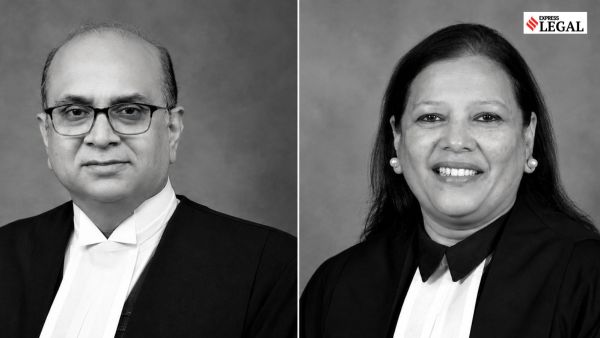 Justices G S Kulkarni and Dr Neela Gokhale said the decision to withdraw the benefit was ‘arbitrary’.
