


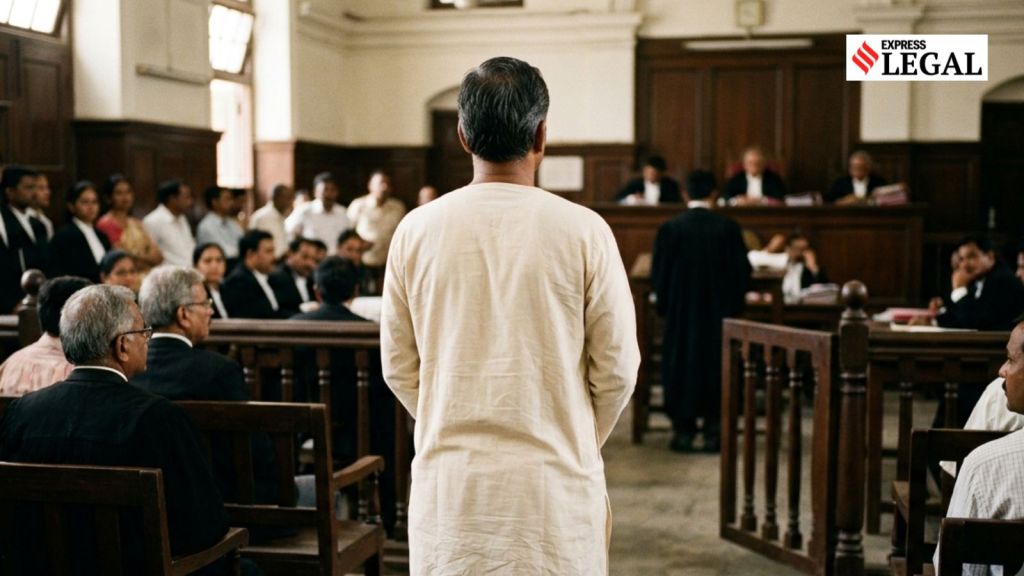
 The court noted that the petitioner and victim had no prior connection or quarrel. (AI-generated Image)
The Delhi High Court has reduced the sentence of a man who attacked a daily-wage labourer with a sharp tool in 2002, holding that it did not amount to an attempt to murder. While modifying his conviction to voluntarily causing hurt with a dangerous weapon, the court highlighted the “regular and unending plight” of labourers, observing that those engaged in hard physical work are often “least paid, least cared for, and least bothered”, despite needing sound sleep to recover for the next day’s work.
Hearing the assault case involving the labourer, Justice Vimal Kumar Yadav observed, “A back-breaking hard day’s labour requires a sound, peaceful sleep in the night to rejuvenate the body in order to enable it to assume and discharge next day’s assignments, which invariably involve hard physical work. This has become a regular and unending plight of the labourers in the country and, to add salt to the injury, this class is least paid, least cared for, and least bothered.”
Terming it a “very pathetic state of affairs”, the September 18 order said that society has failed to value and respect physical labour, contrary to the western world, where physical labour is adequately compensated and valued.
“It was another such night in March, 2002 when the victim, after the usual hard labour of the day, was about to sleep or was sleeping, when the nuisance and ruckus created by the petitioner and some others disturbed the victim,” it observed. However, noting that the nature of injury cannot be treated as that of grievous hurt, as defined in law, it amounts to simple injury, the court said that the petitioner cannot be held responsible for the offence of attempt to murder. His conviction was reduced to three years’ imprisonment from five.
The case arose from an incident in March 2002, when a daily-wage labourer employed at a shop in Lajpat Rai Market, Chandni Chowk, was preparing to sleep on the shop’s verandah. A quarrel involving a man and others disturbed him, following which he asked them to stop.
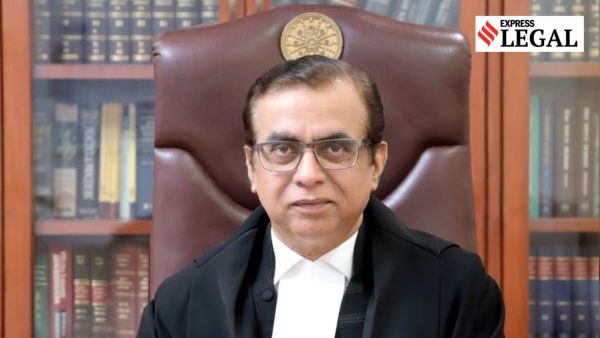 Justice Vimal Kumar Yadav passed the order on September 18.
The petitioner allegedly pushed him and attacked him with a sharp-edged rapi (an instrument used by
cobblers to cut leather), causing an injury extending from his cheek to the neck. A police constable on patrol apprehended the accused petitioner, while the labourer was taken to the trauma centre and underwent surgery.
The police registered an FIR and filed a chargesheet under Section 307 of the IPC (attempt to murder). The petitioner pleaded not guilty, but after a trial involving 17 prosecution witnesses, the trial court convicted him and sentenced him to five years’ rigorous imprisonment and a Rs 1,000 fine on December 2, 2004.
The man challenged the conviction before the high court, arguing that the attack was a sudden act during an altercation, involved only a single blow, and lacked the intention or knowledge required for an attempted murder offence. He argued that the offence, at most, could fall under a provision dealing with bodily injury.
The court observed that for an offence of attempt to murder, the crucial issue is whether the accused had the “intention” or “knowledge” that his act could cause death. Such intention cannot be directly seen and must be inferred from the surrounding circumstances.
The court said factors such as the weapon used, manner of its use, body part targeted, number of blows, circumstances of the incident and the conduct of the accused can help determine the assailant’s intention.
Applying these principles, the court noted that the petitioner and victim had no prior connection. The victim had only intervened after the petitioner’s quarrel with others disturbed his sleep, following which the latter suddenly attacked him.
“The weapon used indeed was a dangerous weapon and could have been fatal but for the fact that the way it was used. It was used in a vertical manner and was not used to stab the victim,” it said. The order added that the injury, though medically described as grievous, did not qualify as grievous hurt under the legal definition in law.
Therefore, the court held that the requisite intention or knowledge was absent, and modified the conviction to voluntarily causing hurt by a dangerous weapon. The man’s sentence was accordingly reduced to three years’ imprisonment.