


 The court observed that the wife's request could not be disallowed just because the hospital had collected a consent document other than the legal Form 9. (AI-generated image)
The Kerala High Court recently allowed a 43-year-old widow to use the embryos preserved from the fertility treatment she had earlier undergone with her husband after a hospital denied their use for assisted reproduction, citing a lack of specific written consent.
Justice Harisankar V Menon said the widow’s request cannot be disallowed merely because the hospital has chosen to collect the consent letter as against the legal format in Form 9.
“…it is the ‘deceased’s inferred consent’ and the ‘partner’s interest’ in becoming a parent that require the utmost consideration. As has been found, the intention of the deceased was to ensure the ‘actual use’ of the embryos, and, therefore, the wish of the petitioner-wife to become a parent deserves to be respected,” the court said on September 1.
The couple had been undergoing infertility treatment at the hospital, following which they had cryopreserved the embryos. After the death of her husband, when the woman sought to use the embryos for an In Vitro Fertilisation (IVF) procedure, the hospital refused to do so in the absence of specific written consent.
The woman’s counsel argued that the consent letter obtained by the hospital at the time of cryopreservation must be taken as a case of “substantial compliance” with the requirements under the Assisted Reproductive Technology (Regulation) Act, 2021.
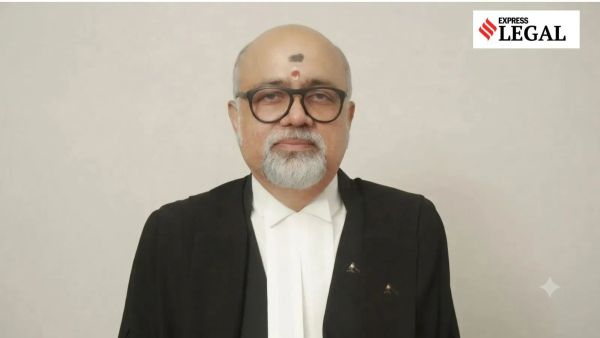 Justice Harisankar V Menon said the late husband’s inferred consent and the ‘partner’s interest’ in becoming a parent were important.
Opposing the plea, the Centre’s counsel argued that the consent actually obtained by the hospital did not contain the option of handing the embryos over to the wife. Instead, the late husband had opted for the embryos to be used by “unknown couples”. According to the counsel, this showed that the husband had never intended his wife to use the embryos after his death.
Under Form 9 of the Assisted Reproductive Technology (Regulation) Rules, a husband is required to specify what should happen to the embryos if he dies. He can choose to allow the embryos to perish, have them handed over to his wife, or permit their use for research purposes. Similar options are available to the wife. However, the court found that the hospital had not obtained consent in the statutory Form 9. Instead, it had obtained a different consent letter.
“A perusal of Ext P3 (consent letter) would show that, in marked difference to Form 9, there is no provision/option by which the wife and the husband could permit the use of the embryos by the surviving spouse. Instead, Ext P3 only permits use of the embryos by third-party couples,” it observed.
The court noted that while the consent form obtained by the hospital gave the husband three options, he had chosen the first, allowing the embryos to be used rather than permitting them to perish or be used for research.
“When Ext P3 is read along with Form 9, it can only be assumed that the husband wanted the wife to use the embryos after his death, as even as per Ext P3, he wanted the same to be used for a meaningful purpose,” the judge said.
The high court observed that the wife’s request could not be disallowed merely because the hospital had collected a consent document other than the legal Form 9. It found that it is the late husband’s inferred consent and the “partner’s interest” in becoming a parent that require the utmost consideration.
The court thus allowed the plea and directed the hospital to permit the widow to use the preserved embryos for assisted reproduction.