


Journalism of Courage
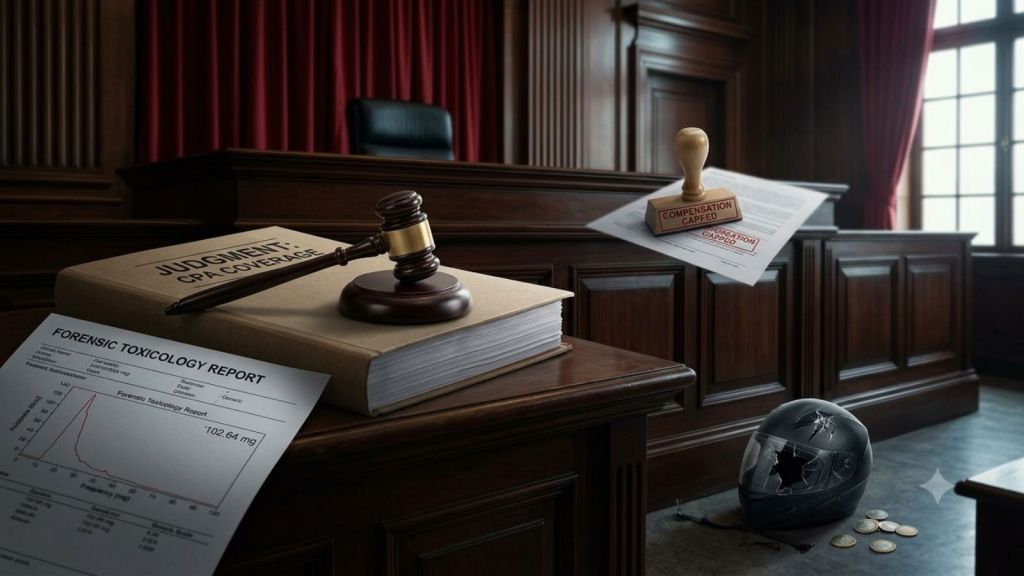 The Karnataka High Court has stressed strict treatment of drunk driving cases, holding that those who ride or drive under the influence endanger themselves and other road users (Image generated using AI).
The Karnataka High Court has held that an individual driving or riding a vehicle under the influence of alcohol not only places themselves at risk but also exposes other road users, the public, and society at large to danger.
Delivering a key verdict on insurance claims, the court ruled that drunk drivers cannot claim full compensation benefits under benevolent traffic laws, attributing 30 per cent contributory negligence to an intoxicated motorcyclist and modifying a Motor Accidents Claim Tribunal award accordingly.
The court emphasised that when such instances are brought to its attention, they must be viewed and handled strictly.
In an order dated September 1, Justice K V Aravind observed, “Riding a motorcycle under the influence of alcohol is an offence. When a person uses a vehicle under the influence of alcohol, he not only poses himself to risk but also exposes other road users, the public, and society at large to risk.”
The bench further noted that when a claimant has violated the mandate of law, the principle of liberal interpretation applied to benevolent enactments like the Motor Vehicles Act cannot be stretched to cover such cases. In an era of growing population, rising vehicle numbers, and increasing road congestion, the court said road users must obey the law and show concern for fellow commuters.
Following these observations, the High Court partly allowed an appeal filed by National Insurance Co Ltd, which had challenged a tribunal order directing it to pay the entire award amount to the claimant, Vishwanath, 34, who was injured in a September 2018 crash.
The insurance company argued that hospital records established the claimant was intoxicated at the time of the crash, thereby contributing directly to the negligence that caused the incident.
The bench dismissed the insurer’s argument that a doctor’s brief note describing the incident as a “fall from the motorcycle” implied a self-fall, observing that initial medical focus is on emergency treatment rather than detailed accident histories, and noting that the insured car had dashed against the claimant.
The court accepted medical evidence confirming the claimant was under the influence of alcohol when brought to the hospital. Consequently, it attributed 30 per cent of the negligence to Vishwanath, relieving the insurer from paying the full original payout.
Extending liberal legal interpretations to a claimant under such circumstances, the court stated, would place a premium on law violations and lead to a breakdown of road discipline and law and order.