Restoring the mother’s custody application, the high court sent it back to the family court for a fresh decision.
The boy’s mother will have custody while his father will have him during the first half of the Diwali, Christmas and summer vacations, besides every other weekend, until the family court decides afresh.
Justice Gauri Godse said equal parenting time is not automatically the right solution.
“In Indian law, the statutory framework governing child custody and guardianship does not recognise the concept of joint parenting. There is no compelling equal parenting, and the legal foundation in Indian law is the welfare of the minor child,” the September 1 order read.
A joint parenting plan without a proper structure may result in complications that may have an adverse psychological impact on the child, the Bombay High Court said.
Parted ways but fighting for custody of child
The court called it an unfortunate case where the spouses adopted a balanced approach and parted ways, but are unable to apply a similarly balanced approach for their minor son.
Story continues below this ad
Until he was 4, the child lived with his mother. The father filed for divorce in March 2015 and took his son to his grandmother’s home in 2016. The child was eventually handed over to his mother in July 2017. He was again sent to his father in December 2019 under modified consent terms.
 Justice Gauri Godse stressed that the child’s educational requirements, medical and health issues, extracurricular activities and emotional stability must remain at the centre.
The court found it strange that, in the modified final consent terms of 2019, the father was granted sole custody, with no provision for the child to meet his mother. The mother approached the family court seeking access, and in November 2021, it was agreed that she would be allowed to meet the child once every two months for two nights. Also, she would have him for half the summer and winter vacations.
The dispute intensified when the mother alleged that her access to the child was being restricted and requested a reworking of custody. In March 2024, however, both parents filed a joint plea agreeing to abide by the earlier consent terms. The mother withdrew her custody petition while the father assured that he would let her meet the boy.
But despite the earlier arrangement, the family court, in its September 20, 2024 order, partly allowed the mother’s application and directed joint parenting, with a 50-50 vacation split. Also, the child would live with the mother from the next academic year, the family court said.
Story continues below this ad
‘Insensitive approach’ of father, custody
The high court noted the father’s “insensitive” approach in arguing that the mother had given up custody for Rs 8 lakh and a share in their house.
“Such routine terms in the consent terms cannot be interpreted to mean that the mother had given up the custody of the child in exchange for any consideration,” it added.
The court noted that the family court judge had said the child wanted equal time with both parents and ultimately wanted to keep both happy. But the judge had overlooked whether joint parenting would be feasible, the high court noted.
A shared or joint parenting plan, if found to be in the child’s best interests, would be the best solution, but the parents’ willingness is most important, said Justice Godse. Sending the case back to the family court, the judge called for a “meaningful and fair discussion and hearing”.
Story continues below this ad
The high court said it is the duty of the parent who has custody to make genuine efforts to help the child feel comfortable meeting the other parent. “Thus, the mother, with whom the child is presently residing, must make efforts to enable the minor son to spend sufficient time with the father,” the court added.
The judge said that both parents should share the child’s expenses equally, including education and medical costs, and directed them to cooperate for an early resolution.





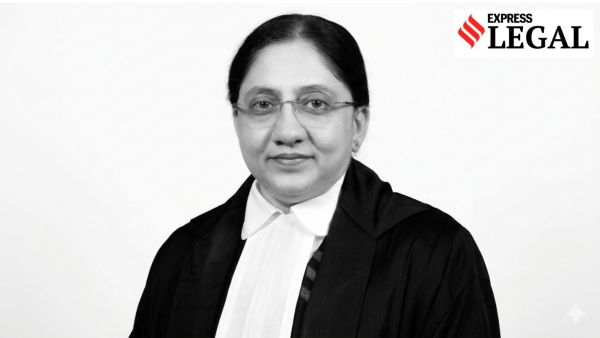 Justice Gauri Godse stressed that the child’s educational requirements, medical and health issues, extracurricular activities and emotional stability must remain at the centre.
