
“The findings recorded by the learned Trial Court are based on a proper appreciation of evidence on record and do not suffer from any perversity and illegality warranting any interference by us. The sentence imposed is proportionate and commensurate with the offence committed. We, therefore, find no ground to interfere with the trial court’s judgment,” the court said on September 30.
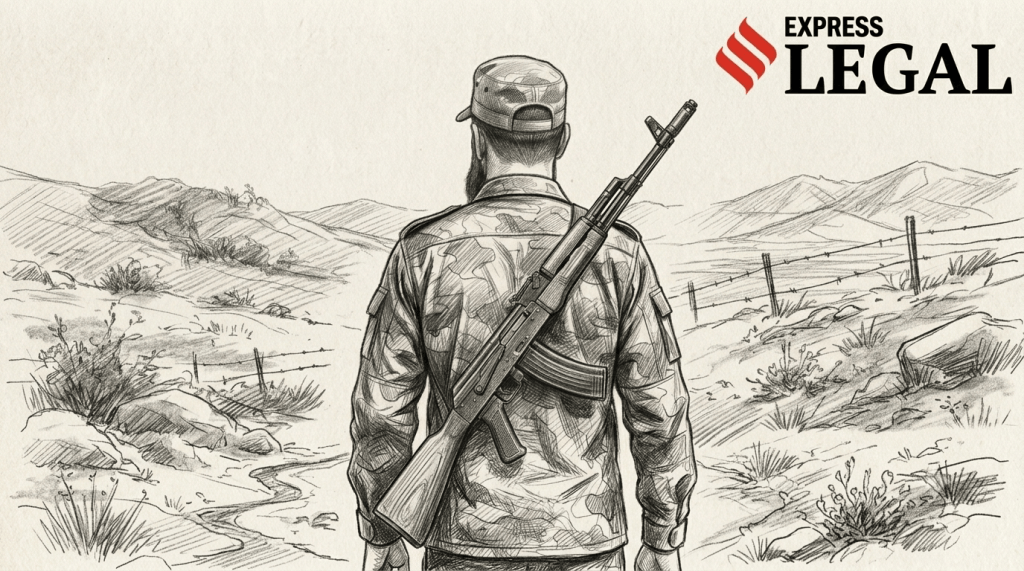
The dispute went back to January 6, 2018, when Khan had been permitted to maintain a neatly trimmed beard. According to the BSF’s response, the permission was subject to the beard being neat and properly trimmed. On June 16, 2023, the force said Khan was found “utterly shabbily dressed” with a long, free-flowing beard. It said this was contrary to the earlier permission and that Khan had refused to trim his beard. The permission was then revoked.
Retirement request accepted the same day
Khan’s case was that the sudden withdrawal of permission to maintain his beard prompted him to seek voluntary retirement. His application was accepted on June 16, 2023, the same day it was submitted.
Justice Rajnesh Oswal said the petitioner was free to approach the appropriate jurisdictional court to redress his grievances.
He later sought to withdraw the retirement request. The order records that he made the request on June 17, 2023, but it was rejected. An order dated July 5, 2023, directed him to take pension and not resume duties.
Khan then approached the authorities again, maintaining that the permission to keep a beard had been cancelled due to vindictiveness and that he had been compelled to seek voluntary retirement. He also made a representation to the Director General of the BSF on July 19, 2024, which, according to his petition, was not considered.
Story continues below this ad
The BSF disputed that account. According to the force, Khan himself expressed a desire to proceed on voluntary retirement after a parade and submitted his application. The commandant heard him in the presence of other officers and specifically asked whether his decision had been taken under any duress or compulsion. The BSF said Khan expressly denied being under pressure, and that the proceedings were recorded in the relevant register.
The force further said Khan had cited his mother’s illness and his own inability to endure difficult service conditions, given his medical status, as reasons for seeking retirement. It said the competent authority considered his circumstances, service record and recent conduct before accepting the request with immediate effect.
The beard dispute ultimately remained undecided by the court. It did not determine whether the withdrawal of permission for the beard was legally justified, whether he had actually been compelled to seek retirement, or whether his voluntary retirement was otherwise valid. Instead, it considered the preliminary objection raised by the BSF that the petition had been filed before a court without territorial jurisdiction.
The BSF said the retirement order had been passed by the Commandant of the 50th Battalion BSF at Praharinagar, Tura, Meghalaya. Khan had also submitted his retirement application there. The high court found that no material part of the cause of action had arisen within Jammu and Kashmir.
Story continues below this ad
Khan’s counsel argued that the presence of the inspector general, BSF, Kashmir, as a respondent gave the Srinagar court jurisdiction. The court rejected this, noting that the Kashmir officer had no nexus with the controversy and that the relevant officer was the inspector general, BSF, Shillong.
The court also rejected the argument that the presence of the director general of the BSF in New Delhi meant that any high court could entertain the case. It reiterated that under Article 226 of the Constitution, territorial jurisdiction depends on the cause of action arising wholly or partly within the concerned high court’s territorial limits.
Free to approach jurisdictional court
The high court referred to earlier decisions holding that even a fraction of the cause of action can confer jurisdiction, but that such a part must be material, integral or essential to the dispute. It found no such part of Khan’s grievance arising in Jammu and Kashmir.
Justice Oswal accordingly dismissed the petition for want of territorial jurisdiction, while leaving Khan free to approach the jurisdictional court for redressal of his grievances.




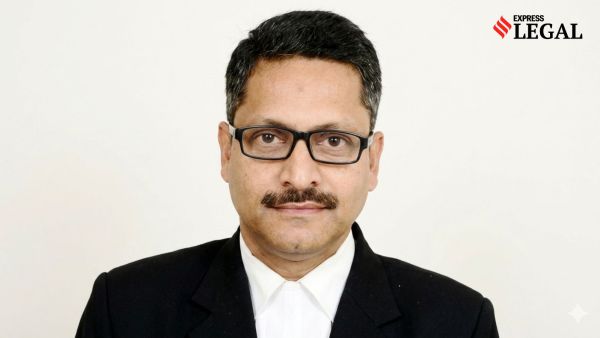 Justice Rajnesh Oswal said the petitioner was free to approach the appropriate jurisdictional court to redress his grievances.
