“Except relying upon the survey report, the Opposite Party has not produced any satisfactory explanation or calculation demonstrating how the said amount represented the final liability under the policy,” the commission said on August 25, examining the insurer’s assessment and payments made to Agarwal.
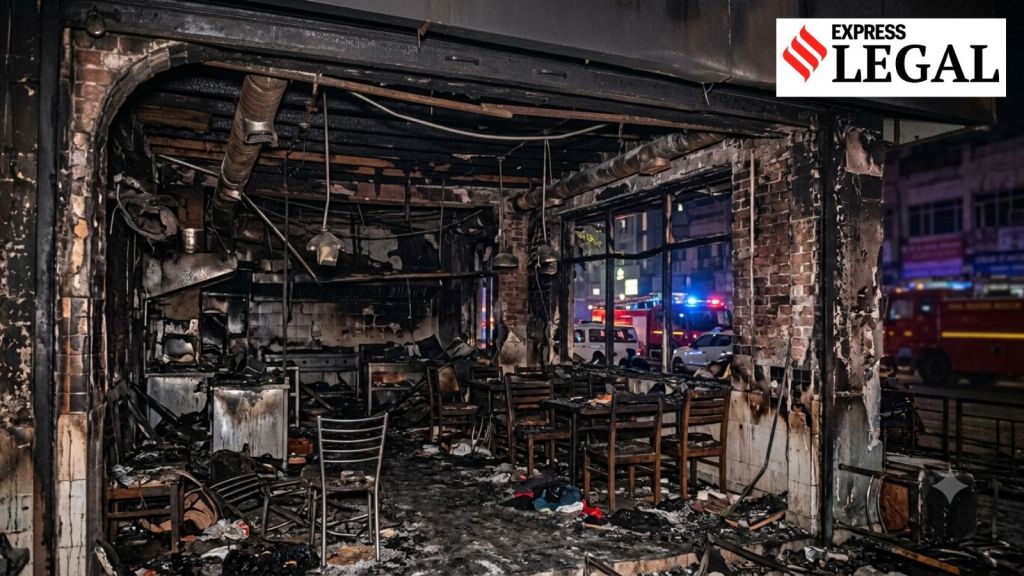
The case dates back to May 4, 2011, when a major fire broke out at the insured premises. The restaurant, which operated under the name Tamba Indian Cuisine, was insured under a ‘Standard Fire and Special Perils Policy’ for a sum insured of Rs 1 crore. According to the complaint, the fire completely destroyed the restaurant, including furniture, fixtures, fittings, electrical installations, stock-in-trade and other articles.
Claim dispute after 2011 fire
The fire was reported to the police and fire department, which issued reports dated May 17, 2011. The insurer was informed of the loss on the same day and appointed surveyors to inspect the premises. Agarwal told the commission that the original purchase bills had been destroyed in the fire. He said certified copies of invoices obtained from the suppliers were subsequently furnished to the surveyor.
He alleged that despite repeated assurances about settlement, the insurer required him to sign blank discharge vouchers and other documents before releasing the insurance amount. The insurer later paid Rs 16,88,995 on March 30, 2012, and Rs 78,895 on July 27, 2012.
Agarwal claimed that the insurer had relied on a survey report prepared for co-insurer, the PSU insurer company and assessed the loss on a “market value basis” rather than a “reinstated basis”. He also alleged that 75 per cent depreciation had been applied to damaged items without justification.
Story continues below this ad
Insurer disputes consumer status
The insurer denied the allegations. It argued that Agarwal was not a “consumer” under the Consumer Protection Act, 1986 because the insurance policy related to a commercial establishment. The insurer also said a licensed surveyor, Aditi Consultants Private Limited, had assessed the loss at Rs 7,16,707 and that this amount had been paid in full and final settlement. It therefore denied any deficiency in service.
The commission rejected the objection regarding Agarwal’s status as a consumer noting that although the policy related to a hotel, bar and restaurant, the complainant was earning his livelihood from the hotel.
Commission questions 75 per cent depreciation
Examining whether the insurer had been deficient in providing its service, the commission noted that the survey report recorded the fire as the proximate cause of the loss and did not find any breach of the policy’s terms, conditions or warranties by Agarwal. It also examined Clause 9 of the policy, which dealt with reinstatement or replacement of damaged or destroyed property.
The surveyor had assessed the loss on a “Market Value Basis” and, for certain items, applied 75 per cent depreciation because the damaged articles could not be accurately matched with the original purchase bills.
Story continues below this ad
Noting that Agarwal had maintained that the original bills were destroyed in the fire and that certified copies from suppliers had been furnished. It found that there was no specific clause in the policy providing for 75 per cent depreciation merely because the original invoices were unavailable. It also found no material showing that Agarwal had violated a policy condition that could justify such substantial deductions.
The commission ordered the insurer to pay Rs 51.12 lakh after deducting the amounts it had already paid from the Rs 68.80 lakh with simple interest at 6 per cent per annum from May 4, 2011, the date of the fire, until August 25, this year. The commission additionally directed the insurer to pay Rs 1 lakh towards mental agony and harassment and Rs 50,000 as litigation costs.
Takeaway
Check whether steep insurance deductions are actually allowed under the policy. In this case, the commission found no policy clause allowing 75 per cent depreciation simply because the original invoices were unavailable.
For consumer-related grievances, individuals may contact the consumer helpline in their respective states (Delhi: 1800-11-4000) or call the National Consumer Helpline at 1915 for assistance.
Story continues below this ad
Do not miss out on these stories
Rs 53 lakh luxury car has ‘faulty’ audio, owner refused refund, gets Rs 1.5 lakh payout
‘Improper’ blood storage leads to woman’s death, family gets Rs 10.25 lakh payout
NCDRC holds post office accountable for ‘missing’ Rs 6 lakh cheques from 2008