


Journalism of Courage
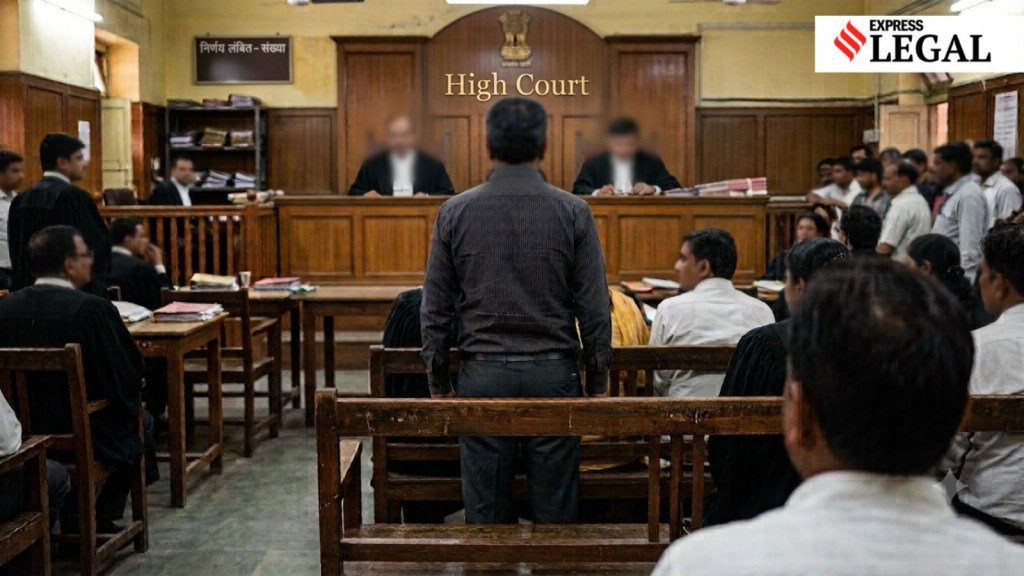 The Calcutta High Court stated that the man had no explanation for the delay in filing the case. (Ai-generated Image)
Agreeing with a railway tribunal that the case was “hopelessly belated”, the Calcutta High Court recently dismissed the plea of a man for compassionate appointment, observing that “such schemes are concessions aimed at providing immediate help to the family members”.
The court observed that the man had been “unreasonably lax” in pursuing his case, allowing his initial plea to be “dismissed for default” without seeking restoration for 23 years. Noting that he only came to the court four years after his second plea was dismissed, the order said that it “cannot come to the rescue of the indolent, even otherwise since delay defeats equity.”
Chief Justice Ravindra Ghuge and Justice Om Narayan Rai were hearing a plea filed by a man who had sought a compassionate railway job because his father was a loyal employee who worked during the 1974 all-India strike and retired in 1977.
“Schemes of compassionate appointment are framed for the purpose of helping the family of an employee who is forced into dire straits due to the sudden loss of employment (and hence the earning) of the sole breadwinner of the family either due to death in harness or serious ailment or any other contingency that may be indicated in the scheme itself,” the September 29 order read.
While dismissing the case, the court said that since the man’s father had continued to work after the strike, no one had to be appointed in his place and the employer had paid an additional increment along with the regular increment to the man’s father as a reward and “on this aspect, the petitioner (the man) cannot claim a compassionate employment, after passage of 51 years.”
The high court further observed that “such schemes are concessions aimed at providing immediate help to the family members of the concerned employee so that they can tide over the sudden penury.”
The man claimed that his father was appointed in the office of the Divisional Railway Manager, Eastern Railway, Howrah Division on July 19, 1944 and retired from service on March 1, 1977. According to the man, his father had “rendered exemplary service to the railways since he stood firm in his duties during the ‘All India Strike’ in 1974” and was awarded a pay hike in advance during his tenure.
It came on record that on August 4, 1986, the man’s mother made an application for his appointment on compassionate grounds while stating that his father had been given retirement due to his ill health. Subsequently, on December 13, 1986, the man also filed a similar plea.
The man claimed that he had then approached the railway tribunal for a direction to provide a compassionate appointment to him. His case was based on a circular issued by the authorities which said that the system of appointments on compassionate grounds, in Class III and Class IV posts “could be extended to the loyal staff as well” apart from the employee who “dies prematurely or gets permanently crippled or afflicted with serious illness”.
On June 12, 1990, the original plea was “dismissed for default” by the tribunal, and the man applied for restoration of the plea only in the year 2013, which was also dismissed on May 6, 2013. The man then filed an appeal before the high court, which was dismissed with the observation that “dismissal of the writ petition would not prevent the competent authorities from considering the grievances of the petitioner (the man) sympathetically on merits”.
Once again, the man approached the tribunal for appointment on compassionate grounds, but on October 14, 2015, his plea was dismissed. The man then continued to make “several representations” to the railway authorities and then approached the high court, four years after the dismissal of his last plea.
Advocates Shiv Shankar Banerjee and Rahul Dev, appearing for the man, argued that the man’s plea was turned down initially based on the opinion of the Railway Employees’ Union, but later it was found that the man’s case was genuine. The counsel further urged that since the man had “all alone been wary and vigilant” and his case had been wrongly rejected, the delay was not his fault.
Government counsel Dhiraj Kr Trivedi and advocate Ajay Gaggar, appearing for the authorities, submitted that when the man’s father retired, he was a minor and that the first application seeking compassionate appointment was made only in the year 1986, which was nine years after the retirement. The counsel also contended that the father had already been incentivised.
On the fact that the first application for appointment on compassionate grounds was made after nine years of retirement, the court noted that “the fact that the petitioner (the man) and his family have been able to survive for about nine years after the retirement of the petitioner’s father would reasonably lead to an inference that the petitioner’s family did not fall in penury.”
“Given the law governing the field, such aspect may singularly be sufficient to disentitle the petitioner to lay any claim for compassionate appointment unless the scheme therefore provides for a time limit going beyond the said period of nine years.”


