4 min read
© The Indian Express Pvt Ltd



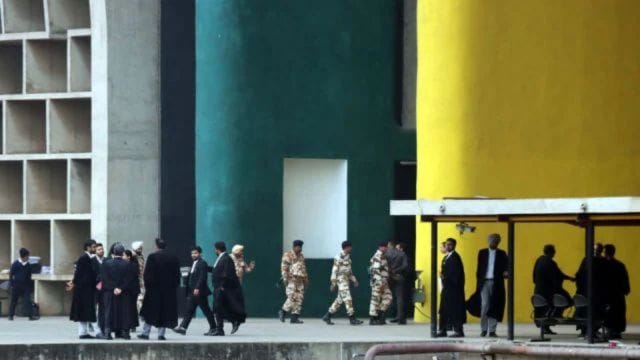 Tanwar was arrested on July 6, 2018, after a police patrol team near Sector 42 claimed to have recovered 5.30 grams of heroin from his pocket.
The Punjab and Haryana High Court Monday upheld the acquittal of a Chandigarh resident in a 2018 heroin recovery case, sharply criticising the investigation for “serious lapses” that undermined the prosecution. Dismissing the Chandigarh administration’s appeal against the 2020 acquittal of Anil Tanwar, the court said the police probe failed the basic standards required under the Narcotic Drugs and Psychotropic Substances (NDPS) Act.
Justices Anoop Chitkara and Sukhvinder Kaur said the trial court had rightly extended the benefit of doubt to Tanwar after finding inconsistencies in key witnesses’ statements, unexplained contradictions in case documents, and non-compliance with mandatory reporting provisions.
Tanwar was arrested on July 6, 2018, after a police patrol team near Sector 42 claimed to have recovered 5.30 grams of heroin from his pocket. The sample later tested positive at the Central Forensic Science Laboratory. He was charged under Section 21 of the NDPS Act.
However, the Special Court acquitted him in January 2020, holding that the recovery and documentation were doubtful. The Chandigarh administration appealed, arguing that the testimony of police witnesses was reliable and that the recovery was a “chance encounter”, exempting the team from certain procedural safeguards.
The High Court disagreed, noting that “scrupulous compliance” with procedural requirements is essential under the NDPS Act because of its stringent penalties. Central to the bench’s criticism was the Chandigarh Police’s failure to send special reports under Sections 52 and 57 of the Act to superior officers—a lapse the court said went to the root of credibility.
“Everything was kept as a guarded secret,” the court observed, adding that such omissions, though directory, directly affect the appreciation of evidence.
Material contradictions in testimony
The court also found material contradictions in official testimony. While Sub-Inspector Jaivir Singh claimed he wrote the complaint, Head Constable Dilawar Singh said it was drafted by Head Constable Adalat Singh. The trial court had flagged that the complaint and site plan appeared in one handwriting and the search and arrest memos in another. The High Court agreed that this mismatch cast doubt on whether the paperwork was prepared on the spot.
The bench took particular exception to the prosecution’s failure to examine Head Constable Adalat Singh, the officer who allegedly prepared most of the critical documents. “When most of the documents were prepared by HC Adalat Singh, then he should have been cited as a witness,” the bench held, calling the omission a significant investigative lapse.
This gap, it said, compounded other deficiencies and contributed to reasonable doubt about the prosecution’s version.
Ordinarily, official witnesses can sustain an NDPS conviction. But the court noted that given the inconsistencies in statements and documents, independent corroboration became crucial. The police’s failure to join any public witness, therefore, “assumed importance”, creating doubt over whether the recovery took place as claimed.
The bench noted that reversing an acquittal requires “compelling circumstances” and a finding of perversity in the trial court’s reasoning. Citing Supreme Court judgments including Noor Aga, Mahamadkhan Nathekhan and Mallappa, the High Court said no such perversity existed here. Instead, it found that the trial court had correctly assessed the flaws in the investigation.
The court dismissed the UT administration’s application for leave to appeal, calling it meritless, and closed the pending motions.
The ruling underscores the ongoing judicial scrutiny of NDPS investigations, where the law’s severity makes documentation, verification, and transparent procedures indispensable. The Chandigarh Police did not respond to queries before the publication of this report.