


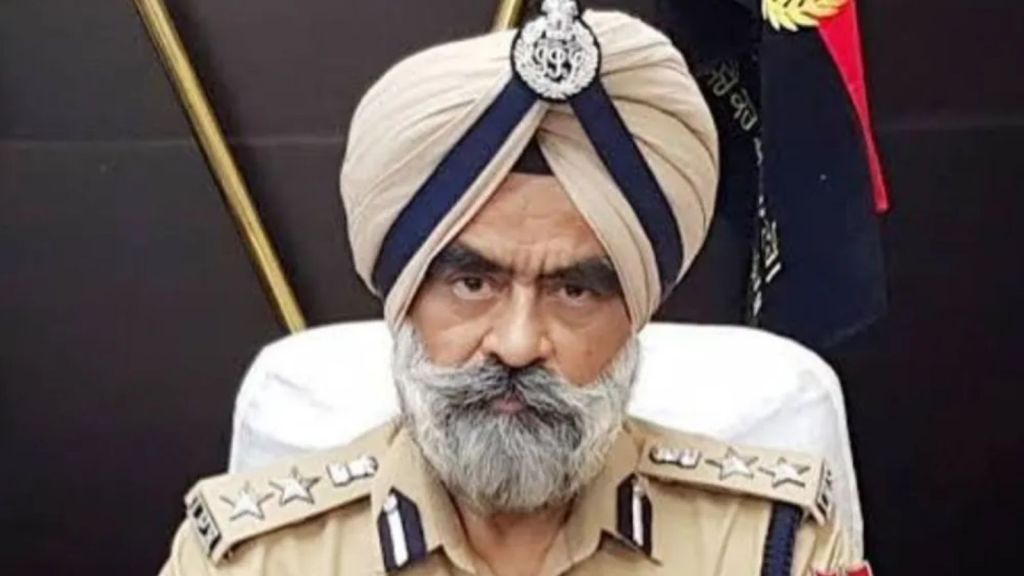
 Suspended Punjab Police DIG Harcharan Singh Bhullar (File photo).
Talking tough on the graft charges against suspended Punjab Police Deputy Inspector General (DIG) Harcharan Singh Bhullar, the Supreme Court Tuesday indicated that it may reject his bail plea in a corruption case registered by the Central Bureau of Investigation (CBI).
“100 per cent case of dismissal. You want (us) to dismiss it now or later?” Chief Justice of India Surya Kant, presiding over a three-judge bench, stated while adjourning the hearing on Bhullar’s appeal.
The bench, also comprising Justices Joymalya Bagchi and V Mohana, deferred the matter for four weeks, stating it will hear the plea after the examination of key witnesses. Bhullar’s appeal challenges the August 10 order of the Punjab and Haryana High Court, which had dismissed his second bail application.
The case originates from an FIR registered on a complaint by one Akash Batta. He alleged that Bhullar, then posted as DIG, Ropar Range, demanded a bribe through a private intermediary, Krishanu Sharda, in exchange for not taking coercive action against his business regarding a case registered at the Sirhind police station.
On October 16, 2025, the central agency laid a trap and apprehended Krishanu while he was allegedly accepting Rs 5 lakh as part of the bribe from Batta. Bhullar was arrested the same day.
Raids on Bhullar’s premises reportedly yielded over Rs 7 crore in cash along with other valuables. The Punjab Vigilance Bureau is currently investigating a separate disproportionate assets case.
On January 23, the Ministry of Home Affairs granted sanction to prosecute the 2009-batch IPS officer under corruption and criminal conspiracy charges.
Bhullar first approached the Punjab and Haryana High Court after a special CBI court in Chandigarh rejected his bail plea on January 2. The High Court turned down his initial petition on February 17.
Bhullar filed a second bail application, arguing that he had rendered over three decades of service, was “on the verge of superannuation,” was no longer required for further investigation, and that no money had been recovered directly at his instance.
However, the High Court rejected his second bail plea on August 10, emphasising the gravity of the charges. The High Court noted that the FIR allegations, recorded conversations, verification reports, and trap proceedings established a prima facie case of gratification demanded and collected through a co-accused.
Observing that charges had been framed and trial had commenced, the High Court held that granting bail posed a “reasonable apprehension that he may attempt to influence witnesses, tamper with witness or otherwise obstruct the course of proceedings”.