‘Where there’s folly…’: Gujarat Pocso court quotes Ramayana, jails man to 20 years

Stating the reasons for the sentence, the court noted, “Here, the accused is a husband and the father of a child. Despite this, he lured the minor away with the promise of marriage and proceeded to sexually exploit the minor herself".

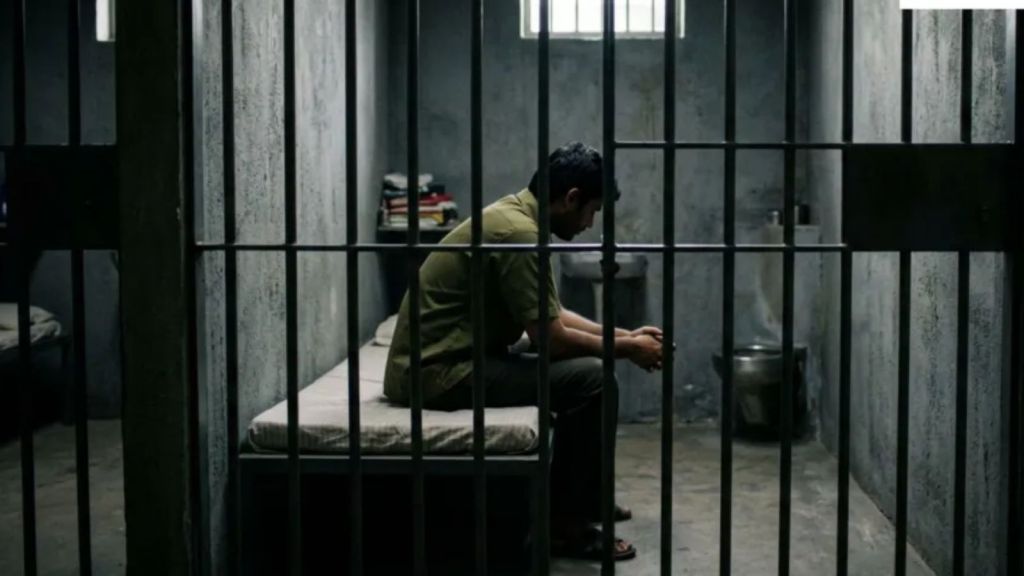
gujarat pocso caseA man has been 22 years after he was accused of allegedly aiding Pakistani nationals. (AI-generated image)

“WHERE THERE there is wisdom, there is prosperity; where there is folly, there is misery and destruction”. This Ramayana couplet on the consequences of good and bad choices forms the striking opening to a Gujarat Pocso court’s judgment sentencing a married man to 20 years in prison for sexually exploiting a teenaged minor girl.

The court opened its verdict by observing that the case involved an accused who had “shamed the personality of a father and a husband” by sexually exploiting a minor despite having a wife and child of his own.

The Special Pocso Court in Gandhinagar district, convicted the man and sentenced him to 20 years’ rigorous imprisonment, also imposing a fine of Rs 1 lakh. This includes 10 years’ rigorous imprisonment and a Rs 50,000 fine under Section 4 of the Protection of Children from Sexual Offences (Pocso) Act, and 20 years’ rigorous imprisonment with a further Rs 50,000 fine under Section 6, with the sentences running concurrently.

Stating the reasons for the sentencing, the judgment noted, “Here, the accused is a husband and the father of a child. Despite this, he lured the minor away with the promise of marriage and proceeded to sexually exploit the minor herself. This establishes the accused’s perverse mentality. If such perversions are not curbed, no minor girl in society will remain safe. Therefore, it appears necessary to impose the punishment prescribed by law on such an accused, and accordingly, the following final order is passed.”

The trial was completed within two months and eight days of its commencement, and the judgment was delivered within five months of the complaint being filed.

According to the FIR, the survivor was taken by the accused on his motorcycle from outside a temple on April 19, 2026, on the promise of marriage. She was kept at relatives’ and friends’ homes at multiple places, where the accused, according to her testimony, had sexual relations with her “on several occasions.” She was recovered along with the accused on June 4, after the family, having initially delayed the complaint out of fear of “loss of honour in society,” approached the police.

Prosecution witnesses included the panchas who recorded the seizure of clothing and the motorcycle, the survivor’s father, the doctors who examined both parties, and the investigating officer, who were examined at length during the trial.

Story continues below this ad

The defence questioned the delay in filing the complaint and pointed to the absence of an ossification test, injuries, and other material evidence. It also argued that the prosecution had failed to establish forcible sexual relations and argued that the relationship was consensual, and that the victim herself had denied physical relations in parts of her testimony.

The court rejected the argument, holding that under Sections 29 and 30 of the Pocso Act, the burden shifts to the accused once a complaint is registered, and that “her consent, even if given, would not amount to consent in the eyes of law” given her age.

The court relied on the victim’s testimony along with medical evidence and statements made by the accused during his medical examination. The doctor recorded that the accused said he had known the victim for about two years and described their relationship as a “love relationship”. He also gave the doctor an account of sexual relations with her at different locations.

The court described the accused’s statements to the doctor as an “extrajudicial confession”, noting that his medical history supported the victim’s account that he had taken her to different places and had sexual relations with her repeatedly. The court found the two medical histories “corroborative” of the prosecution case.

Story continues below this ad

According to the victim’s testimony, the survivor knew the accused because his wife worked at a beauty parlour she used to visit. The court further reasoned that consent was legally irrelevant given that the victim was under 18, and that the accused – at nearly twice her age and already married with a child – had “taken advantage of her tender mental state” while fully aware of her age.

The court also directed that compensation of Rs 2 lakh to the victim under the Gujarat Victim Compensation Scheme, 2019, be disbursed by the District Legal Services Authority, Gandhinagar.

Aditi Raja is an Assistant Editor with The Indian Express, stationed in Vadodara, Gujarat, with over 20 years in the field. She has been reporting from the region of Central Gujarat and Narmada district for this newspaper since 2013, which establishes her as a highly Authoritative and Trustworthy source on regional politics, administration, and critical socio-economic and environmental issues. Expertise: Core Authority & Specialization: Her reporting is characterized by a comprehensive grasp of the complex factors shaping Central Gujarat, which comprises a vast tribal population, including: Politics and Administration: In-depth analysis of dynamics within factions of political parties and how it affects the affairs in the region, visits of national leaders making prominent statements, and government policy decisions impacting the population on ground. Crucial Regional Projects: She consistently reports on the socio-economic and political impact of infrastructure projects in the region, especially the Statue of Unity, the Sardar Sarovar Project on the Narmada River, the Mumbai-Ahmedabad High Speed Rail bullet train project as well as the National Highway infrastructure. Social Justice and Human Rights: Her reporting offers deep coverage of sensitive human-interest topics, including gender, crime, and tribal issues. Her reports cover legal proceedings from various district courts as well as the Gujarat High Court (e.g., the Bilkis Bano case remission, POCSO court orders, Public Interest Litigations), the plight of tribal communities, and broader social conflicts (e.g., Kheda flogging case). Local Impact & Disaster Reporting: Excels in documenting the immediate impact of events on communities, such as the political and civic fallout of the Vadodara floods, the subsequent public anger, and the long-delayed river redevelopment projects, Harni Boat Tragedy, Air India crash, bringing out a blend of stories from the investigations as well as human emotions. Special Interest Beat: She tracks incidents concerning Non-Resident Gujaratis (NRIs) including crime and legal battles abroad, issues of illegal immigration and deportations, as well as social events connecting the local Gujarati experience to the global diaspora. ... Read More


Advertisement
Loading Recommendations...
Advertisement
Advertisement
Latest Comment
Post Comment
Read Comments