A Gujarat accident, 2 cops, a Rs 100-bribe case, and acquittal 27 years later

In the judgment dated August 31, Justice Vimal K Vyas acquitted Assistant Sub Inspector Dayashankar Tripathi and a co-accused policeman of charges under the Prevention of Corruption Act, 27 years after the alleged incident and 21 years after their conviction.

Gujarat couple battle for IVF, Gujarat couple IVF, losing doctor son to suicide, Gujarat couple in 50s wins battle for IVF, Gujarat couple in 50s wins High Court battle for IVF, Gujarat couple battle for IVF, Ahmedabad news, Gujarat news, Indian express, current affairsThe Special Judge at Patan convicted the two in 2005, sentencing them to two years of rigorous imprisonment.

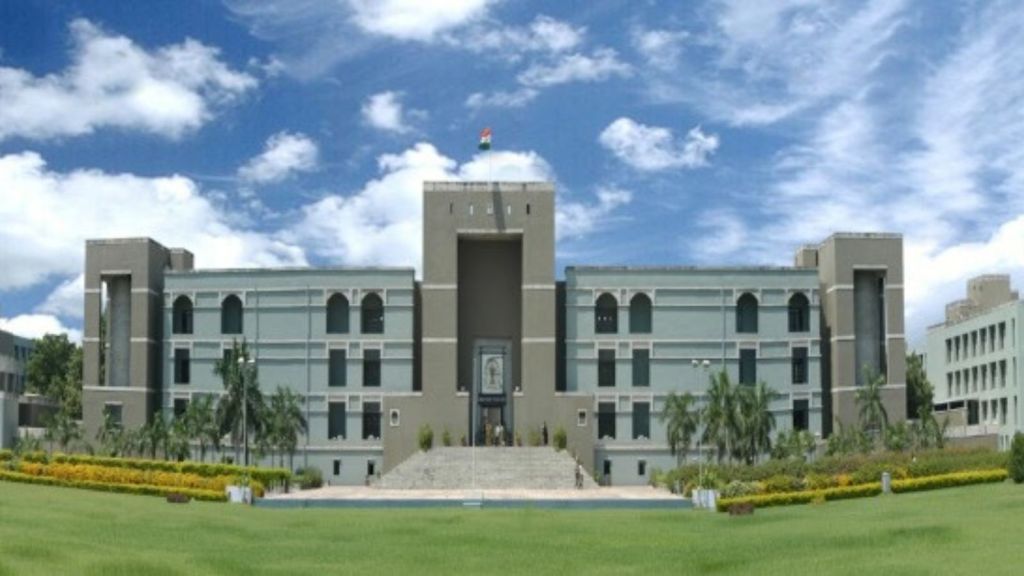
The Gujarat High Court has acquitted two policemen in a Rs 100 bribe case, 27 years after a lower court sentenced them to two years in jail in 1999. The court has said the prosecution could not establish a fundamental question at the heart of the case: whether money was demanded and voluntarily accepted as a bribe.

In the judgment dated August 31, Justice Vimal K Vyas acquitted Assistant Sub Inspector Dayashankar Tripathi and a co-accused policeman of charges under the Prevention of Corruption Act, 27 years after the alleged incident and 21 years after their conviction.

The court noted that the prosecution’s witnesses made contradictory statements.

The case goes back to an accident involving an auto-rickshaw in Gujarat’s Patan district in January 1999. Bhanuprasad Oza, an auto-rickshaw operator, found himself at the centre of a police probe after the three-wheeler hit a cyclist. According to the prosecution, Tripathi asked Oza for the auto-rickshaw’s documents, then warned him that the vehicle would be seized and he would be arrested. The prosecution said that when Oza asked if there was a way out, Tripathi allegedly demanded a bribe of Rs 1500. They eventually negotiated it down to Rs 900. Oza paid Rs 800 on the spot and promised Rs 100 later.

The next day, the prosecution said, a policeman came to Oza’s home and demanded the balance amount and the rickshaw’s papers. The cop asked Oza to appear at Pipla Gate Police Station. Instead of paying up, Oza went to the Anti-Corruption Bureau (ACB) in Mehsana and registered a complaint. ACB officials laid a trap. The two policemen were given notes smeared with anthracene powder as the bribe and then caught red-handed. Anthracene, a fluorescent chemical, is used to taint currency notes for bribe traps.

The Special Judge at Patan convicted the two in 2005, sentencing them to two years of rigorous imprisonment. But when the case reached the High Court, the witnesses’ depositions unravelled the prosecution’s version.

Oza, the prosecution’s chief witness, gave an account that conflicted with the case against the accused.

Story continues below this ad

He said the officer who allegedly demanded the bribe and earlier accepted Rs 800 was not present when the trap was laid. Oza told the court that he placed the anthracene-treated notes in another policeman’s pocket before signalling the raiding party. Under cross-examination, he admitted that the first accused neither demanded nor accepted any money from him.

The shadow witness gave another version, saying the accused refused the money and asked Oza to hand it to a colleague. The court found the accounts did not match. A shadow witness is a person sent by a law enforcement agency to observe an anti-bribe operation.

The judgment leaned heavily on a Supreme Court Constitution Bench ruling, which held that proof of demand and acceptance of a bribe is essential to establish the guilt of the accused public servant. Justice Vyas noted that the legal presumption of guilt under the Prevention of Corruption Act can only arise once demand and acceptance are proved as facts.

“Mere recovery of the tainted currency notes is not sufficient to convict the accused if the core evidence in the case is unreliable,” the court held, adding there was no proof that the money was voluntarily accepted as a bribe. The High Court said that where the evidence allows two equally plausible views, the one favouring the accused must prevail, as an equally plausible case of innocence itself creates “reasonable doubt” about the prosecution’s case.

Story continues below this ad

Concluding that the trial court had failed to appreciate the contradictions and convicted the two policemen, the High Court quashed the conviction and sentence, ordered that the two men be set free of all charges, cancelled their bail bonds and directed that any fine already paid be refunded.

Aditi Raja is an Assistant Editor with The Indian Express, stationed in Vadodara, Gujarat, with over 20 years in the field. She has been reporting from the region of Central Gujarat and Narmada district for this newspaper since 2013, which establishes her as a highly Authoritative and Trustworthy source on regional politics, administration, and critical socio-economic and environmental issues. Expertise: Core Authority & Specialization: Her reporting is characterized by a comprehensive grasp of the complex factors shaping Central Gujarat, which comprises a vast tribal population, including: Politics and Administration: In-depth analysis of dynamics within factions of political parties and how it affects the affairs in the region, visits of national leaders making prominent statements, and government policy decisions impacting the population on ground. Crucial Regional Projects: She consistently reports on the socio-economic and political impact of infrastructure projects in the region, especially the Statue of Unity, the Sardar Sarovar Project on the Narmada River, the Mumbai-Ahmedabad High Speed Rail bullet train project as well as the National Highway infrastructure. Social Justice and Human Rights: Her reporting offers deep coverage of sensitive human-interest topics, including gender, crime, and tribal issues. Her reports cover legal proceedings from various district courts as well as the Gujarat High Court (e.g., the Bilkis Bano case remission, POCSO court orders, Public Interest Litigations), the plight of tribal communities, and broader social conflicts (e.g., Kheda flogging case). Local Impact & Disaster Reporting: Excels in documenting the immediate impact of events on communities, such as the political and civic fallout of the Vadodara floods, the subsequent public anger, and the long-delayed river redevelopment projects, Harni Boat Tragedy, Air India crash, bringing out a blend of stories from the investigations as well as human emotions. Special Interest Beat: She tracks incidents concerning Non-Resident Gujaratis (NRIs) including crime and legal battles abroad, issues of illegal immigration and deportations, as well as social events connecting the local Gujarati experience to the global diaspora. ... Read More


Advertisement
Loading Recommendations...
Advertisement
Advertisement
Latest Comment
Post Comment
Read Comments