4 min readNew DelhiUpdated: Sep 25, 2026 01:12 PM IST
A custody battle took an unexpected turn before the Madhya Pradesh High Court when a five-year-old boy was asked whom he wanted to live with. He told the bench that he wanted to stay with his mother. Considering his preference and the circumstances of his care, the court held that he would be safer with his mother and made her interim custody permanent.
Justices G S Ahluwalia and Anuradha Shukla were hearing a habeas corpus petition filed by the boy’s mother seeking his custody. The father and grandmother appeared before the court, while the mother appeared along with the child.

“It is really unfortunate that couple is fighting with each other at the cost of lives of their children. Both the parties belong to a lower status of the society and they are labourer by profession…On a query by this Court, he specifically submitted that his mother loves him and he wants to stay with his mother. The corpus would be more safe in the company of his mother rather the company of his father,” the court said on September 22.
Justices G S Ahluwalia and Anuradha Shukla noted that the child’s grandmother declined to take responsibility for his care, saying it was his father’s responsibility. (Image enhanced using AI)
Father earned Rs 10,000 per month
During the hearing, the child’s father told the court that he worked as a labourer and earned approximately Rs 10,000 a month. He also levelled certain allegations against the mother. The order records that the father admitted that he occasionally consumed liquor.
The bench also asked the child’s grandmother whether she was prepared to look after the boy in the absence of his father. She said she was not ready to take responsibility for the child and maintained that it was her son’s responsibility to look after him.
The grandmother further told the court that her son did not provide assistance to the family and ate his meals at a hotel. The father conceded that he took his meals at a hotel but said he had provided material for cooking food for the child.
The court also recorded that the mother did not want to live with her husband. Her father had expressed that she should return to her matrimonial home and said he had other children to look after. The order further records that the mother’s father had previously stated that quarrels took place between her and her sisters-in-law.
Story continues below this ad
Child’s welfare above parental claims
The high court considered the custody dispute against the settled principle that the welfare of a minor is the paramount consideration in custody matters. The bench referred to Supreme Court decisions holding that custody cannot be determined merely by examining the legal right of a parent or guardian. The court must consider the child’s ordinary comfort, contentment, health, education, intellectual development and favourable surroundings.
The high court also referred to the principle that custody disputes are human problems and cannot be resolved solely by interpreting legal provisions or applying strict rules of evidence and procedure. The welfare and well-being of the child remain the central considerations.
The order further notes that a child’s welfare is not to be measured only in terms of money or physical comfort. Moral and ethical welfare and emotional ties are also relevant. The court also referred to the principle that, if a minor is old enough to form an intelligent preference, the court should consider that preference, while the final decision remains with the court based on what is conducive to the child’s welfare.
The court asked the child whom he wanted to stay with. The boy, who the court recorded as being approximately five years old, specifically told the bench that his mother loved him and that he wanted to stay with her. The court then considered his response along with his age and the circumstances surrounding his care.
Story continues below this ad
The high court had temporarily granted custody of the child to his mother on September 21. After hearing the parties, it made the interim custody order absolute on September 22. The high court directed that the custody of the child, which had been handed over by the police authorities to his mother, would continue with her.


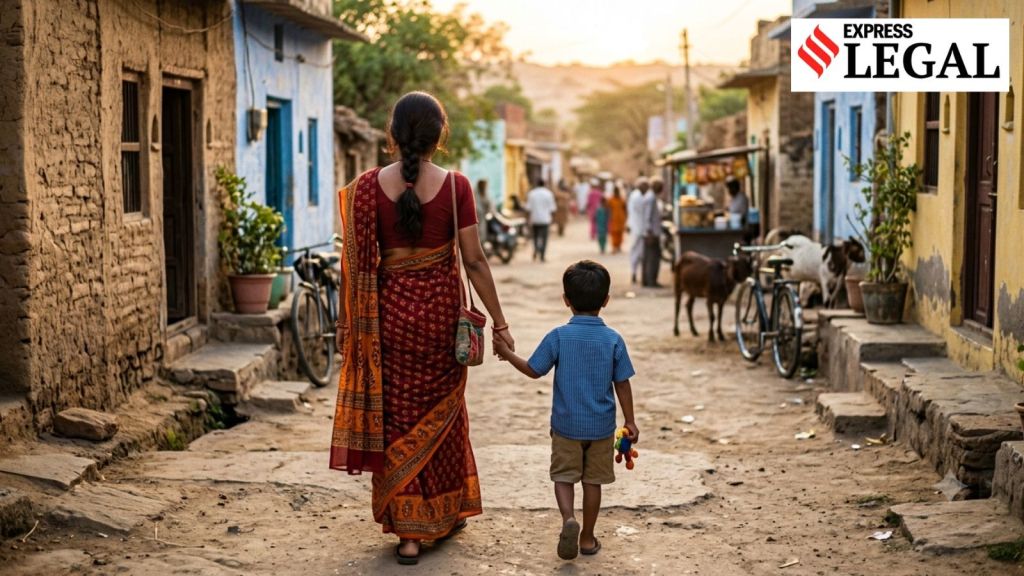


 Justices G S Ahluwalia and Anuradha Shukla noted that the child’s grandmother declined to take responsibility for his care, saying it was his father’s responsibility. (Image enhanced using AI)
