


 Justice Yadav begun the judgement observing that the physical violation is not the sole violation; rather may be a kind of soul violation which takes place in an offence of rape. (File Photo)
The Delhi High Court recently observed that “females, especially young girls” are very vulnerable in our society, and for them it becomes nearly impossible to trust anyone, including neighbours or relatives, who take advantage of women’s vulnerability. The court, however, upheld the acquittal of a man accused of raping a woman who later ended her life.
Justice Vimal Kumar Yadav was hearing the State’s appeal against the man’s acquittal when he considered the victim’s statements given to the police and the magistrate, apart from the death note and medical evidence. While all the evidence pointed to a “strong possibility of rape”, the same could not be corroborated in her absence.
The court noted that the accused was the victim’s neighbour, highlighting, “Females, especially young girls, are very vulnerable in our society and it is nearly impossible to trust anyone, as even the neighbours/relatives take advantage of the vulnerability of females.”
“Physical violation is not the sole violation; rather be a kind of soul violation which takes place in an offence of rape, as it transcends the physical boundaries and enters into the psychological and mental realm as well,” the September 28 order added.
Noting that the victim, rather than receiving sympathy and support, had to face the question of their own character, the ruling continued, “The social stigma and ostracisation is such in some of the societies and regions that the victim is unfortunately blamed for what she has undergone. Instead of having sympathy, support, and empathy for the victim together with social, psychological and mental support, in some of the societies, the victim is treated as an outcast, a person of questionable character and whatnot.”
It was observed that when family, medical, psychological, and social support is absent, the survivor’s life can become extremely difficult.
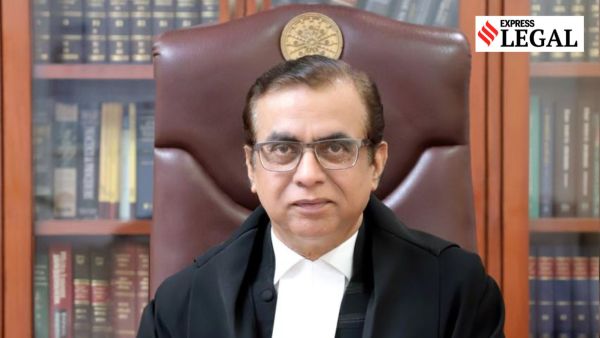 Justice Vinay Kumar Yadav said that when family, medical, psychological, and social support is absent, the survivor’s life can become extremely difficult.
“Ignominy, with all its synonyms like disgrace, dishonour, shame, humiliation, odium, disrepute, scandalisation, stigma, and opprobrium, is faced, lived, and undergone by a victim of rape. Then, if the family’s medical, psychological, and social support is not there, then life virtually becomes a living hell, and at times the victim, instead of resorting to legal recourse, finds it easy to end her own life,” the court said.
The order highlighted that one cannot possibly imagine and visualise the kind of mental state where the victim shudders at the very thought of recounting the experience before law enforcement authorities, courts, and then facing the onslaught of cross-examination.
The case arose from an alleged rape of a young woman at her jhuggi in Delhi in May, 2006. According to the prosecution, the man entered the jhuggi when the woman was alone, bolted the door, and raped her. She informed her brother later that night, following which an FIR was registered for rape.
The woman’s statement was recorded before a magistrate, and she underwent medical examination. However, about three months after the incident, and before she could testify in court, she ended her life. The note stated that she took the step due to shame arising from the incident.
The trial court, after examining 18 prosecution witnesses, acquitted the man in 2009. The state challenged the acquittal before the High Court, arguing that the survivor’s statements, note, medical evidence, and testimony of her family members established the case.
The accused opposed the appeal, arguing that the survivor’s testimony was unavailable, the remaining evidence contained contradictions, and there was no conclusive scientific evidence linking him to the offence.