5 min readNew DelhiUpdated: Sep 13, 2026 06:24 PM IST
SBI news: Observing that an employee cannot be treated as a “slave”, the Patna High Court recently reinstated an SBI officer who was declared to have voluntarily resigned after he remained absent from work due to illness. The court held that the bank failed to properly consider his medical documents or give him a fair opportunity to explain his absence.
Justice Harish Kumar noted that the officer, Pankaj Kumar Singh, had over 30 years of service and had taken sick leave after being diagnosed with jaundice, before developing another ailment that required treatment and prolonged bed rest.

“An employee cannot be treated as a slave and, ordinarily, has the right to relinquish his employment voluntarily by tendering his resignation. Equally, however, a prolonged and unexplained absence from duty may, depending upon the applicable service rules and the surrounding circumstances, constitute abandonment of service,” the court said on September 3.
The man had challenged a December 2019 communication issued by the State Bank of India (SBI) declaring that he had voluntarily vacated the service of the bank, amounting to voluntary resignation from service.
30 years of service
The man joined SBI in November 1989 as a clerk-cum-cashier at its Gandhi Maidan branch in Patna and later was promoted to assistant manager in 2006 and deputy manager in 2011. He later requested a transfer and was posted to the Muzaffarpur Zone in June 2019 where the officer was allegedly diagnosed with acute jaundice and advised complete rest for at least 45 days. He applied for leave, which he claimed was sanctioned through the bank’s HRMS portal for July 1 to July 31, 2019.
Justice Harish Kumar observed that the man claimed to have over 270 days of earned leave and sick leave.
While on bed rest, he allegedly developed severe pain in his legs and was admitted to a private clinic on October 17, 2019. He remained under treatment and was advised complete rest until mid-December.
He remained on medical rest until December 13 and, after being declared fit, reported for duty on December 16. However, he was then told that the leave earlier granted to him had been declined.
Story continues below this ad
The bank treated his absence from June 29, 2019, as unauthorised and said no leave had been sanctioned. Later, by a communication dated December 13, 2019, he was informed that he had voluntarily left service, which was treated as a resignation with effect from December 7. His appeal against the decision was rejected in June 2020. Aggrieved, he moved the high court seeking reinstatement and continuity of service.
‘Absent for over 90 days’
Representing the man, Senior Advocate P K Shahi argued that his client had completed more than 30 years of unblemished service in the bank. During his long tenure, he served in various capacities and across different branches, consistently meeting the organisation’s expectations, and there were no complaints about his conduct or performance.
On the contrary, SBI, through Senior Advocate Rajendra Narain, argued that despite the man’s leave being declined by the authority, he remained absent for more than 90 consecutive days.
It was added that the man’s continued absence, despite repeated communications and opportunities afforded to him, constituted a clear case of neglect of duty and indiscipline, leaving the bank with no option but to proceed against him.
Story continues below this ad
Bank did not act fairly: HC
The high court found that the man’s medical condition and documents were not false, forged or fabricated, and their genuineness had not otherwise been discredited. “Consequently, the foundation for treating the petitioner’s absence as unauthorised absence stood materially eroded,” it added.
The court noted that the man claimed to have more than 270 days of earned leave and substantial sick leave. It said these circumstances should have been considered before taking the drastic step of treating him as having voluntarily left his employment.
Pointing out that the bank has not acted reasonably and fairly, the court said that the man’s medical grounds for absence were not considered in their proper perspective. It noted that the bank’s reason for rejection of his sanctioned leave was not disclosed by the authority.
“The petitioner was not afforded a fair and meaningful opportunity to explain his alleged unauthorised absence before the drastic consequence of voluntary vacation of service was imposed upon him,” it added.
Story continues below this ad
The court quashed the bank’s notices and the appellate order, and directed SBI to reinstate the officer with continuity of service. However, it clarified that he would not receive salary or allowances for the period he did not actually work, though that period would count towards continuity of service and other applicable benefits.


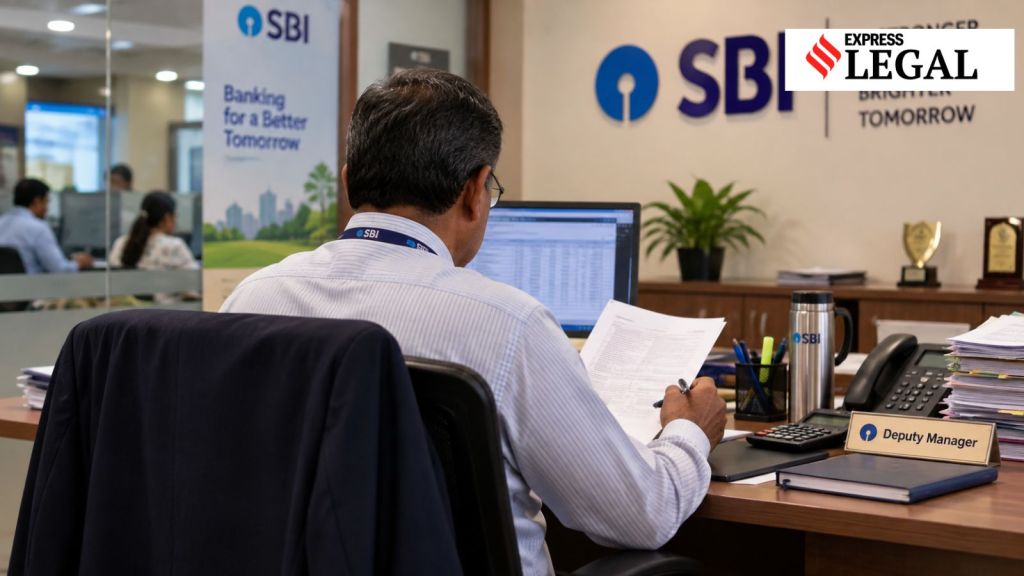


 Justice Harish Kumar observed that the man claimed to have over 270 days of earned leave and sick leave.
