5 min readNew DelhiSep 4, 2026 04:23 PM IST
First published on: Sep 4, 2026 at 04:23 PM IST
The Jharkhand High Court recently upheld the conviction of a man sentenced to nine years for the dowry death of his wife, who died under unexplained circumstances within two years of marriage in 1999. The court found consistent evidence that he had subjected her to cruelty over an unfulfilled demand for a pump-set.
Rejecting the husband’s plea, the court said that once the prosecution establishes the required ingredients through reliable evidence, the death is treated as dowry death, and the statutory presumption shifts the burden of proof onto the husband and his relatives.

Dealing with the plea of the husband challenging his conviction, Justice Pradeep Kumar Shivastava said, “There is consistent evidence that the husband of the deceased was demanding a pump set for irrigation purposes, and due to non-fulfilment of the same, the husband of the deceased used to harass and torture the deceased in various ways,” the court said on August 31.
The court noted that the other witnesses have also corroborated the fact that the victim was married to the appellant in the year 1997. “Thereafter, her husband started demanding a pump set, and due to non-fulfilment of the same, she was being tortured and harassed by her husband,” it added.
Family suspected poisoning in death
The case arose from the death of a woman who married the petitioner in 1997. According to the wife’s family, after about two years of marriage, the husband and his father allegedly demanded a pump-set for irrigation and subjected the woman to cruelty when the demand was not fulfilled.
Justice Pradeep Kumar Srivastava found no illegality or infirmity in the trial court’s conviction.
On December 30, 1999, the woman allegedly returned from agricultural work, began shivering, and collapsed. She died while being taken to hospital. When her arived, they found foam coming from her mouth and suspected that she had been poisoned.
The woman’s family maintained that they did not find any injury on the body of his daughter but found foam coming out of her mouth and nose. A case was registered under sections of culpable homicide not amounting to murder, and the husband was subsequently convicted by the trial court and sentenced to nine years’ rigorous imprisonment for dowry death.
The husband challenged the conviction before the high court, arguing, among other things, that there was no independent evidence of dowry-related cruelty and that he was already married to another woman when he married the victim.
State cited evidence of torture
Appearing for the accused-husband, advocate Binod Singh, along with advocates Anmol Deepak, Saranya Vaure and Ajay Kumar Jha, submitted that allegations of the woman’s family that their daughter was tortured and subjected to cruelty due to non-fulfilment of the demand for dowry have not been supported by any independent witnesses examined in this case.
It was further argued that the prosecution has also failed to take into consideration that there was a tense relationship between the victim and the first wife of the accused, which may be a cause for commission of suicide.
The state, represented by the Additional Public Prosecutor, opposing the contentions, argued that it was proved beyond doubt that the victim’s husband was very much instrumental in demanding a pump set as dowry and, due to non-fulfilment of the same, the victim was subjected to torture and cruelty physically and mentally, at the hands of her husband and in-laws.
Evidence proved pump-set demand: Order
The court held that the prosecution had established all four foundational requirements for a dowry death under the IPC.
“In the instant case, the death of the deceased, as per the evidence of prosecution witnesses, including her brother and father, is due to administration of poison by the husband, resulting in her death, and it has happened otherwise than under normal circumstances, which confirms the first requirement of Section 304B of the IPC,” the order reads.
It observed that the woman’s death occurred otherwise than under normal circumstances and within seven years of her marriage, satisfying the requirements.
The court found consistent and unrebutted evidence from her family members that her husband demanded a pump-set and subjected her to harassment and torture when the demand was not met.
It held that once these foundational facts were proved through reliable evidence, the statutory presumption under Section 113B of the Evidence Act legitimately operated against the husband.
The court therefore found no illegality or infirmity in the trial court’s conviction and nine-year sentence and dismissed the husband’s appeal.

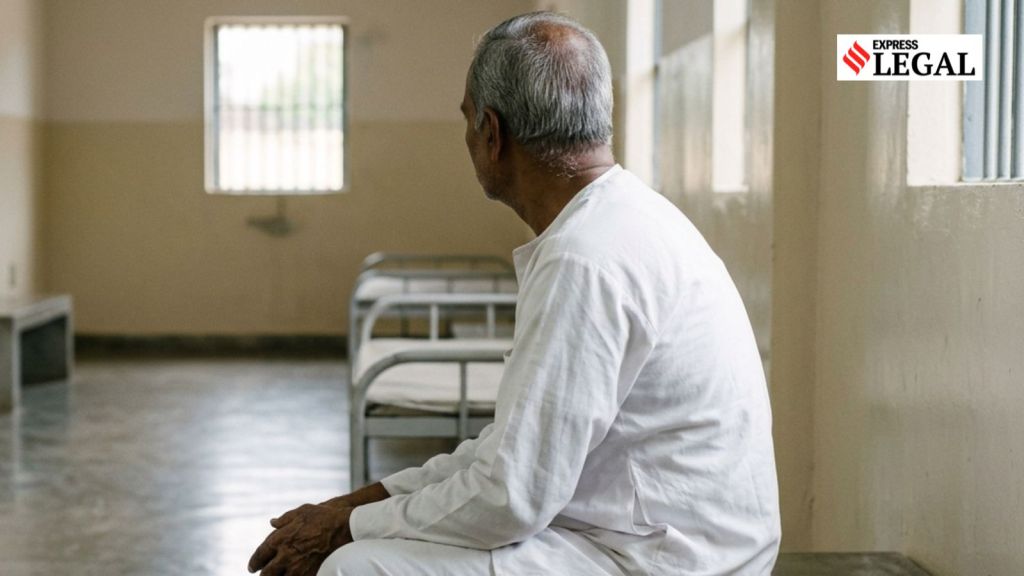 The Jharkhand High Court was dealing with a plea of a husband challenging his conviction in wife's dowry death case. (AI-generated Image)

 Justice Pradeep Kumar Srivastava found no illegality or infirmity in the trial court’s conviction.


 Share


