While expecting the finalisation of the SOP by the next date of hearing, the court said it would enable “Persons like the petitioner and others to use service dogs for their easy commutation/movement, ” and posted the matter on January 7, 2027.
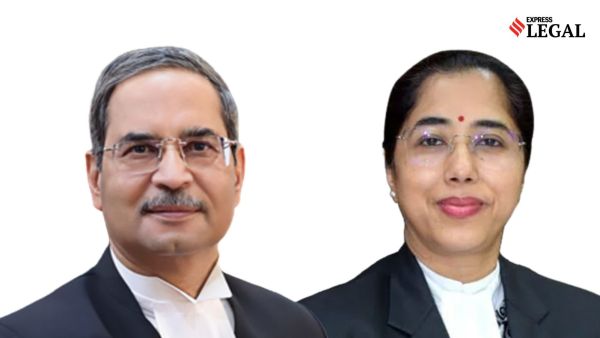
 Justice Dinesh Mehta and Justice Aditi Choudhary directed the authority concerned to take requisite steps to ensure redressal of the grievances.
The safety gap for persons with disabilities
In 2024, the Dhananjay Sanjogta Foundation (Mission Accessibility) filed a public interest petition before the Delhi High Court challenging the Animal Birth Control Rules, 2023, alleging that they failed to adequately address the risks stray animals pose to persons with disabilities (PwDs).
It was stated that India and, more particularly, Delhi have a very high population of stray animals, most of which are not vaccinated and sterilised, and that due to lapses in the management of stray animals, many of them also become aggressive and prone to attacking people, which poses a major health and safety risk to the inhabitants of localities with a high population of stray animals, especially when it comes to vulnerable sections of the population including aged individuals and PwDs.
Appearing for the foundation, advocates Rahul Bajaj, Amar Jain and Sarah submitted that the white cane used by visually impaired persons (which resembles a stick that is used to chase stray animals, including dogs) was perceived as a threat by stray animals and resultantly, the stray animals end up being more aggressive around visually impaired individuals.
The counsel argued that the inability of visually impaired persons to anticipate threats and their restricted mobility renders them incapable of defending themselves in cases of an attack. Similarly, persons with locomotor disabilities, hearing impairments, speech impairment, and mental illness also face challenges in defending themselves in cases of an attack by stray animals, the counsel added.
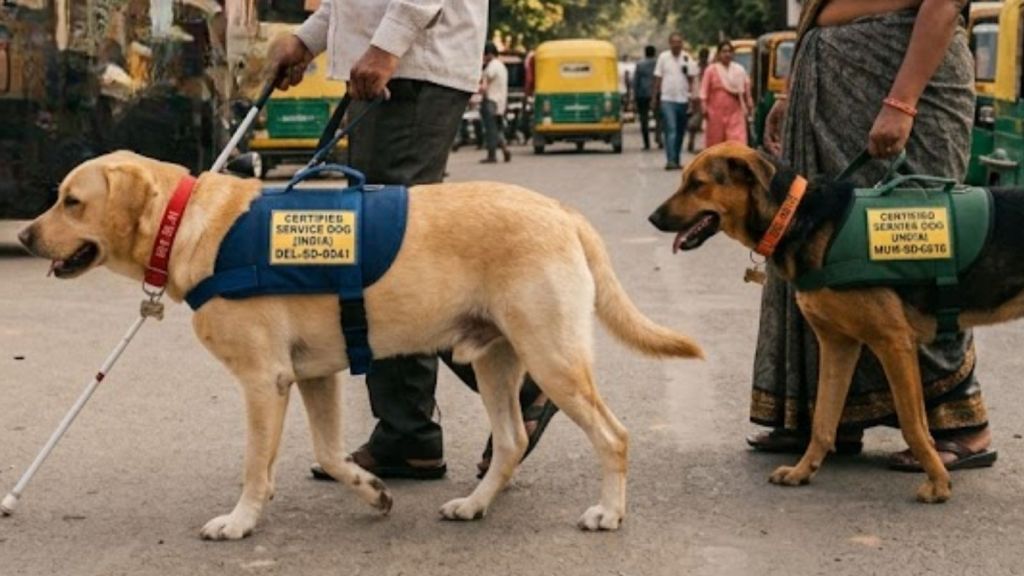
Many PwDs in other jurisdictions rely on service animals and therapy animals to go about their lives, but there exists no enabling framework for PwDs to utilise service/therapy animals in India, thus placing them in a disadvantageous position vis-à-vis their counterparts in other jurisdictions, Bajaj said.
The counsel added that the Animal Birth Control (“ABC”) Rules, 2023 dated March 10, 2023 notified by the Central Government have failed to adequately address the unique challenges faced by PwDs in relation to stray animals.
On November 18, 2024, the Delhi High Court directed the Department of Animal Husbandry and Dairying and the Department of Empowerment of Persons with Disabilities to explore a framework for the “safe, non-discriminatory and effective utilisation of service animals in India.”
Register the dogs, colour-code the collars
Advocates Sarah, Rahul Bajaj and Amar Jain, appearing for the Dhananjay Sanjogta Foundation, approached the Delhi High Court over grievances concerning the use of service dogs by persons with disabilities in India. Union Department of Animal Husbandry and Dairying and another respondent placed a draft Standard Operating Procedure (SOP) for service dogs assisting persons with disabilities before the court.
Rajesh Gogna, counsel for the opposite party, submitted that objections have been invited from the general public and all stakeholders and the SOP would soon be finalised.
The suggestions that emerged during the hearing were that a register of service dogs be kept and each service dog be given a registration number, and all service dogs should have a pre-fixed coloured unique collar to enable the general public, including security people, to know that such a dog is a service dog and is not likely to cause harm.
Another suggestion was that when taken into crowded areas, such as cinema halls, malls, hospitals, etc., the service dogs shall be muzzled so as to ensure peace and harmony.
Gogna assured that the said inputs will be communicated/conveyed to the Authorities concerned for consideration and incorporation in the SOP.


 Justice Dinesh Mehta and Justice Aditi Choudhary directed the authority concerned to take requisite steps to ensure redressal of the grievances.

 Share


