


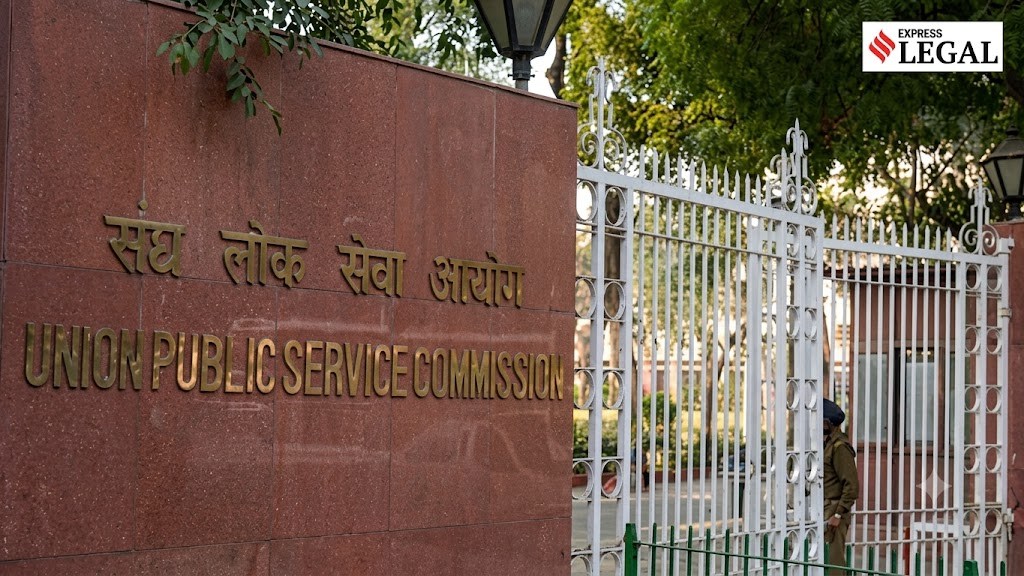
 UPSC building in New Delhi
The Delhi High Court has set aside the decision of the Railway Board and the Central Administrative Tribunal to cancel a man’s candidature in the UPSC Engineering Services Examination prelims, mains, and personality test after a medical exam reportedly found his neurological condition unsuitable for civil engineering posts. The court noted that his 45 per cent “locomotor disability” was recognised by a government-issued UDID card.
The court held that the tribunal had erred in treating him as ineligible for recruitment to the Civil Engineering Service. A bench of Justices C Hari Shankar and Vinod Kumar observed that the Government of India had recognised Kumar as having a locomotor disability in his UDID card.
“The medical certificate clearly demonstrates that, owing to the ailment suffered by the petitioner, his movement and his ability to execute activities relating to movement were affected. The notification dated 1 June 2001 issued by the Ministry of Social Justice and Empowerment, specifically including, in the category of ‘locomotor disability’, inability resulting from affliction of musculoskeletal and/or nervous system.”
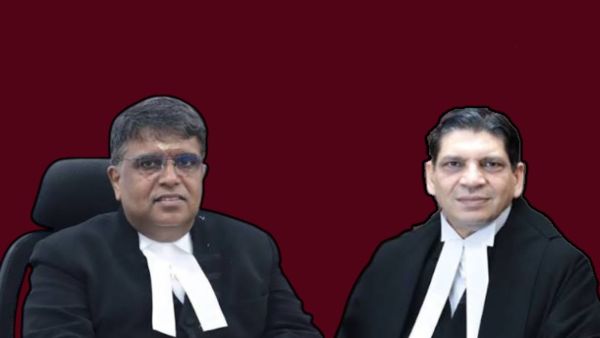 Justices C Hari Shankar and Vinod Kumar set aside the Railway Board decision cancelling Manish Kumar’s candidature.
The Union Public Service Commission (UPSC) issued a notification on September 28, 2016, for conducting the Engineering Services Examination 2017. The candidate, Manish Kumar, applied under the physically handicapped category. He cleared the preliminary examination, the mains examination, and a personality test. A Railway Board medical examination was conducted, and the appellate medical board opined that he was suffering from neurological complaints with Generalised Dystonia with Myoclonus and Dysarthria.
This report led to the issuance of a show cause notice dated February 12, 2018, requiring Kumar to show why he should be considered a candidate with disabilities, as Generalised Dystonia with Myoclonus and Dysarthria was not an identified disability under the Engineering Services Examination (ESE) Rules, 2017.
Kumar argued in his response that he owned three disability certificates, of which one was issued by the Govind Ballabh Pant Hospital and another by the Institute of Human Behaviour and Allied Sciences, apart from a certificate which stated that his neurological condition had affected his speech that amounted to a “physical disability” within the Rights of Persons with Disabilities Act, 2016
In March 2018, the Railway Board cancelled his candidature, saying his neurological condition of Generalised Dystonia with Myoclonus and Dysarthria was not identified as suitable for any of the services/posts which were proposed to be filled by the ESE.
Kumar challenged the decision before the Delhi High Court, which transferred the case to the Central Administrative Tribunal in 2019; the CAT dismissed his plea, holding that his condition did not qualify him for appointment to the civil engineering category.
Advocates Amar Jain, Rahul Bajaj and Sarah, appearing for Kumar, argued that based on the disability certificate issued to him, Kumar was issued a Unique Disability ID card by the Government of India, which certified the type of disability from which he was suffering to be “locomotor disability” to the extent of 45 per cent.
Kumar’s counsel argued that his medical certificates showed that his neurological condition restricted his movement and ability to perform movement-related activities. Therefore, he should be considered to have a “locomotor disability” under the June 1, 2001 notification.
The Railway Board relied on the reasoning of the CAT and defended the decision to treat Kumar as ineligible for recruitment to the Civil Engineering Service.
Relying on Om Rathod v Director General of Health Services, the court held that a person who has a valid disability certificate cannot be subjected to medical examination to conclude contrary to that recorded in the disability certificate.