


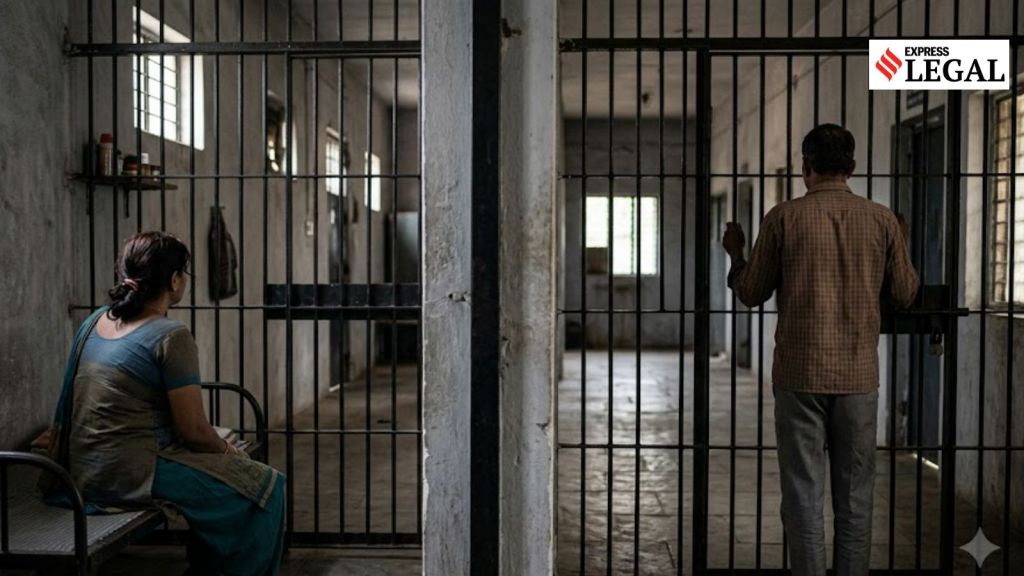
 Huzair Farhan Baig alias Huzair, the accused No 5 in the Shivamogga Islamic State (IS) conspiracy case, has been sentenced to six years’ rigorous imprisonment and a fine of Rs 58,000.
The Delhi High Court has granted bail to two accused in a 2021 UAPA case after nearly five years in custody, stressing that there was “no chance of the trial ending soon.” The court said the accused woman had an “arguable case” for bail and, for the accused man, weighed his prolonged incarceration against the material alleged against him.
The case arose from an alleged “larger conspiracy” involving members and associates of a terrorist organisation operating in Jammu and Kashmir, and the two accused were allegedly involved in activities linked to the conspiracy, including terrorist propaganda and radicalisation of youth.
A bench of Justices Navin Chawla and Ravinder Dudeja observed that the accused man had already spent almost five years in custody while awaiting trial, and there was no likelihood of the trial concluding soon.
The September 3 order said, “Given the long period of incarceration of the appellant juxtaposed against the material alleged against him by the National Investigation Agency (NIA), the appellant has been able to make out a case for being released on bail.”
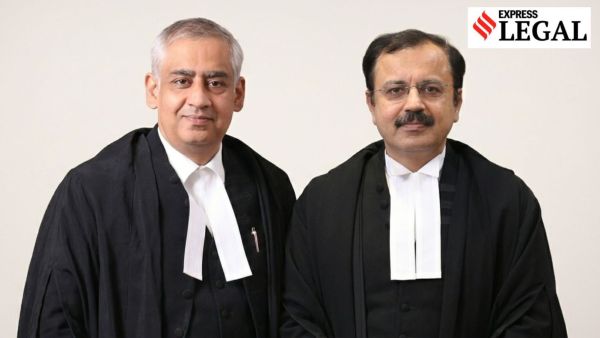 Justices Navin Chawla and Ravinder Dudeja granted bail to the accused person in a UAPA case.
The National Investigation Agency Act case concerns an alleged larger conspiracy involving members and associates of a terrorist organisation operating in Jammu and Kashmir. The agency alleged that the network was indulging in the radicalisation of impressionable local youth for recruiting and training them in handling arms, ammunition and explosives.
Sobiya Aziz was arrested on October 22, 2021, and a search was conducted at her residence, where, it is alleged, incriminating material in the form of several diaries wherein she had made handwritten notes about the establishment of Shariyat Law, Islamic State ideology, and other Jihadi material was recovered. It is further alleged that an Islamic State Flag was also recovered from her house.
It was the case that she had been in custody since 2021, and presently, out of the 359 cited witnesses, only 21 witnesses have been examined by the prosecution.
Kamran Ashraf Reshi was arrested on October 20, 2021, when he was aged only around 21 years. As per his nominal roll, he has spent almost five years in custody. The NIA alleged that he was linked to online propaganda groups, Pakistan-based handlers and terrorist organisations, possessed threatening pamphlets and attended lectures to radicalise youths towards armed jihad.
Advocates Kartik Venu, Arjan Ajai Singh Chonker, Jude Rohit, Agrim Tandon and Alisha Sharda, appearing for the accused woman, argued that she was 33 years old and had no criminal antecedents. It was submitted that she had spent five years of incarceration and there was no chance of the trial ending soon.
The counsel submitted that she had been discharged from some UAPA charges and that several co-accused had already received bail. It was further argued that the prosecution evidence did not establish her involvement in the alleged conspiracy. According to the defence, merely being present in a car where arms were allegedly being transported did not show that she knew what was inside.
The Special Public Prosecutor Amit Tiwari and others, appearing for the National Investigation Agency, argued that she was part of a larger conspiracy to wage war against India and to help and support terrorist activities. It was submitted that the accused woman should not be enlarged on bail as there is a possibility of her threatening the witnesses and prejudicing the trial.
The accused man’s lawyers argued that there was no evidence linking him to the Telegram group or showing that he shared jihadist videos or radical messages. They said there was no evidence of his operational involvement in terrorism and argued that the case against him was largely digital and non-violent.
The counsel submitted that the threatening pamphlet seized from his premises was only a single sheet of paper and could not lead to his long incarceration. It was submitted that there was no evidence that he had any role in preparing the said pamphlet or even in its circulation.
Opposing his bail plea, the NIA’s counsel submitted that mobile phones, the pamphlet, Pakistan contact, witness statements and his alleged links with radicalising groups showed his association with the terrorist network. It argued that the seriousness of the allegations and charges against him justified custody.
The court noted the accused woman had already suffered a long period of custody of almost five years pending trial, and that there was no chance of the trial ending soon. It said the circumstances justified her release on bail. The court clarified that these observations were made solely to decide the bail appeals and would not affect the merits of the trial.
The court added that the accused persons should not leave India without the prior permission of the trial court. Any application seeking permission to travel shall disclose the destination, duration, and purpose of travel, along with complete contact details during such travel. The court also directed the accused persons to refrain from joining any WhatsApp group or other social media platform where anti-national material is uploaded, circulated, or propagated. They shall also not upload/share/disseminate or circulate any anti-national material on any social media platform or otherwise.