‘Contractual hiring not the answer’: High Court flags staff crunch at Delhi government hospitals

The Delhi High Court has asked the government to urgently fill vacant top posts and address staff shortage across its 38 hospitals

Contractual hiring not the answer to hospital staff crunch, fill top vacancies immediately: Delhi High Court tells government.Contractual hiring not the answer to hospital staff crunch, fill top vacancies immediately: Delhi High Court tells government.

Stating that contractual employment in hospitals is not the answer to staff crunch, the Delhi High Court has told the Delhi government to recruit for hospital top posts immediately

It also flagged the lack of a “uniform HR policy” to handle recruitments in these hospitals, cautioning the government that “there should not be a single post” at the top, such as of medical superintendent, left vacant.

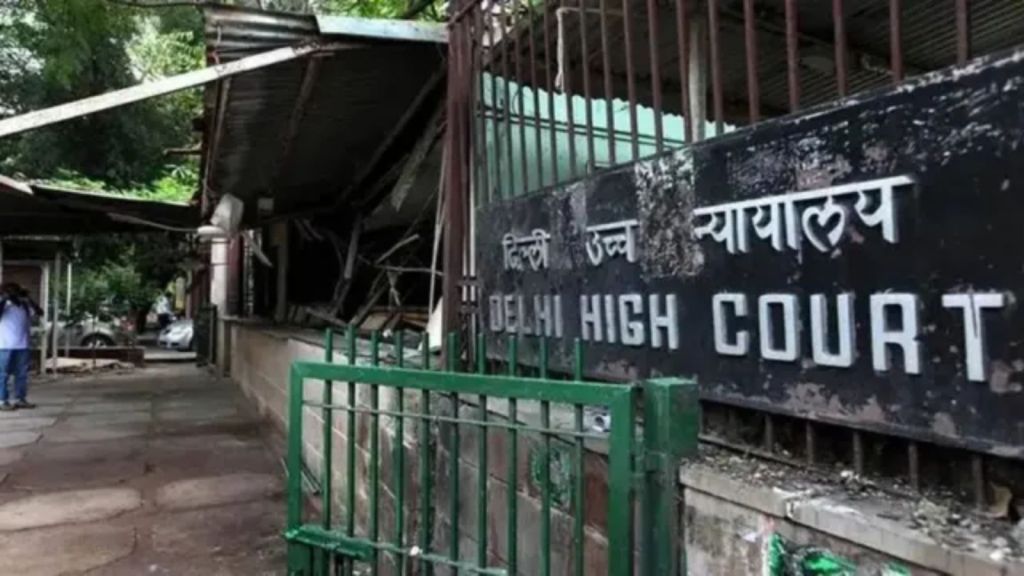
The observation, made in an order on September 18 and made public on Monday, was by a bench of Justices Prathiba Singh and Manmeet Pritam Singh Arora while hearing a suo motu public interest litigation (PIL).

In 2017, the HC had taken suo motu cognisance of facilities lacking at hospitals, including ventilators, and had instituted the PIL.

The court has periodically kept a close eye on Delhi government’s health facilities through the PIL, issuing directions from time to time, including implementing a system of publicly sharing in real-time bed availability across its hospitals.

The bench has now called for all medical superintendents/medical directors/directors of the 38 government hospitals in Delhi, as well as the secretary of the health department to join the proceedings either virtually or physically on the next date of hearing on October 10.

Lack of manpower

Taking up the issue of lack of manpower, cited as a reason by several hospitals on why several high-end medical equipment remain unused, the court observed that “contractual employment cannot be the answer to all problems”.

Story continues below this ad

It also recorded that doctors from the Delhi Cancer Institute claimed the institute has not had a full-time medical superintendent since 2019.

Noting that the Delhi government “would have to deal with the issue of recruitment in a centralised manner, rather than allowing recruitment at the local level on a contractual basis,” it said: “… the filling up of vacancies from the top till the bottom of the pyramid has to be done in a manner so as to bring some consistency, clarity and permanency. Contractual employment cannot be the answer to all problems.”

“Unless the staff crunch issue is addressed in a methodical manner, hospitals will continue to suffer from lack of proper administration and there is a likelihood of high level of attrition with contractual staff. This Court is also conscious of the fact that contractual employment also blocks promotion avenues and results in frustration amongst employees,” the bench recorded.

The court has directed the secretaries of the health and services departments to hold a fresh meeting with the MS/MD of each of the 38 hospitals in Delhi to address the recruitment issue, starting with recruiting a regular full-time MS or MD in hospitals without one.

Story continues below this ad

Unused equipment

The court has also sought a revised status report on equipment lying unused across the 38 government hospitals, “especially, MRI, CT Scan, PET Scan, USG machine”, and provide details as to in which hospitals these facilities are available and where there is adequate regular or contractual manpower to run these equipment or not.”

“While giving these details, use by consultants on a random basis shall not be constituted as use of equipment. Any equipment which is not available for use of patients on a daily basis with proper manpower shall be treated to be unused equipment,” the court outlined.

Nearly a fifth of the toll-free calls made for ambulance, dropped

Last week, the bench was told that nearly 18% of medical emergency calls made to the state’s toll-free number do not go through.

Story continues below this ad

The toll-free number 102 — used for calling ambulance services — has 30 operators across 30 lines, fielding over 2,000 calls a day at present.

“The total number of calls received on this dedicated number are stated to be around 2,200 calls per day and there are at least 500 call drops everyday as per Mr [Alok Kumar] Divedi, HOO [head of operations] (CATS) [Centralised Accident and Trauma Service],” which runs the toll-free, the court recorded.

Now, they will not only field calls for ambulances, but will also respond to calls inquiring about the availability of ICU beds at government hospitals.

With the increased workload for the operators, the HC directed the CATS’ head to observe the data for a month on calls received and dropped each day, and assess if the number of lines and operators are required to be increased to make the service more efficient.

Sohini Ghosh is a Senior Correspondent at The Indian Express. Previously based in Ahmedabad covering Gujarat, she recently moved to the New Delhi bureau, where she primarily covers legal developments at the Delhi High Court Professional Profile Background: An alumna of the Asian College of Journalism (ACJ), she previously worked with ET NOW before joining The Indian Express. Core Beats: Her reporting is currently centered on the Delhi High Court, with a focus on high-profile constitutional disputes, disputes over intellectual property, criminal and civil cases, issues of human rights and regulatory law (especially in the areas of technology and healthcare). Earlier Specialty: In Gujarat, she was known for her rigorous coverage in the beats of crime, law and policy, and social justice issues, including the 2002 riot cases, 2008 serial bomb blast case, 2016 flogging of Dalits in Una, among others. She has extensively covered health in the state, including being part of the team that revealed the segregation of wards at the state’s largest government hospital on lines of faith in April 2020. With Ahmedabad being a UNESCO heritage city, she has widely covered urban development and heritage issues, including the redevelopment of the Sabarmati Ashram Recent Notable Articles (Late 2025) Her recent reporting from the Delhi High Court covers major political, constitutional, corporate, and public-interest legal battles: High-Profile Case Coverage She has extensively covered the various legal battles - including for compensation under the aegis of North East Delhi Riots Claims Commission - pertaining to the 2020 northeast Delhi riots, as well as 1984 anti-Sikh riots. She has also led coverage at the intersection of technology and governance, and its impact on the citizenry, from, and beyond courtrooms — such as the government’s stakeholder consultations for framing AI-Deepfake policy. Signature Style Sohini is recognized for her sustained reporting from courtrooms and beyond. She specialises in breaking down dense legal arguments to make legalese accessible for readers. Her transition from Gujarat to Delhi has seen her expand her coverage on regulatory, corporate and intellectual property law, while maintaining a strong commitment to human rights and lacuna in the criminal justice system. X (Twitter): @thanda_ghosh ... Read More


Advertisement
Loading Recommendations...
Advertisement
Advertisement
Latest Comment
Post Comment
Read Comments