


 A bag containing a polythene packet was recovered from the woman containing 105 grams of Charas.
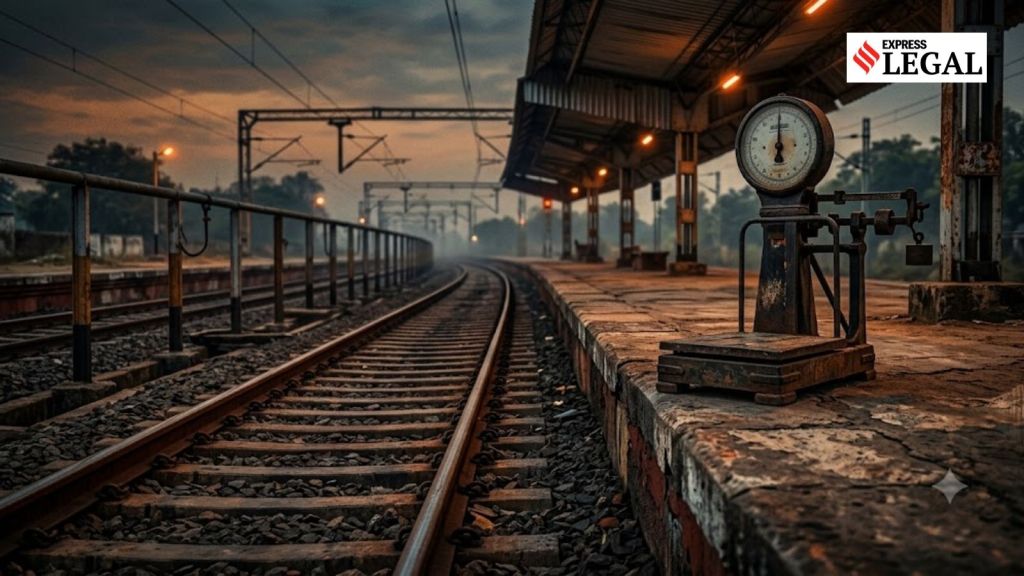
(AI-generated image)
A passing train may have made all the difference in a 2002 charas case.
The Delhi High Court found that vibrations from trains passing near the railway track could have caused an error while weighing 105 grams of charas, just five grams above the small-quantity threshold, from Sunita in the 2002 case. The court also considered that she was then a 26-year-old, poor and illiterate woman supporting four minor children, a disabled husband and blind elderly in-laws.
Justice Vimal Kumar Yadav observed that subjecting her to rigorous imprisonment, given her circumstances, would go against the reformative, rationalised approach and reduced Sunita’s jail term to the period already undergone.
The September 7 order said, “The weighing and sampling was done near a Railway track, and it is a matter of common knowledge that every time a train passes, the area around the railway track vibrates. This introduces a possibility of some element of error in weighing, even if the equipment, which was manual, was fully and actually functional. Five grams, which has overshot the “small quantity” limit in the instant case, is a very insignificant weight otherwise. A possibility of error is, therefore, very much present.”
Under India’s Narcotic Drugs and Psychotropic Substances (NDPS) Act, a small quantity of charas (hashish) is defined as up to 100 grams, and possession carries a rigorous imprisonment of up to 6 months to 1 year, a fine of up to Rs 10,000, or both.
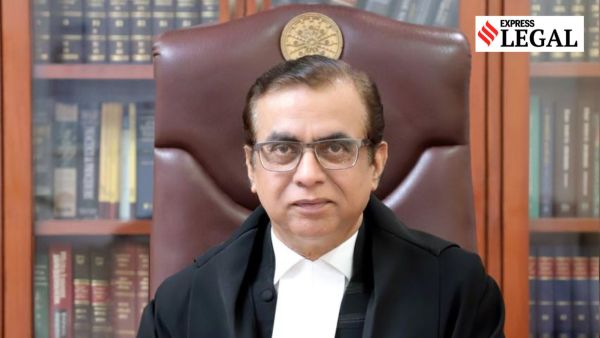 Justice Vinay Kumar Yadav reduced the woman’s sentence to the period already undergone by her in a 2002 charas case.
On October 2, 2002, police received information that a lady would come and go towards Khera Village via Railway Line Friends Colony, who would be carrying contraband Charas. A raiding party was constituted, and the woman was apprehended based on the informer’s identification.
After the woman was served a notice under the NDPS Act, police recovered a bag containing a polythene packet from the woman, containing 105 grams of Charas, out of which 50 grams was separately packed and sealed and subsequently sent to the Forensic Science Laboratory (FSL).
Following the seizure, a case was registered under Section 20 of the NDPS Act, and the contraband was deposited in the police Malkhana; thereafter, other requisites of the investigation were completed.
Advocates Dinesh Singh Bachgoti, Kamlesh Kumar Verma and Deepali Singh appearing for the woman did not challenge her conviction. The counsel sought reduction in sentence and argued that the recovered charas was recorded as 105 grams instead of 100 grams, and the weighing scale which was used to weigh the contraband was not foolproof, being manually handled; therefore, the 5 gram variation can easily be visualised.
The counsel said that the genesis of this argument is that the police separated 50 grams in one packet and sent it to the FSL, where the charas/packet was found to weigh 52.22 grams. Thus, the weight of the wrapper/polythene bag in which the charas was sent to FSL turned out to be 2.22 grams. So, a variation of 5 grams cannot be unexpected, but is very much possible.
Opposing the reduction in her sentence, additional public prosecutor Mukesh Kumar, appearing for the state, relied on her alleged criminal antecedents, pointing out that she was involved in 16 other cases, mostly relating to illicit liquor offences.
The court noted that there is a difference in carrying out tests, measurements, and weights in a controlled atmosphere, like in a Forensic/Scientific Laboratory, and those very things, when carried out in an open and exposed atmosphere, may yield results that vary. It said that a “possibility of error” was there.
The court reduced her sentence to the period already undergone and directed her to furnish a bond of Rs 20,000 for a period of two years before the trial court as prescribed under the Narcotic Drugs and Psychotropic Substances Act (execution of bond by the convicts or addicts), Rules, 1985.