“The schools are doubly enriching themselves by admitting another candidate without refunding the fees of a student who has withdrawn their admission in mid-term. Such institutes have become commercial shops, and there cannot be any worse form of unscrupulous and unfair trade practice in the field of education,” it added.
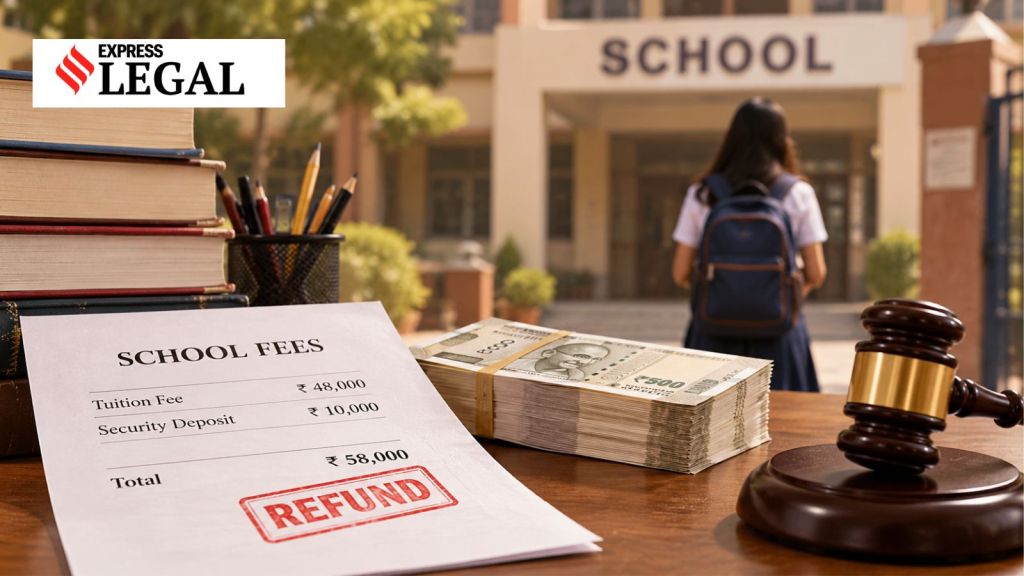
The commission, while allowing the complaint filed by the 50-year-old man, noted that the parent allegedly paid Rs 48,000 in school fees besides a Rs 10,000 security deposit.
“A student may be at liberty to leave midstream if she finds the service deficient and non-yielding, and to tell her that fees once paid are not refundable was an unfair trade practice, as no service provider can take or charge the consideration of the service which it has either not given or has not been availed,” the September 16 order read.
Daughter struggled to adjust to US-to-India schooling
The 50-year-old man said he approached the school to admit his daughter to Class 11 in the Science stream after she returned from the US. He said she was enrolled on August 20, 2018, and he paid Rs 10,000 as a security deposit and Rs 48,000 as school fees.
Story continues below this ad
The man said that at the school’s request, he furnished a no-objection certificate relating to his daughter’s previous schooling in the US. She then attended the school for a few days but allegedly struggled to follow the lessons because of the difference in the method of teaching and presentation.
He said he requested the school authorities to provide extra support and also sought a refund of the fee as his daughter had discontinued her studies. However, the request was denied by the school authority. Aggrieved, he moved the commission seeking refund and compensation.
School’s defence
The school, through advocate A Rajashekhar Reddy, emphasised that the Supreme Court held that “education is not a commodity”. It submitted that educational institutions do not provide a “service” and therefore there could be no question of deficiency in service in matters relating to admission or fees.
The school also argued that the parent had agreed to its terms and conditions relating to the fee structure and had signed the declaration form required at the time of admission.
Story continues below this ad
Parent is consumer: Commission
The commission pointed out that fees are paid for services to be rendered by way of imparting education by the educational institutions. “If there is no rendering of service, question of payment of fee would not arise,” it added.
It was also clarified that the complainant had hired the services of the school for a payment, so they are consumers as defined in the Consumer Protection Act. It added, “imparting education by an educational institution for consideration falls within the ambit of `service’ as defined under the Consumer Protection Act”.
The commission further added that if the student is not comfortable with the teaching methods/skills, they may leave the institution in between or mid-session or after attending for a few days. “In our opinion, the educational institution or coaching centre for which such coaching centres or educational institutions should not be denied a refund of the fee for the remaining period, which he/she did not attend,” the commission emphasised.
It said no service provider can take or charge consideration of the service which neither it has provided nor has been availed.
Story continues below this ad
Pointing to the complainant’s daughter’s different educational background after studying in the USA, the commission said: “A student may leave midstream if she finds the service deficient and non-yielding, and to tell her that fees once paid are not refundable is gross unfair trade practice on the part of the opposite party (school).”
Accordingly, the commission directed the school to refund the sum of Rs 58,000 from the date of payment along with costs of Rs 5,000 towards the litigation.
Takeaway
This ruling highlights that a no-refund policy cannot by itself allow a school to retain fees for a period during which a student did not avail the educational services.
Aggrieved consumers may contact the consumer helpline in their respective states (Telangana: 0771-2582902) or call the National Consumer Helpline at 1915 for assistance.
Story continues below this ad
Don’t miss out on these stories:
Airline to pay Bihar man Rs 85,000 after flight delay forces family to buy fresh tickets
Rs 1,500 Anarkali dress bought on Instagram never came: Kerala woman wins Rs 16,000
Ordered diapers for 1.5-year-old daughter, ‘never’ delivered: Father wins Rs 22,500