
“Police are entrusted with the responsibility of protecting life, liberty, rights and public order, but they are not an authority above the people. Police powers are conferred by law and must be exercised fairly, reasonably and proportionately. Thus, the police must act as guardians of the constitutional principles, rather than as rulers exercising unchecked authority over citizens…,” the court said.
“The police structure, methods and legal framework largely continued to reflect the colonial model, mainly based on the Police Act, 1861, which was primarily designed to maintain order, control the population and protect the interests of the ruling authority, rather than to function as a citizen-oriented service,” it added.
The court said that though the British rulers were replaced by an elected Indian government, the basic institutional character of the police remained substantially unchanged.
Justice Maheswara Rao Kuncheam highlighted that Andhra Pradesh has around 166.18 police personnel per one lakh population, against the UN recommendation of 222.
“Hence, all the stakeholders contribute their respective support to change the overall existing police structures from the colonial phase to people-centric policing in the larger interest of modern Indian and turns into Democratic policing, which means a system of policing in which the police exercise their powers within the limits of law, remain accountable to constitutional and democratic institutions, and respond to the legitimate needs and rights of the people,” it added.
6 pleas raised common concern
The six petitions involved different disputes but raised the common issue of police allegedly interfering in civil matters already pending before competent forums.
In one petition, the petitioner alleged police interference in a dispute concerning his house and pressure to vacate it. Another alleged that police had locked her house and prevented her from entering. Other petitions involved allegations that police repeatedly called parties to stations to settle disputes concerning land or property.
One petitioner alleged that police threatened her to withdraw a civil suit, while another alleged that he was detained for hours and pressured to compromise in a property dispute. These were allegations made in the petitions. The State disputed them and told the court that police had not called the petitioners to the respective stations and would not interfere in civil disputes unless a cognizable offence was registered.
The high court also highlighted the limited police strength in Andhra Pradesh. It noted that the state has approximately 166.18 police personnel per one lakh population, against the United Nations recommendation of 222 personnel per lakh.
The court said that, given these limitations, deploying police resources in areas where they have no jurisdiction could become a futile exercise. It referred to the possibility of “unjust enrichment” of some police personnel through such intervention and described such conduct as illegal and unconstitutional.
Police can’t decide civil rights
The court made it clear that the police retain their legal duty to maintain law and order, prevent crime, protect life and property, and take lawful preventive measures where there is a threat to public peace. However, those powers do not extend to deciding civil rights between private parties.
The court said that once a competent judicial or quasi-judicial forum has seized a dispute, an executive authority without adjudicatory powers cannot assume the role of that forum and determine the rights of the parties. Such action would amount to acting without jurisdiction.
“The duty to resolve civil disputes is entrusted to the judiciary. No such power is empowered to the Police,” the court said, adding that interference in pending or potential civil disputes is not within their province.
DGP’s guidelines draw the line
The court took note of instructions issued by the Andhra Pradesh Director General of Police on October 24, 2025 concerning land disputes. The guidelines say police should not take sides or interfere in civil ownership or title disputes, while providing for preventive action where a dispute threatens public peace. The guidelines also provide for criminal cases where criminal intent or violence is evident, including trespass, cheating, forgery, assault or criminal conspiracy.
The high court ultimately held that police have no jurisdiction to adjudicate upon or determine civil rights between parties. It directed the police not to interfere, adjudicate, determine or settle such rights without legal cause and ordered strict compliance with the DGP’s guidelines. The parties were left free to pursue remedies before appropriate civil courts or competent forums.
The court clarified that if a cognisable offence is made out, police remain free to proceed according to law. There was no order as to costs, and pending interlocutory applications were closed.

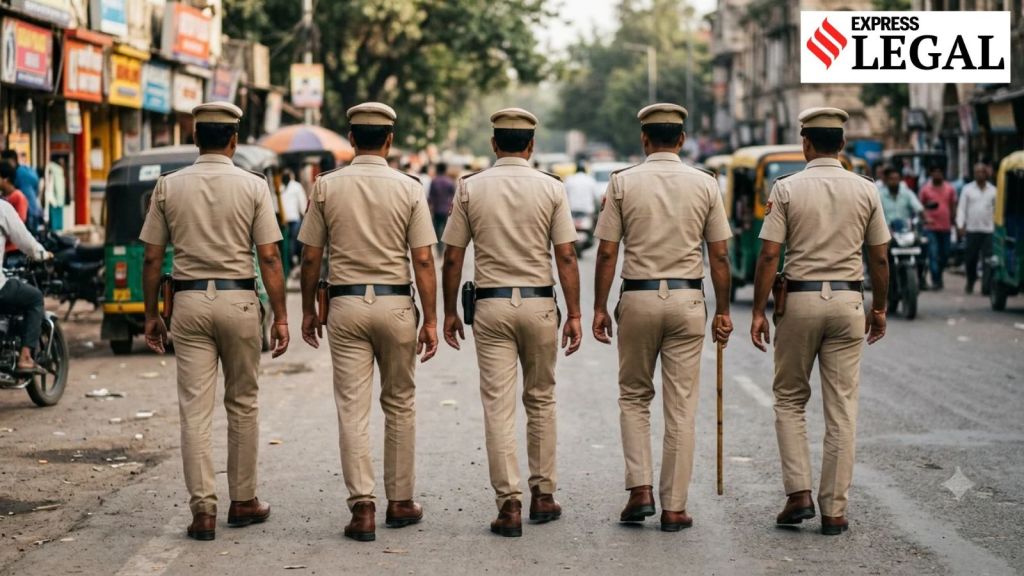

 Justice Maheswara Rao Kuncheam highlighted that Andhra Pradesh has around 166.18 police personnel per one lakh population, against the UN recommendation of 222.


 Share


