5 min readNew DelhiSep 10, 2026 03:30 PM IST
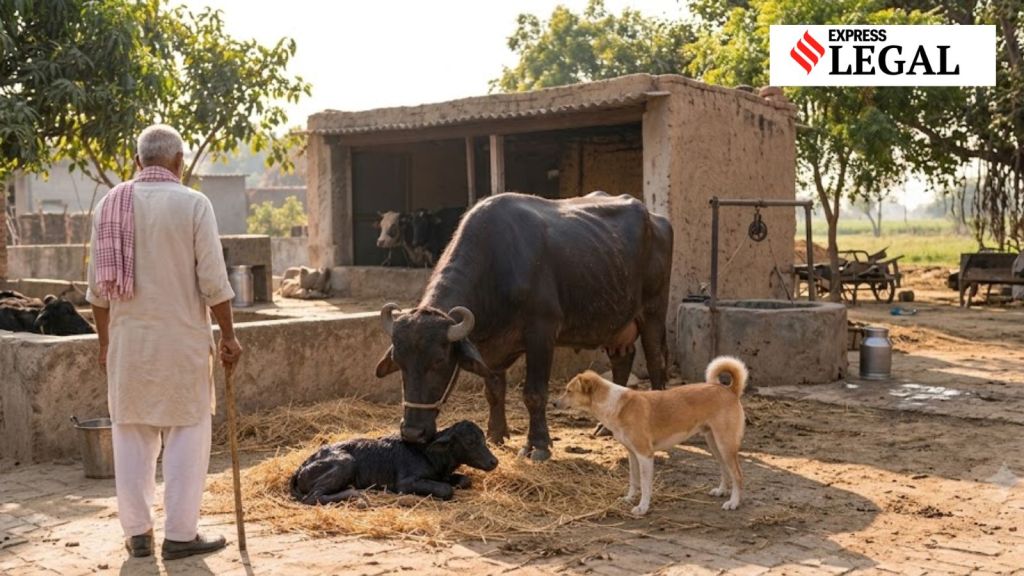
The Punjab and Haryana High Court recently upheld the conviction of two brothers in a 1996 case in which they assaulted a neighbour who had objected after their dog ate the placenta of his buffalo’s newborn calf. The court, however, reduced their sentences to the period already served.
Justice Mandeep Pannu noted in the September 7 order that the incident was nearly three decades old and the men were 22 and 26 years old at the time. They are now around 52 and 56. The court also noted that they had faced criminal proceedings over the assault for more than three decades.

Noting that the revision petition had remained pending for about 18 years, the court allowed their appeal and directed both the men to pay Rs 4,250 each to the injured person as compensation.
“Keeping in view the totality of the facts and circumstances, including the age of the petitioners, the period already undergone by them, the enormous passage of time since the occurrence and the prolonged pendency of the present revision petition, this court is of the considered view that the ends of justice would be adequately met if the substantive sentence of imprisonment imposed upon the petitioners is reduced to the period already undergone by them,” the order read.
The high court was hearing a revision petition filed by the brothers against the three-year jail sentence imposed by the trial court, which was upheld by a fast-track court in February 2008.
Justice Mandeep Pannu found that the conviction was supported by evidence and saw no reason to interfere with it.
‘Assault with gandasi, lathi’
The complainant, Om Parkash, stated that he was an agriculturist and reared dairy animals. On October 12, 1996, at about 5 am, his buffalo gave birth to a calf and the neighbour’s dog ate the placenta, which was still hanging from its body.
Parkash asked the accused to restrain the dog, but they allegedly did not listen. Later that day, his mother also asked them to restrain the dog. Following this, one of the accused, Raju, who was armed with a gandasi (chopping tool), and the other accused Deva, armed with a lathi, allegedly abused and assaulted him, before fleeing.
Story continues below this ad
Parkash was taken to hospital, where doctors found two injuries, including a fracture to his arm. An FIR was registered on October 13, 1996. The trial court convicted the men in January 2006 and sentenced each of them to three years in jail under a provision relating to causing grievous hurt. Their appeal was dismissed by a fast-track court in 2008, after which they approached the high court.
‘Willing to pay compensation’
The men, through advocate Fateh Saini, argued that the injury caused was on the arm and no injury was caused to any vital part of the complainant’s body. He argued that the incident was in 1996 and the men have already undergone a substantial period of sentence. It was also submitted that they are ready and willing to pay reasonable compensation to the injured.
Deputy Advocate General Sheenu Sura opposed the request for the reduction of sentence and submitted that both the men are involved in one more case of robbery in 2003. He added that, however, the first accused has undergone the sentence awarded in that case and the other was acquitted in the said case.
He also placed their custody certificates on record, showing that one man had spent two months and seven days in jail in the present case, while the other had spent one month and 25 days.
Story continues below this ad
Over 3 decades of proceedings: HC
The court found that the conviction was supported by the evidence and saw no reason to interfere with it. It noted that both men had spent around two months in jail, but had also faced “prolonged litigation” for a considerable period.
The court noted that the revision petition itself has remained pending since 2008 and said, “Consequently, the petitioners have faced the ordeal of criminal proceedings for a period of more than three decades from the date of occurrence and for about 18 years during the pendency of the present appeal”.
It held that the long passage of time was an important factor while deciding the sentence. The court, hence, reduced their jail terms to the period already served, while keeping the fine unchanged.




 Justice Mandeep Pannu found that the conviction was supported by evidence and saw no reason to interfere with it.
