


Journalism of Courage
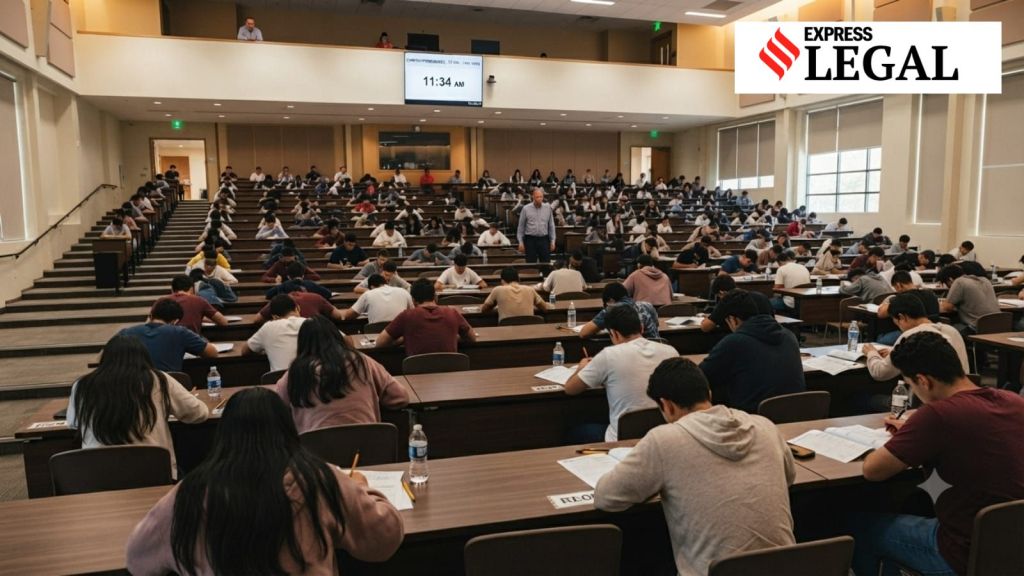 The authorities had earlier rejected the students' request, which the latter said was ‘unreasonable’ and will affect their right to pursue higher education. (AI-generated image)
The Bombay High Court recently dismissed a plea filed by a couple of students urging the authorities to lower the minimum qualifying marks for the National Eligibility cum Entrance Test-Under Graduate (NEET-UG) re-examination, citing that otherwise they would be barred from pursuing medical education, not only in India, but across the world, as both require a minimum eligible score in the exam.
Justices Anil S Kilor and Rajnish R Vyas were hearing a plea filed by the students who had appeared for the NEET-UG re-exam and sought lowering of its minimum qualifying marks. The re-examination was necessitated after the NEET-UG 2026 was cancelled following allegations of a paper leak.
“When the legislature confers a discretionary power on an authority, it has to be exercised by it in its discretion; the decision ought to be that of the authority concerned and not that of the court. The court would not interfere with or probe into the merits of the decision made by an authority in exercise of its discretion. Further, to maintain a writ it is necessary to establish a legal right and to point out the legal duty of the authority to perform but has failed and/or neglected to do so,” the September 21 order read.
The high court held that “the intention to have similar minimum qualifying marks for admission to Undergraduate Medical Courses, as per Regulation 9, is with an intention that even if a student pursues his/her medical education abroad or elsewhere and not in India, and if he or she comes back to India, there should not be any variation in standard of education since it relates to health care”.
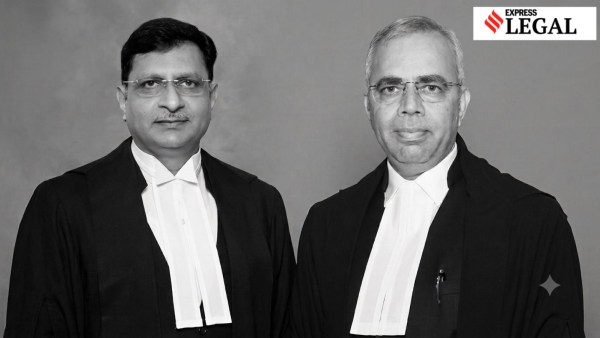 Justices Anil S Kilor and Rajnish R Vyas said the intention of the rules was to have uniform eligibility criteria to pursue medical education.
The students had claimed that they had appeared for the NEET-UG examination and sought relaxation of the minimum eligible marks notified for the re-examination by recalculation of the minimum eligible score based on the number of students who had appeared in the first NEET-UG examination.
The authorities had earlier rejected the students’ request by a communication dated August 20, which the students argued was “unreasonable and arbitrary as it will impair (their) right to pursue higher education, which forms part of right to life and personal liberty guaranteed by Article 21 of the Constitution of India”.
The students said the rules prevented them from pursuing medical education in India as well as abroad because both required them to have a minimum eligible score in the exam, and such “disqualification for reasons of large absenteeism in re-NEET is not attributable to petitioners (students)”. They said that hence, the refusal to consider their request was disproportionate and arbitrary.
Senior Advocate Devadatt Kamat and advocate M D Raut, appearing for the students, submitted that in the NEET-UG re-examination held on June 21, absenteeism increased from 3.27 per cent to 12.27 per cent and the minimum eligible score was 213 for unreserved seats and 117 for reserved seats.
The counsel urged that since cancellation of the examination was not the fault of the candidates who had appeared in the examination, denial to lower the minimum eligible score was arbitrary and would impair the students’ right to pursue higher education, as the rules mandated that even if the students wanted to pursue graduate medical education abroad, they had to score the minimum eligible marks at the NEET-UG exam.
Deputy Solicitor General of India K N Shukul, along with advocate Gaurav Khatwani appearing for the authorities, argued that the case was not maintainable as it was the discretion of the authorities to lower the minimum marks required for admission to undergraduate medical courses and they had “judiciously exercised” the discretion. The counsel further contended that the discretion to lower the eligibility marks for admission could be exercised only in case a sufficient number of students in a category failed to secure the minimum marks.
The high court noted that when law confers a “discretionary power” on an authority, the decision should be that of the authority concerned and not of the court. “The court would not interfere with or probe into the merits of the decision made by an authority in exercise of its discretion”.
The bench also observed that “to maintain a writ it is necessary to establish a legal right and to point out the legal duty of the authority to perform” and that there was no legal right in favour of the students or legal duty that had to be performed by the authorities which it failed at.
On the plea that if the qualifying marks are not lowered and the student would not be in a position to pursue medical education, even abroad, the high court said that “the intention is to have uniform or similar eligibility criteria to pursue education either in India or elsewhere”.
Dismissing the plea, the court said the regulation requiring students to meet the minimum NEET-UG score even if they pursue medical education abroad was intended to ensure that “the candidate who, in case goes elsewhere out of India to pursue his or her medical education and returns to India on completion of education for practice, the standard of healthcare should be maintained, and there should not be two different standards”.
The regulation, introduced in 2018, ensures that Indian students studying medicine abroad meet the required standards to practice medicine in India.


