5 min readNew DelhiUpdated: Sep 10, 2026 12:30 PM IST
In just 48 days, a 59-year-old undertrial lost 21 kilogram — a weight loss the Bombay High Court described as “alarming and dangerous”, particularly given his recent gastric surgery and other health problems. The court has now granted him medical bail, finding that continuing to keep him in custody, even in the prison hospital, could put his health at further risk.
The court noted that the man had been admitted to five hospitals after his arrests in June and was unable to access his prescribed post-surgery diet and specialist medical care while in custody.

Justice Milind N Jadhav found that the man had undergone a gastric surgery in November 2025, during which 80 per cent of his stomach was removed, and was strictly directed to remain on a liquid or semi-liquid diet. He was arrested in connection with allegations under several criminal offences, including criminal conspiracy, sexual offences and offences under Maharashtra’s anti-black-magic law.
The court said the chronology of his medical condition was “even more disturbing to the mind of a normal prudent person” and held that keeping him in custody or even the prison hospital “would run the risk of deterioration of his health further to a point of no return.”
“It is seen that he (man) lost 21 kilograms of body weight in a span of 48 days of incarceration which by itself is alarming and dangerous to health under normal circumstances let alone the dire medical circumstances within which applicant finds himself in the present case,” the court said on September 7.
Drastic weight loss
The man, through advocate Salman K Pathan, sought bail primarily on medical grounds, arguing that his drastic weight loss in custody and lack of access to his prescribed medication required him to receive appropriate medical treatment outside jail.
Justice Milind N Jadhav said that the chronology of the man’s medical condition was “even more disturbing to the mind of a normal prudent person”.
The prosecution, through assistant public prosecutor Sukanta Karmakar, argued that the man’s medical condition was neither serious nor life-threatening and could be treated at the jail hospital. It also disputed the allegation that his arrest was illegal and opposed his release on bail.
Story continues below this ad
The court noted that the jail hospital and Sassoon General Hospital did not have the requisite specialist doctors, following which the man was brought to Mumbai on July 31 for treatment at KEM Hospital and JJ Hospital.
‘Aware of jail conditions’
The court found that keeping the man in custody, including in the prison hospital, was incompatible with his medical condition and could lead to further deterioration of his health.
“We are otherwise all aware of the jail conditions and the enormity of congestion in jails, and I need not comment on the same,” Justice Jadhav observed.
The court also acknowledged that medical bail can sometimes be “the most misused bail when all doors are shut.” However, in this case, it found that the man’s medical condition was supported by medical records and was not disputed by the doctors who appeared before the court.
Story continues below this ad
The court noted that the man had also been diagnosed with Type-I autoimmune pancreatitis, liver disease, tuberculosis and a pituitary gland problem for which he required steroids.
Referring to the material on record, the court found that the man’s few months in custody had significantly affected his overall health and that he required rehabilitation, careful monitoring of his diet, protection from infections and regular, uninterrupted appointments with specialist doctors.
“These requirements can only be met if the applicant receives treatment at a hospital of his choice and/or his home where he is well taken care of, away from an infection-related environment if he is to stand trial,” the court said.
The court also stressed that there is a “marked qualitative difference” between the treatment received by an undertrial prisoner, particularly in jail barracks and the jail hospital, and that received by a citizen without such restraints.
Story continues below this ad
“I need not say much on this aspect,” Justice Jadhav said.
The man was accordingly granted bail on medical grounds, subject to conditions including that he cooperate with the investigation and provide all information sought by the investigating officer. The investigating officer was also permitted to visit his hospital or home for investigation after giving him due notice.





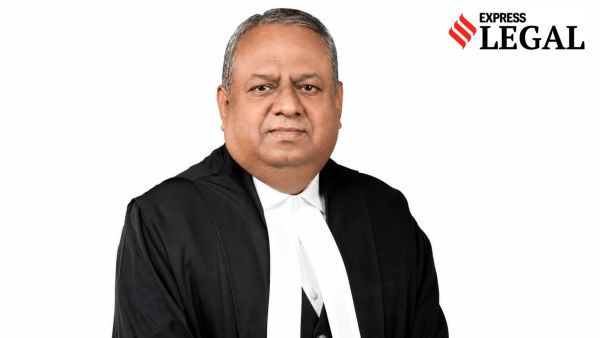 Justice Milind N Jadhav said that the chronology of the man’s medical condition was “even more disturbing to the mind of a normal prudent person”.
