“Even where a boycott/protest is undertaken in circumstances claimed to be exceptional, no advocate, litigant or other person shall be subjected to intimidation, coercion, obstruction or harm for choosing to attend Court or pursue his or her legal remedy,” the court said on September 21.
On June 16, 2025, the Bar Association called a one-day boycott. The advocate alleged that he was stopped from entering court, and that the General Secretary asked him to remove his advocate’s band and leave before he was slapped and assaulted. He also alleged that he fell down the stairs and injured his head and forehead. The allegations were disputed and led to criminal proceedings.
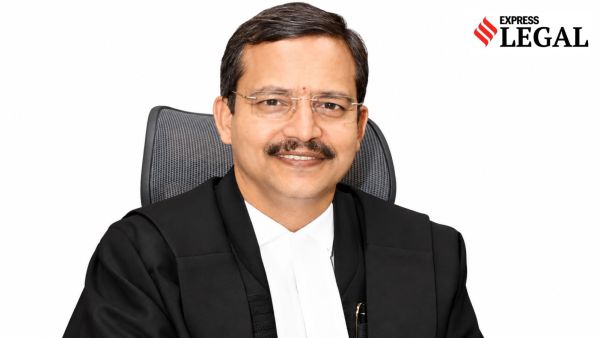
 Justice Laxmi Narayana Alishetty, who heard the contempt plea, dismissed the case against the Bar office-bearers. (Image enhanced using AI)
Boycotts
Reiterating that advocates do not have a general right to strike or call for a boycott of court work, the High Court said that an advocate cannot be compelled to participate in such a boycott, nor can an advocate who chooses to attend court be subjected to threats, coercion or adverse consequences.
The court referred to the Supreme Court recognising a limited exception in the rarest of rare situations involving the dignity, integrity or independence of the Bar or Bench. Even in such circumstances, abstention from court work cannot exceed one day. The bar president must first consult the Chief Justice or the District Judge, as applicable, and the decision of the judicial authority concerned has to be followed, it said.
The High Court said the evidence indicated that it was passed as an expression of solidarity and to condemn attacks on advocates. Observing that merely expressing solidarity in circumstances involving an alleged attack on an advocate could not, by itself, be treated as an act directed against the administration of justice, the court also noted that the safety and dignity of advocates have a direct bearing on the independence and effective functioning of the Bar.
Story continues below this ad
However, the court said that no material had been placed before it to establish that the Bar president had consulted the concerned Metropolitan Sessions Judge before passing the resolution. The court made clear that even if the circumstances could fall within the limited exception recognised for a one-day abstention, that exception would apply only to the limited abstention from court work contemplated by the Supreme Court.
It would not authorise or protect coercion, intimidation, obstruction or physical assault against an advocate who chose to attend court. The court specifically observed that the conduct attributed to respondent number 5, an advocate, if established, would fall outside the exception.
Contempt case dismissed
Despite these observations, the High Court declined to proceed further with contempt against the respondents, noting that the petition substantially sought to proceed against the office-bearers collectively.
“Contempt proceedings cannot ordinarily be maintained against respondents collectively without specific allegations and material demonstrating the individual role and involvement of each person. The court found that, except for respondent number 5, an advocate, the material did not disclose a specific act attributable to each respondent. It also held that contempt liability could not be imposed merely because a person held a position in the Bar Association,” the court said.
Story continues below this ad
The court referred to the disputed versions of the sides, noting that criminal proceedings had already been initiated.
It held that the contempt court would not be justified in conducting a parallel adjudication of those disputed facts, particularly when the alleged physical assault was specifically attributed to respondent number 5, and not to the office-bearers collectively.
The court also noted that the advocate ultimately entered the court premises on the same day and attended the matter before the magistrate. It further observed that the material did not disclose that any other advocate who chose to attend court despite the boycott call was similarly subjected to physical assault, intimidation or coercive treatment by the office-bearers.
Dismissing the contempt case, the court clarified that the decision should not be understood as approving, condoning or legitimising any act of assault, intimidation, coercion or obstruction against an advocate seeking to attend court despite a boycott call.
Story continues below this ad
The court said that the office-bearers must exercise “due care, restraint and responsibility” in organising or participating in any boycott or protest. Any future call for a strike or boycott must comply with the legal guidelines laid down by the Supreme Court and must not obstruct or prevent access to court or interfere with the administration of justice.




 Justice Laxmi Narayana Alishetty, who heard the contempt plea, dismissed the case against the Bar office-bearers. (Image enhanced using AI)
