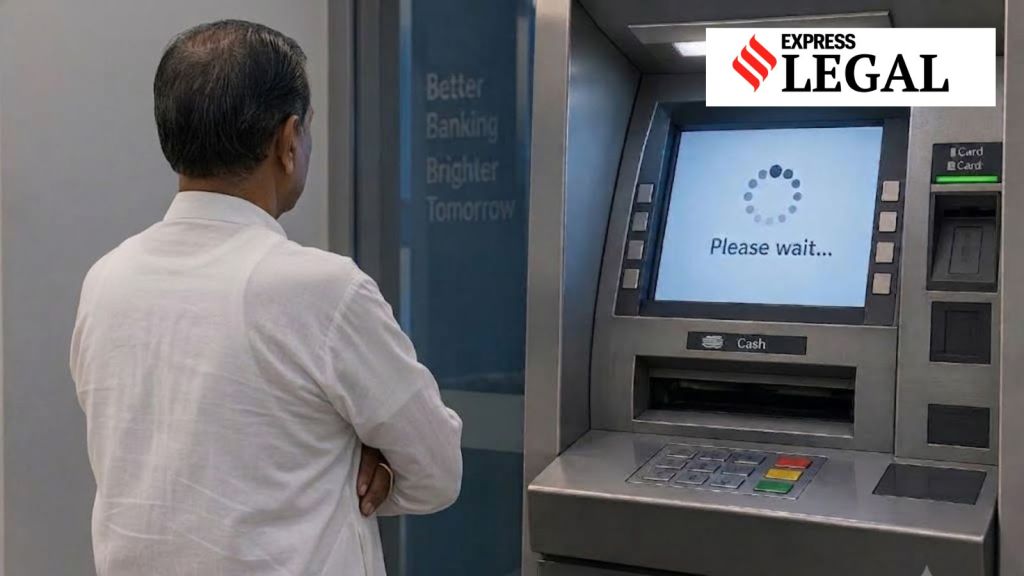
“Instead of resolving the grievance on the basis of proper verification and supporting records, the 1st opposite party (bank) rejected the claim without producing convincing evidence regarding the successful dispensation of cash. Such conduct on the part of the 1st opposite party caused considerable mental agony, inconvenience, financial hardship, and loss to the complainant, demanding compensation,” the August 31 order read.
Amount debited, but no money dispensed
The man claimed that he was an account holder with the bank and that on March 1, 2014, he tried to withdraw Rs 10,000 from an ATM operated by another bank. Although the transaction was initiated, the ATM did not dispense the cash. He later found that Rs 10,000 had been debited from his account.
His lawyer issued a legal notice in March 2015, but the banks did not resolve his grievance. He then approached the commission seeking a refund of the Rs 10,000 and compensation for the hardship caused to him.
He claimed that the failure to dispense the cash, coupled with the debiting of the amount from his account, amounted to a deficiency in service and negligence by the bank. The man was represented by advocate A D Benny before the commission.
The bank, through advocate K N Santhosh, submitted that its account records and transaction statement showed that Rs 10,000 had been withdrawn through an ATM transaction on March 1, 2014. It said the matter was investigated after the complaint and the transaction was found to be successful, with the cash allegedly dispensed from the ATM.
Story continues below this ad
‘Bank’s duty to resolve grievances’
The commission found that the amount had been debited from the man’s account and held that the bank was responsible for addressing his grievance. It added that even if there was a technical issue with the ATM operated by the other bank, the bank holding the customer’s account had to resolve the issue with the other bank and ensure that the customer’s grievance was addressed.
The commission said the customer could not be expected to independently prove technical problems in the inter-bank ATM system. “The consumer’s relationship and privity primarily remain with the 1st opposite party bank from whose account the disputed amount was debited,” it added.
It found that the bank failed to properly investigate and reconcile the disputed ATM transaction and could not prove that the man had actually received the Rs 10,000
“The complainant, being an account holder and consumer of the 1st opposite party bank, was legitimately entitled to fair, transparent, and efficient banking service,” it noted.
Story continues below this ad
The commission noted that the man had claimed only Rs 10,000 as compensation, but said the seriousness of the deficiency and the prolonged failure to resolve the grievance justified awarding a higher amount.
The commission found no independent deficiency or negligence on the part of the bank that operated the ATM and dismissed the complaint against it. Accordingly, the commission directed the said bank to pay Rs 10,000 to the complainant, being the amount debited from his account in connection with the disputed ATM transaction.
The bank was also asked to pay Rs 50,000 as compensation for the financial loss and inconvenience caused, along with Rs 10,000 towards litigation costs, within one month.
Takeaway
The ruling highlights that when a customer’s account is debited in a failed ATM transaction, the bank holding the account cannot simply reject the complaint by pointing to a technical dispute with another bank. It must properly investigate the transaction, resolve the issue with the other bank and ensure that the customer’s money is protected.
Story continues below this ad
For consumer-related grievances, individuals can contact the consumer helpline in their respective states and Union territories (Kerala: 1800-425-1550) or call the National Consumer Helpline at 1915 for assistance.