


Journalism of Courage
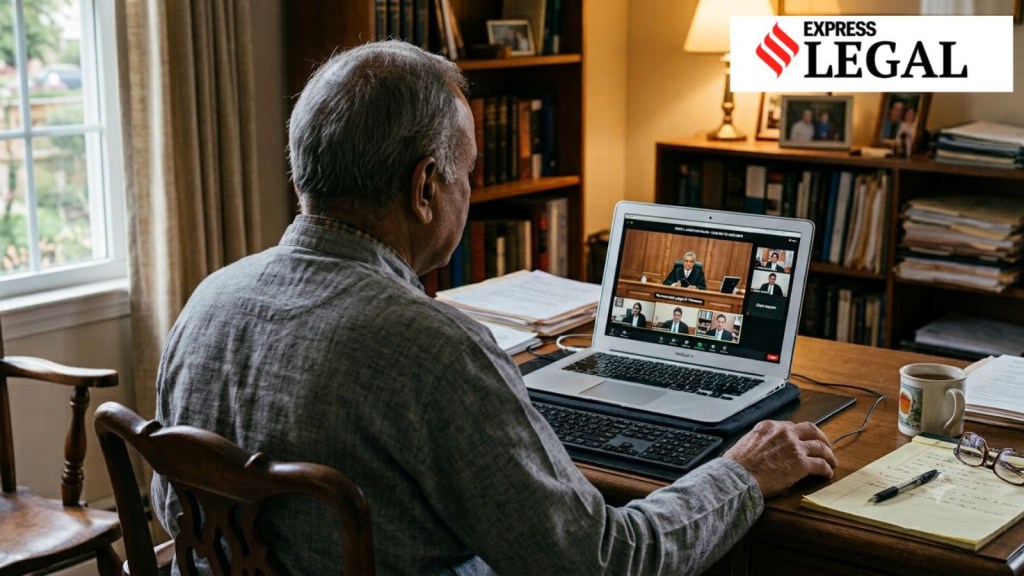 The Madras High Court allowed the doctor to appear virtually for cross-examination and directed the trial court to finish hearing the case in four weeks. (Ai-generated Image)
The Madras High Court has ruled that complex documents in property disputes cannot be used to stop witnesses from testifying online and allowed a 72-year-old London-based doctor to give virtual evidence in a long-standing property case.
Justice N Anand Venkatesh was hearing a revision plea against the order of a Coimbatore trial court, allowing the septuagenarian doctor to give his evidence in a long-pending property matter. “A stage has come where any proceedings can be conducted through the VC mode. Several complex arbitration cases involving large turnover and several volumes of documents are being conducted conveniently through the online/VC mode. This is the reason as to why the Madras High Court Video Conferencing Rules, 2026 were notified, and the same provide for the procedure to be followed to record the evidence through the VC mode,” the court said on September 11.
Dr K Balasundaram had filed a case in the trial court for partition and allotment of one-third share in the property. The doctor also challenged a decree passed by the District Munsif Court, Coimbatore, on March 17, 2004 in favour of the opposite parties, to be set aside. The doctor also sought a permanent stay that would stop the other party from selling the properties involved in the case.
When the case was pending for examination of witnesses, the doctor had filed an application seeking permission to appear virtually to give evidence, which was allowed because the doctor, apart from being 72, was practising in London and had been present in the court on the last three dates for cross-examination, which never happened.
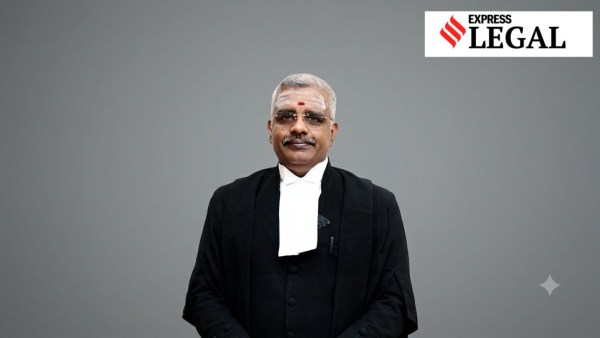 Justice N Anand Venkatesh stated that there was no reason for the doctor to be physically present unless the trial court found it difficult to virtually conduct cross-examination.
On November 29, 2021, the right to take the doctor’s evidence was taken away from the other party, after which they filed a plea requesting the court to call the doctor again for cross-examination. The court allowed this plea on January 3, 2025.
The doctor then filed another application requesting the trial court to allow him to appear virtually to give evidence, as he had recently had bypass surgery and, due to his health issues, he was advised not to travel a long distance. Aggrieved by the trial court allowing the doctor’s request, the other party filed an appeal before the High Court.
Advocates T M Hariharan and G M Ananthakumar, appearing for the other parties, urged that the doctor’s physical presence was necessary to properly cross-examine him since he had relied on several documents and the properties would also include division of some companies.
The counsel further submitted that the other party was also willing to pay for the doctor’s travel expenses and requested the court to fix “a time frame” for completing the cross-examination of the doctor.
Advocate Navaneeth Ragavachari, representing the doctor, contended that he was an aged person who had undergone bypass surgery and was advised not to travel long distances.
The counsel submitted that the doctor was “willing to cooperate for the cross-examination through the VC mode (virtual mode)” and that the other party was insisting on physical presence only to harass him because, on three previous occasions when the doctor had come to the court, he was not cross-examined.
The high court noted that various guidelines have been given in the Madras High Court Video Conferencing Rules for effectively conducting court proceedings through the virtual mode, and if the guidelines are followed, the proceedings could be “conveniently conducted”.
The court observed that the decision of the trial court did not need any interference as the case was “certainly” not a complex issue and cross-examination of the doctor could be easily conducted through the virtual mode. Further, the high court was of the view that the “age and health ailments faced by the first respondent/ plaintiff (doctor) justify his appearance before the court below through the VC mode”.
The high court also commented that it was “quite surprising that the petitioners are insisting on the physical presence of the first respondent/plaintiff (doctor) whereas the petitioners missed the bus when the first respondent/plaintiff was, in fact, present physically in India at least for three hearings” and that the doctor was not required to be physically present in court unless the trial court found it difficult to conduct the cross-examination in virtual mode.
The trial court was also directed to finish hearing the case in four months.


