
“The petitioners are fully protected under Article 21. The petitioners are adults, are homosexual, are educated and are fully capable of understanding what is in their own interest. They have decided, after due consideration, to live together and no one has exercised any force or coercion upon them. Therefore, no one has any right to oppose the petitioners living together in a live-in relationship, and this court finds no reason to refuse their prayer for protection. The present petition deserves to be allowed,” the court said on September 14.
The ruling followed the court’s personal interaction with both women. It recorded that they were adults, capable of understanding what was in their own interest and had chosen to live together voluntarily. Both said they wanted to continue living together and had taken the decision without pressure, fear or undue influence.
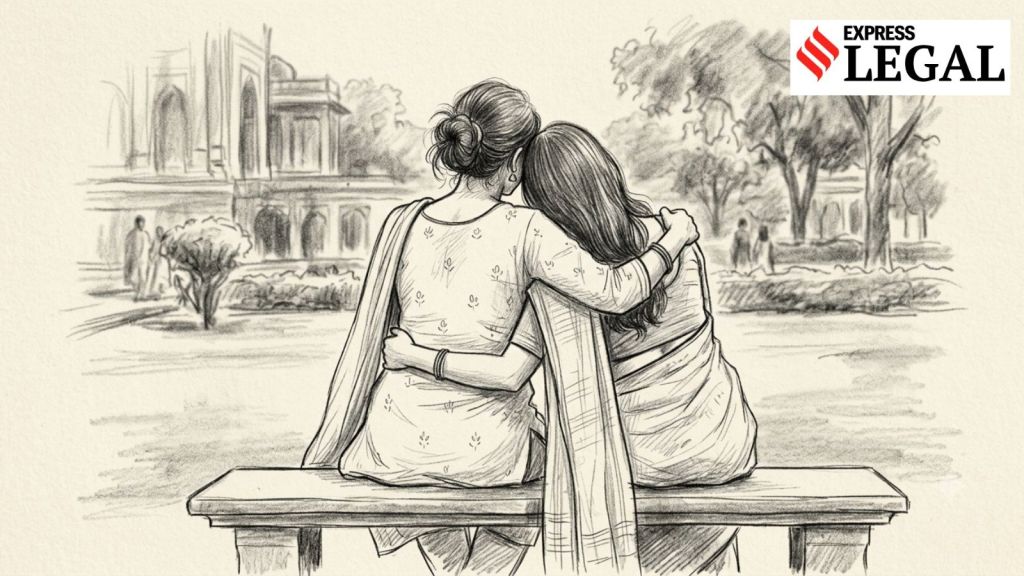
Justice Dr Gautam Chowdhary personally interacted with the two women and found that their decision to live together was based on free consent. (Image enhanced using AI)
Women sought protection
The petitioners’ counsel informed the court that both women were adults and produced copies of their high-school marksheets to establish their ages. They were unmarried and said they were in a live-in relationship.
They alleged that their family members were unhappy with their relationship and that they faced threats and harassment following which, they approached the high court under seeking directions to police authorities to protect their lives and prevent interference with their relationship.
Their counsel argued that the choice of an adult to live with a partner forms part of personal autonomy, dignity and privacy protected by the Constitution. The state’s counsel submitted that while a person’s choice of partner is protected under Article 21, legislative recognition of such a relationship is not itself a fundamental right. The state also referred to the lack of social acceptance of same-sex relationships and traditional views surrounding marriage and family.
Story continues below this ad
Court verified their decision
The high court did not decide the petition solely on the lawyers’ submissions. Both the women appeared before the judge and said they were adults and had decided of their own free will to live together because of their same-sex relationship.
They also told the court that they wanted to continue living together. After personally interviewing them, the court recorded that both were adults, capable of understanding what was in their own interest and that their decision was based on free consent. Both women submitted written statements saying that they were in same-sex relationship and living together.
Court separates right to live together from marriage
The high court considered Supreme Court rulings concerning the rights and legal position of queer and LGBTQ+ persons. It referred to the Supreme Court’s earlier ruling recognising sexual orientation as an aspect of freedom, dignity, privacy and individual autonomy.
Considering the Supreme Court’s later ruling that there is no unqualified right to marriage except where recognised by statute or custom, it said that the Supreme Court had also held that legal recognition of a union similar to marriage or a civil union could be created only through legislation. At the same time, it recognised that queer and LGBTQ+ couples have a right to form relationships or unions under Article 21, flowing from privacy, choice and autonomy.
Story continues below this ad
Taking note of this legal position, the court said the absence of legal recognition of same-sex marriage did not remove the constitutional protection available to two consenting adults who choose to live together. It said such relationships are protected under Article 21 through privacy, choice and personal autonomy.
The court said that if their peaceful life was disturbed, the women could approach the concerned police commissioner, senior superintendent of police or superintendent of police with a certified copy of the order. After verifying that they were adults and voluntarily living together, the police were directed to provide them immediate protection.




 Justice Dr Gautam Chowdhary personally interacted with the two women and found that their decision to live together was based on free consent. (Image enhanced using AI)
