


 The HC bench said even as the petitioner had produced a copy of the acquittal order, the externment order still cited the two cases and a beat information report pending against him. (File image)
Observing that the state action appeared to be an “ego issue” and a retaliatory action amounting to “killing the messenger”, the Allahabad High Court has stayed an FIR against a journalist for reporting the alleged poor infrastructure and other deficiencies at a government school in Lucknow.
A bench of Justices Abdul Moin and Pramod Kumar Srivastava said that since the government had a statutory duty under the Right to Education Act, 2009, to ensure that schools met the prescribed standards, it should have examined the shortcomings highlighted by the journalist and taken steps to rectify them instead of treating the matter as an “ego issue” and lodging an FIR against him.
“When the controversy in the instant case is seen viz-a-viz the act done by the petitioner of reporting about the shortcomings of the school it is prima facie apparent that the First Information Report is retaliatory action to the shortcomings being exposed by the petitioner, a journalist and thus tantamounts to ‘killing the messenger’ which clearly is not countenanced in the eyes of law,” the order passed on September 8 stated.
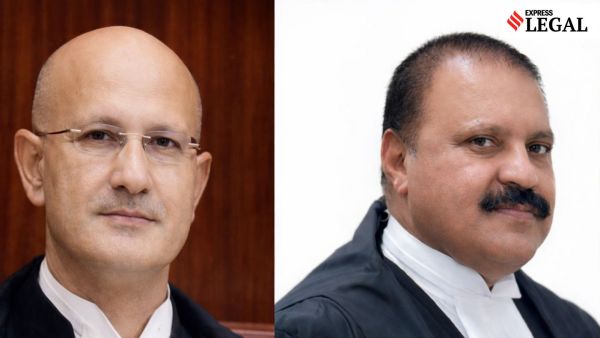 Justices Abdul Moin and Pramod Kumar Srivastava noted that Yadav had visited Purva Madhyamik Vidyalaya in Begriya Mau, Gosaiganj, on August 20.
The court was hearing a plea filed by the journalist Amit Yadav challenging an FIR registered on August 24 at Gosaiganj police station in Lucknow under different sections of the Bharatiya Nyaya Sanhita (BNS).
According to the petition, Yadav had visited Purva Madhyamik Vidyalaya in Begriya Mau, Gosaiganj, on August 20 and through his report claimed that the school was in a poor condition, with shabby toilets, no drinking water and other deficiencies. He had also interviewed certain teachers.
An FIR was subsequently registered alleging that the school was in an excellent condition and that its toilets were clean. It accused the journalist of entering the premises without permission, disrupting the studies of children and compelling two women teachers to speak about the condition of the school. The FIR also alleged that the reporting had been motivated by political prejudice.
The bench said that coloured photographs placed on record prima facie showed the “abysmal condition” of the school’s toilets and premises. It held that the authorities should have considered the statutory exception before registering the FIR.
“Learned A.G.A. fairly submits on the basis of the instructions as aforesaid that no order had been issued by any public servant per which there is a restriction with regard to the entry in the school premises. Consequently, it is apparent that the authorities have patently erred in law in straightaway lodging the impugned First Information Report under Section 223 of the BNS, 2023,” the court observed.
The high court said the journalist had prima facie exposed shortcomings in an educational institution run by the State government. Referring to the Right of Children to Free and Compulsory Education Act, 2009, the court noted that schools are required to meet prescribed norms, including safe and adequate drinking water facilities and separate toilets for boys and girls.
“Once as per the Act, 2009, a duty is cast on the Government to do so & in case the petitioner has highlighted the shortcomings in the school and its infrastructure, it was for the Government to have looked into it and to have initiated action for removal of the shortcomings instead of making it an ego issue and lodging the impugned First Information Report,” the court remarked.
Holding that a prima facie case for interference had been made out, the High Court stayed the FIR and directed that no action be taken against the journalist in connection with the case until further orders.
The court also directed the Additional Chief Secretary, Basic Education, Uttar Pradesh, to file a personal affidavit within four weeks detailing the present condition of the school. The affidavit must include photographs of the premises and state whether any construction, repair, alteration or modification was carried out after the journalist’s report on August 20.