


 The former top court judge also weighed in on the split verdict of two top court judges on whether the challenge relating to the appointments of the CEC and ECs should go before a larger bench.
Referring to the Centre’s comparison between the Supreme Court Collegium system for appointing judges and the three-member panel that selects the Chief Election Commissioner (CEC) and Election Commissioners (ECs), retired apex court judge Abhay S Oka has said that no parallel can be drawn between the two.
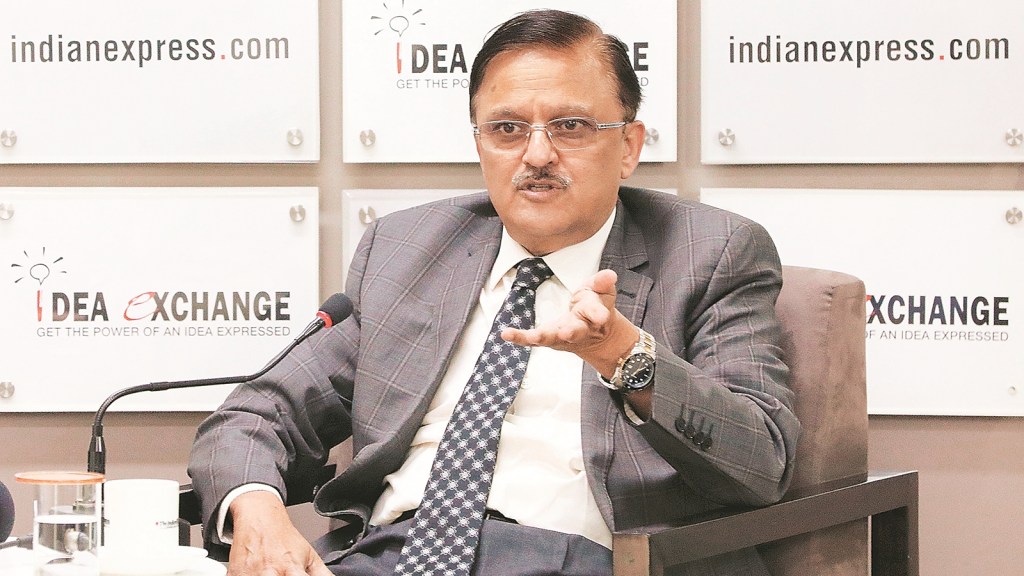
Speaking during a discussion with The Indian Express on Saturday, Justice Oka said, “…the Collegium and the committee to appoint election commissioners…they are not equals. They’re completely different.”
The former top court judge also weighed in on the split verdict of two top court judges on whether the challenge relating to the appointments of the CEC and ECs should go before a larger bench.
On September 24, Supreme Court judge Justice Dipankar Datta declined to refer petitions against the 2023 law on the appointment of the Chief Election Commissioner and other Election Commissioners to a larger bench, and defended the system of appointing judges while criticising the Centre for “selectively” clearing names recommended by the Supreme Court Collegium. Alongside was Justice S C Sharma, who differed in opinion with Justice Datta.
The split verdict came on petitions challenging the Chief Election Commissioner and Other Election Commissioners (Appointment, Conditions of Service and Term of Office) Act, 2023, which provides for their selection by a three-member panel. During the oral arguments, the government had drawn a parallel with the Supreme Court Collegium system of appointment of judges.
Referring to the judge’s observations, Justice Oka said there cannot be any comparison as the entire Collegium procedure was put on the Supreme Court website during the tenure of former Chief Justice of India Sanjiv Khanna.
“At every stage, executive, as I say, because Governor and chief minister of the state have the right to object to the recommendations of the High Court Collegium. Then there is a full-fledged Intelligence Bureau (IB) inquiry of the candidates. IB is under the control of the central government. Ultimately, when it is placed before the Supreme Court Collegium, what is before the Supreme Court Collegium? The objections of the chief minister and Governor, report of IB, and the views of the central government. Therefore, at that stage also, the executive is very much involved,” he said.
The former top court judge further noted that according to the Constitution Bench judgment, once the Collegium recommendation is made, it can be returned for reconsideration and, if it is reiterated, the government has to sign on the dotted line, which does not happen.
“That issue is also flagged here that sometimes, out of 10 appointments, two are cleared immediately; others remain pending for months together. There can’t be any comparison at all. In the case of the Chief Election Commissioner and election commissioners, it consists of only three members. It’s not like the Collegium system where there is consultation at every stage. So, there can’t be any comparison… In fact, the Collegium and the committee to appoint election commissioners…they are not equals. They’re completely different,” Justice Oka emphasised.