4 min readNew DelhiUpdated: Sep 14, 2026 10:59 AM IST
The Himachal Pradesh High Court has refused to grant maintenance to a woman who accused her husband of domestic violence, holding that she had failed to establish the allegation. The court also noted that both spouses were working as assistant professors and had almost equal financial standing, making it difficult to say that the woman was unable to maintain herself.
Hearing the woman’s revision plea challenging the orders of the trial and appellate courts that rejected her petition for Rs 40,000 monthly interim maintenance, Justice Rakesh Kainthla noted that the couple got separated after six days of marriage.

“The wife is not entitled to any maintenance or any other relief on failure to prove the domestic violence and learned courts below had rightly held that the applicant, having failed to prove the domestic violence, was not entitled to maintenance,” the September 3 order read.
Lived together less than a week
The man claimed that after getting married in October 2023, his wife stayed at the matrimonial home for just around five days and treated him as a stranger. He alleged that her behaviour was abnormal from the very beginning, and she even refused to participate in the wedding photography.
The wife persistently refused to cohabit with him and misbehaved with him and his family members, it was alleged. He added that she was also employed as an assistant professor and had filed a false complaint.
Justice Rakesh Kainthla dismissed the revision petition, holding that the other courts had rightly concluded that the wife had failed to support her claims of domestic violence.
On the other hand, the woman claimed that her husband mistreated her and compelled her to sleep on the floor. She was continuously taunted for bringing insufficient dowry, and her husband locked the kitchen and denied her access to food, she added.
‘No proof of domestic violence’
The trial court, in its order, noted that the couple had been living separately since October 28, 2023, just six days after their marriage. A compromise deed dated November 2023 stated that the couple had mutually agreed to live separately due to a misunderstanding between them. The court noted that the compromise did not refer to any domestic violence.
Story continues below this ad
The trial court found that the husband’s argument that he was treated as a stranger and was not permitted to consummate the marriage was believable. It also found that the wife was financially independent and capable of maintaining herself, and dismissed her application.
The woman appealed against the order, but it was dismissed. Aggrieved, she approached the high court with this current revision plea. She alleged acts of domestic violence in her petition, and claimed that the other courts had ignored it. Seeking Rs 40,000 in monthly maintenance, the woman claimed that her estranged husband is also an assistant professor at a government college and earns a monthly sum of Rs 1 lakh.
Legal aid counsel, advocate Vijay Panchta, representing the woman, argued that she had been continuously taunted and harassed in her matrimonial home, making it difficult for her to reside there. He also argued that being the man’s legally wedded wife, she was entitled to maintenance.
Noting that there was no reference to domestic violence in the compromise and that no evidence supported the woman’s allegations of cruelty, the court said, “It is undisputed that the parties had entered into a compromise. Both the learned courts below referred to the compromise and found that the parties had agreed to separate from each other due to misunderstanding between them.”
Story continues below this ad
The high court, accordingly, dismissed the revision petition, holding that the other courts had rightly concluded that she had failed to establish domestic violence and was hence not entitled to maintenance or any other relief.





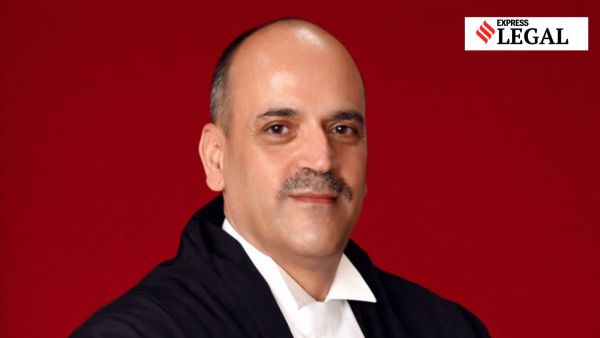 Justice Rakesh Kainthla dismissed the revision petition, holding that the other courts had rightly concluded that the wife had failed to support her claims of domestic violence.
